Episode 16
The Day a Clinical Director Spread Years of Compliance Records Across a Texas Highway
35 minutes
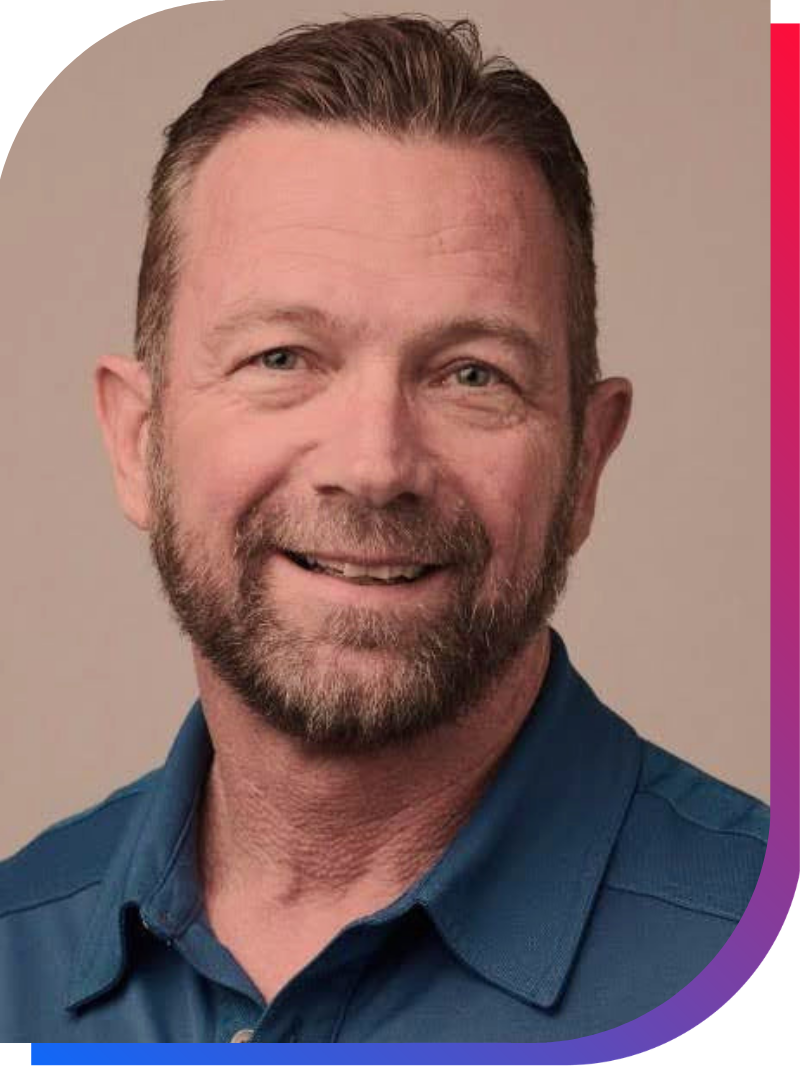
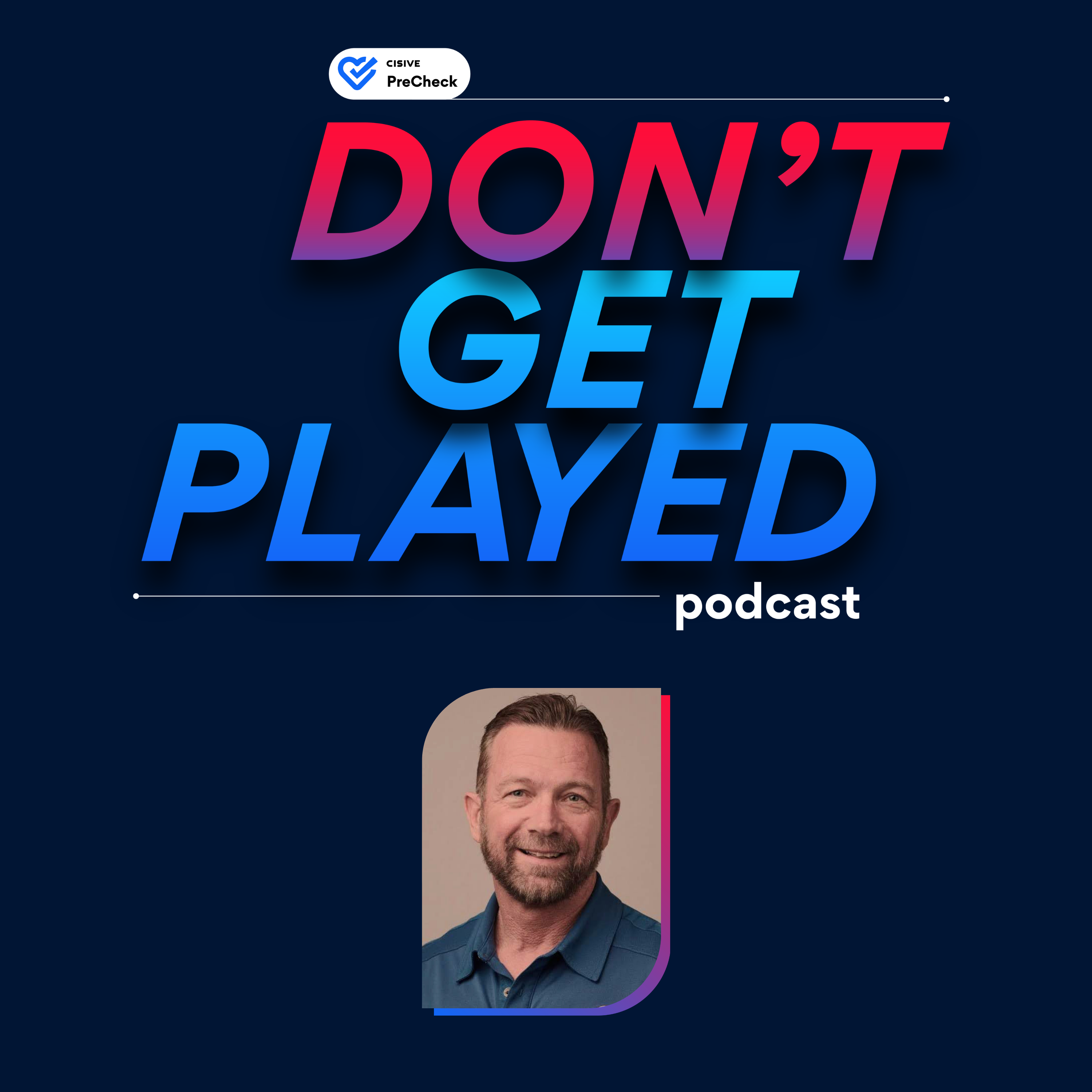
Brian Bright
CEO
Trajecsys
• 36 min
Why Clinical Programs Need a Succession Planning Framework
Don't Get Played
Play
A clinical director gets let go the day before an accreditation site visit. He is not happy about it. He loads years of documentation into his car, drives off, and spreads every page of it across a highway somewhere in Texas.
The site visitors show up the next day. No paper is left to show them.
This isn't really a story about one disgruntled employee. It’s a story about what happens when a compliance record lives entirely in one person's custody, with no independent copy anywhere else.
That story belongs to Brian Bright, CEO of Trajecsys, a clinical documentation platform for allied health and nursing education. In this episode of Don't Get Played, he walks through what succession planning actually looks like for clinical programs. The highway story might be the extreme version, but ordinary instances of this issue are cropping in programs right now, one departure at a time.
A Compliance Record Is Only as Durable as the Person Who Understood It
Programs treat documentation as the safeguard. Brian's point is that the file itself isn’t the safeguard. What matters is whether anyone other than the person who created it can find and understand it.
"Took all the documentation, put it in its car," he said, describing what the clinical director did the day before the site visitors arrived. "And spread all of the documentation on the highway somewhere in Texas. And what do they do when they don't have the paper?"
Brian traces the pattern back to the paper era of this industry. Programs tracked student data on paper, he says, which meant "lost documentation, lack of visibility or accountability." It wasn't carelessness. It's just what happens when a system runs on paper, memory, and whoever's still around to explain it.
That dependency doesn't disappear once a program goes digital, it just gets easier to overlook. A folder in a cabinet or a laptop on one desk is still a single point of failure, and it's rarely tested until the day it actually matters.
Turnover Is the Real Compliance Gap Programs Don't Plan For
Pull the lens back from the highway, and the ordinary version of this problem shows up constantly, without any drama. Clinical documentation for a single program can span three, six, or 10 years. Over that stretch, faculty retire. Coordinators take other jobs. People leave the field altogether. None of it requires a bad actor.
"We gotta remember that people in these organizations leave," Brian says. "So, creating that workflow, that succession plan, so in the event that half of your faculty leave next year, you've got a rooted system that you're gonna have visibility to all the documentation, and it's gonna continue. You don't have to start from scratch."
That's what makes this harder to fix than it sounds. There isn't one job to backfill or one file to secure. An entire chain of institutional knowledge is spread across whoever happened to be on staff when each piece was created, and no single hire replaces it all at once. A program doesn't find out it has a gap until the moment it needs to produce years of records for someone who wasn't there when they were created.
What a program actually needs is a plan that survives the org chart changing underneath it.
Build the Succession Plan Before You Need It
Brian advocates for a system where every requirement, deadline, and record lives in one place, not in the filing cabinet or database of whoever happened to be tracking it. That way the information itself, not a specific employee's memory of it, is what an accreditor, a new coordinator, or a departing director's replacement can pull up on day one.
That same logic shapes how Brian talks about AI's role in clinical documentation. "My view of AI is more of assistive decision-making, as opposed to taking away decision-making," he says. The people still have to lead. What changes is whether the institution's knowledge depends on any single person staying in the job.
Regulatory compliance that only one person understands is not compliance. It’s a countdown. Every program running on paper, or running on a system nobody thought to build a succession plan around, is somewhere on that clock whether they know it or not.
The programs that survive a sudden departure without missing a beat are not the ones with the most paperwork. They are the ones who built the succession plan before they needed it, whether the departure that tested it was routine or, like the one that started this conversation, ended up scattered across a highway in Texas.
Transcript
Brian Bright:
I did a webinar a number of years ago with one of the heads of one of our accreditation partners, and even he told me the story of how he was going on a site visit, and the day before the site visit, they had lost a clinical director, and the clinical director wasn't very happy. Took all the documentation, put it in its car. This is the day before the site visitors are coming down. And spread all of the documentation on the highway somewhere in Texas.
And what do they do when they don't have the paper?
Matt Jaye:
Welcome to Don't Get Played, a podcast from Cisive. This show is for talent acquisition leaders and people managers who care about trust at work. How it's built. How it's measured. And how leaders design systems that hold up when speed, risk, and accountability collide. I'm Matt Jaye, SVP of Healthcare at Cisive.
Clinical documentation can span three, six, even ten years for a single program. That's a lot of hours, a lot of forms, and in some cases, a lot of paper. And paper only shows you how fragile it is once it's already gone.
My guest today is Brian Bright, CEO of Trajecsys, a clinical documentation platform built for allied health and nursing education. Brian's been in this space since 2013. He's spent that time moving programs off paper and into systems built to actually hold up.
We get into a real story about accreditation records that ended up scattered across a Texas highway. Yes, really. Brian talks about what COVID changed for programs that had been putting off going digital for years. We talk about where AI actually helps in clinical documentation, and where the people still have to lead. And Brian lays out the easiest way to get departments collaborating that don't currently talk to each other at all.
Brian's fix for getting departments talking again starts with a meeting most people already have on the calendar. Let's get started!
Hey Brian, welcome to the podcast. It's good to have you here.
Brian Bright:
Hey Matt. Nice to be here. Thanks for the invitation.
Matt Jaye:
Yeah, absolutely. So I know Brian, you and I go way back. I don't want to date myself, but I think it's probably about 20 years. And in the spirit of this weekend, the new Spider-Man movie coming out, I think everybody likes a good origin story. So for those who aren't familiar with you or Trajecsys, how'd you get started in this space?
Brian Bright:
So I started with Trajecsys around 2013, but I got into the space a little bit earlier. At a prior company, I started in accreditation system and we launched and we had some really good success. And there was a part of that piece that we wanted to get into but was kind of missing, and that had to do with the clinical record keeping for all the programs that were dealing with accreditation and so on, or about 2010, 2011.
After the launch of that product, we started looking at ways in which we can incorporate the clinical documentation into the accreditation management system. And so what I found was that most of the programs that we were dealing with were largely paper-based documentation. And I said, boy, there's gotta be a better way to do this.
And when I exited that company, that was the first thought I had, which was, well, somebody's gotta do this, right? And let's go ahead, take a look and see what's out there. And there were a number of companies out there, but they were really focused and honed in on one specific program type or modality, but nobody was serving the entire institution, so I thought, boy, this would be wonderful if we could get one system that would serve all of the programs for their clinical component. And so right about 2012, 2013, I started looking. Ended up buying into Trajecsys and taking it over as their new CEO.
Matt Jaye:
Wow. So when you say even in like the mid 2010s, right, paper and pencil still, I think is kind of astonishing to a lot of people because, you know, we were well into the technology era by then. Do you feel like higher ed just maybe gets left behind a little bit when it comes to adopting new technology and, like, how literal is that? When you say paper and pencil, are we talking like Excel spreadsheets or what?
Brian Bright:
Not even Excel spreadsheets, but that would've been a good thought back then. But again, we're talking early on in technology and, you know, the smartphones weren't a thing back then. People had blackberries and, you know, a few different phones, but they didn't have all of the technology we have today.
So it was a little difficult, a little more challenging, but the reality was, they had to track all of this student data and they were doing it on paper, which meant there was lost documentation, lack of visibility or accountability. And yet, you know, the technology was there to be able to solve it.
Just nobody was thinking about replacing all that paper and putting it into a digital system. And so that gave me the inspiration to find a company that had this technology in place but just hadn't expanded it the way that I thought it could be. And lo and behold, I bumped into the owner of Trajecsys and said, you know, let's work together, and this is what I think we can do.
And it was, you know, it was something that he was doing for imaging sciences, so sonography. In fact, that's an interesting story, because the Sonography Association actually launched a version of Trajecsys called Scan Book, and Scan Book actually broke off the Sonography Association and started its own business, which left the Sonography Association without a partner to do their clinical management, and Trajecsys stepped in and took that responsibility.
And that, so it really gave the business the big start because that was an organization that wanted to move into a digital documentation arena. And they were, as an organization, they decided this is what they were gonna do and they needed a partner to do it. And Trajecsys stepped in, and we've been partnered with them since 2006.
Matt Jaye:
Wow. As you're describing this, going back to something you mentioned a little earlier, you said some programs had some things going, and there were some vendors in the space, and, you know, I think about, like, Allied Health and Health Sciences is like this big giant umbrella, and you have all these different programs underneath it.
And if I'm hearing you right, it's almost like sometimes the left hand doesn't know what the right's doing and vice versa. Was that kind of an opportunity that you saw in the space, was to kind of do away with that fragmentation and adopt more uniformity even though the programs are different from each other?
Brian Bright:
Yeah. And maybe it's just my thinking is like everybody working together in Allied Health, in the nursing fields, everybody using the same process in order to complete, you know, their documentation. And so when you look across all the modalities, when you say an umbrella, the reality is the process is pretty much the same.
When a student goes out to clinical, they record their time that they're spending. They record the activities at the facilities, and then they get assessed whether they're capable of performing these skills and activities. But what changes is the process and the terminology. But the overall arching process, students still get trained out in the facility.
And if you could have one universal system, right? Umbrella. And then everybody could use it. So now from an institutional standpoint, we're looking at common data. So everybody's using the same clock in and out system. Everybody's using the same tracking of skills and competencies. Everybody's using the same assessments and evaluations, but across the organization you can compare and contrast how individual modalities and programs are doing.
And you can do it under one system, as opposed to having different systems for each and trying to map how everybody's doing against each other. And so that was a big part of how I could see us really making an impact by really looking across all of the modalities and showing that one system can, in fact, bring them all together.
Matt Jaye:
Looking back on it now, like just coming into that space in the 2013. You had some background in healthcare through the accreditation work that you were doing, but were you surprised that it was as fragmented as it was? Like, did you kind of come in expecting that maybe there was more than what actually existed? Just kind of curious, like, what your aha moment was of, man, like, we got a real business here. This is something that we can grow.
Brian Bright:
There was an aha moment. It was probably somewhere past maybe the first 12 months, maybe in 2014, when I decided I'm gonna put this to a test and I'm gonna get out to some of these different conferences. And when I started talking to people in the field and started telling 'em the things that we do, they were wowed by it.
Whereas some of the programs that we're already working with, it's, well, we already do that. And we started going to these different conferences saying we can do that. They're like, no way you can do that. And again, this is 2014. I know it seems like yesterday for most of us, but it was a while ago in technology years.
You're talking 50 years ago, not 12. But the reaction to some of the programs in these different modalities was scratching their head going, you really can do that. And so when we showed a few of the programs in these different modalities that we could do it, our ability to grow was tremendous, because it wasn't me telling the story.
It was our customers telling the story of all the benefits they started getting all the time, that they were saving all of the remediation, all of the documentation, everything that they could do by logging into one system. They were going to filing cabinets. They were pulling out records. You know, they were bringing things together.
That was an aha moment when they said, boy, could you do that for me? 'Cause I would love it.
Matt Jaye:
Yeah, I think about it like in my head as you're describing this, it's like the industrial revolution, right? It's like there was nothing, and then, like, all of a sudden, like, now there's something. And then, you know, I think ahead a little bit, you know, here we are 13, 14 years later. What are the big areas where you've seen an evolution in the space? Are there, you know, two or three things that you can point to and say, wow, you know, since that time, this is really where this market's gone, and these are kind of the shifts, and, you know, this is what programs are starting to really think about and adopt.
Brian Bright:
Another great question. I have to put it into two components. One is functionality wise, and the other would be market side. Market wise from a functionality standpoint. I think, you know, as an industry, we started raising the bar as to what clinical management, what clinical record keeping meant.
From a deliverable standpoint. So it wasn't just replacing some paper forms, it was really co running reports being helpful and supportive, not just on a daily day basis, but for all of the clinical instructors, for the faculty, for the staff. What else can we do to really help them in their clinical management?
And so we started adding functionality that was really meaningful to all of the modalities. And so we really increased the level of expectation for what this meant. So from, you know, 2005 when we started to 2013, 14, we had a centralized system for everybody. And so right around another moment would've been, I would say, pre-COVID, I would say about 2018, 2019.
When we started seeing some of the larger nursing programs from a market standpoint started adopting, and, you know, it was much easier for the Allied Health programs to come over because they were relatively small. Most of them had a program director and a clinical coordinator, so they had this burden of all this work.
So it was easy for them to say, get rid of the paper. Let's go digital. We'll migrate over. But pre-COVID and then post-COVID, we started seeing a lot of the nursing programs that may have a hundred students, or 200, or 5,000 students, say we gotta have a better way of doing this, because paper is not working, specifically during COVID, when they were asking nurses to come to the hospitals, nursing students.
But the oversight, the faculty and the staff, were not allowed in. So they were still doing their clinical work, but they didn't have the supervision that they're used to for a hundred years. So that really changed the level of adoption for technology. We started seeing more of those technology enablement folks coming into those jobs.
They want more technology. COVID kind of brought that to the forefront, and we started seeing a really big shift in the nursing programs, adopting a centralized system for all their clinical documentation, really starting from their lab all the way through graduation. And we've seen that really evolve over the last, you know, five, six years, to really evolve into a huge market for us.
Matt Jaye:
Yeah. It's funny as you're describing that, I'm thinking about, you know, necessity being the mother of invention, right? And I think if there's a silver lining to come out of COVID, I think it really did force folks who maybe were in a position where they were technology-averse that, like, okay, like, we have to do this now. There's no other way around it, right? We're not physically with these people constantly. We can't look at their documents. We need a system to be able to do that.
But then, on the other end of the coin, I'm thinking about, you know, especially with your background coming from accreditation, that there's also, like, really serious compliance issues and gaps. So I'm just, I'm wondering, from your perspective, you think it's a combination of the two that really forced programs to get serious, or would you put a heavier weight one way or the other? And how do you see that changing from, you know, a compliance standpoint, and needing to make sure you have all your ducks in a row.
Brian Bright:
Like I said earlier, we were doing an electronic accreditation management system, and that's kind of drove me into this space. So I really see the two kind of coming together. And what I mean by that, the accreditors were looking for technology adoption as well. So as they evolved as organizations, they wanted more insight into the data from a program standpoint.
So not only do you have them evolving, you also have the programs evolving and seeing that the documentation is critical in order for the program to succeed. So I think part of it was the accreditors demanding more documentation, 'cause the technology was there, and the programs wanting more oversight so that hopefully they can help their students become better and they're not missing anything.
And so I think there's really a divergent coming together post-COVID, where, to your point, there was more adoption of technology outta necessity. The accreditors wanted more oversight into the documentation, and so there was a real adoption for both parts to really come together and kind of move in this direction.
And what's interesting, when you talk about compliance, and that's where you and I met a while ago, it was really important for our programs to have compliance. And so not only accreditation is part of compliance. But making sure they're compliant with all their affiliates, with all their documentation for their affiliate agreements.
So it wasn't just the clinical documentation of the skills and hours, but it was making sure that they were compliant going in, that when they were in there, they met all those expectations. And that's where you and I, 'cause I knew we needed to fill that need, and you're an expert in that field.
So we said, you know, this is a good match. And so that whole accreditation and compliance really does go together. And so that's what I'm excited about, that next evolution, to be able to offer that really across the board, a one-stop where they get the best of, you know, the right worlds, the way I see it.
Matt Jaye:
You know, we talked about workflow solutioning earlier, and, like, I think we're on the same page in terms of the evolution has really been, okay, there's a great product here, there's a great product here, there's something else here. But at the end of the day, like, do we want these administrators who are like always being asked to do more with less, swivel chairing between, okay, I'm on this one, now I'm on this one, and now I'm on this one?
And then they have the clinical sites, who all have different requirements. And, like, how do you actually make sure I did this right? So it only makes sense to have it combined. So I was thrilled when we developed our partnership, and we were able to solve for that.
You know, I think about this a lot, even now in 2026, right? I still think there's a lot that we see that programs do get wrong, or do take for granted. Sometimes it's taking for granted that the affiliation agreement here is the same as the affiliation agreement here, or sometimes it's the affiliation agreement got updated.
Like, did you make sure, like, in our world, right, it, the background, the drug, but I'm curious from your perspective, right? I'm sure there's a lot there. Well, whether it's a record keeping component they have to keep track of, or a new training modality.
And I always say to our customers, our job is like, we gotta keep you out of the news, right? Like, this is patient safety. We gotta keep your patients safe. I think we share a similar philosophy, in that we want to do the right thing. I guess my question is, where does your team typically see folks maybe still getting it wrong, or kind of commonly getting in trouble, if they're not doing things correctly?
Brian Bright:
Yeah, I think there's a number of different points. I think, you know, the bigger, and I don't know if they're doing it wrong, I would just say that, you know, maybe there's a lack of oversight, or lack of, you know, importance on certain things, and where we see programs really struggling is in the documentation, and we're talking about 3, 6, 8, 10 years' worth of documentation.
And, you know, I like to tell our guys, we always have to remember that people retire within their 10 year. We gotta remember that people in these organizations leave. They go somewhere else, or they just leave the profession altogether. So, you know, creating that workflow, that succession plan, so in the event that half of your faculty leave next year, you've got a rooted system that you're gonna have visibility to all the documentation, and it's gonna continue.
You don't have to start from scratch. I think for me, that lack of documentation across the board is really difficult. And I did a, and obviously access to that documentation, I did a. I did a webinar a number of years ago with one of the heads of one of our accreditation partners, and even he told me the story of how he was going on a site visit, and the day before the site visit, they had lost a clinical director, and the clinical director wasn't very happy.
Took all the documentation, put it in its car. This is the day before the site visitors are coming down. And spread all of the documentation on the highway somewhere in Texas.
Matt Jaye:
Oh my gosh.
Brian Bright:
And what do they do when they don't have the paper? You know, it was a nightmare site visit, and he had to go through it, and he's one of the leaders of driving technology from an accreditation standpoint.
So there is immediate visibility. So I think, part of the way that we really try to help customers is find a way to bridge the gap between where the paper ends in the digital system begins and really transition everybody over to digital. And here's a fun, here's a fun story for you. And I don't know if you and I have ever talked about this, but even the arches themselves, the arches were designed to represent going from paper to digital. I don't know if you and I have ever talked
Matt Jaye:
No, I don't
Brian Bright:
the
Matt Jaye:
did.
Brian Bright:
is it's like, it's to transition everybody and get 'em off of the paper, and, you know, the challenges that paper has, and we still see a lot of programs on paper, but to do it in a smooth way, and know that we've got their back and we know that what we're doing and we can help 'em, but not only when they're on a digital platform, but really making sure that they can continue that without interruption.
Knowing that you have a high turnover rate, knowing that you're gonna bring in other partners, knowing that things are gonna change, is kind of like you're still always gonna have the Trajecsys platform to lean on.
Matt Jaye:
I'll put you on the spot for a second. If we break out the crystal ball and say, you know, next five years, like, what's that next leap forward look like? Where do you see things evolving in your space?
Brian Bright:
Yeah, I mean, again, kind of leaping forward, the first thing I would talk about is introduction of AI. AI is not gonna solve the people problem, 'cause I think you always need people to be able to monitor all the things that are going on and make sure that their com accreditation and compliance is done.
But when it comes to being able to utilize information and make decisions, I see AI being a big part of maybe more of assistive decision-making support. So instead of waiting or looking for information, it's going to give you recommendations and information about what you possibly could be doing, or what you need to do.
And I know a number of companies are already bringing AI into the fold when it comes to decision-making. And I see the same thing happening within the clinical management space, where, you know, decision support, either through AI or, you know, some cool reporting, is gonna make a big difference in how some of these programs are operating.
And it may be a little bit more than five years. And what I mean by that is, in education, that evolution, I hope it goes quicker, tends to go a little bit slower, right? And so the adoption of that type of technology may take a little bit more, but I do see that as, you know, the future of the industry, and where program leaders don't have to make all these decisions in a vacuum, they're gonna have support.
Matt Jaye:
Yep. You got my head spinning in, like, 10 different directions, because I hear AI and I'm like, oh my God. Okay, so I'm gonna geek out for a second on this with you, 'cause I think this is a really interesting time as well. We're seeing a lot of it in our world as well, right? What the accuracy that you can have with AI and document management and things like that.
And we talked about the workflow perspective before. I just feel like, from what you're describing, that takes it to a whole nother level, 'cause in my head, I think about it as, like, you have people that log into systems and they have to look and figure out what work is waiting for me. Like, where do I need to pick up?
And AI is, like, kind of putting that front and center and saying, this is your highest priority item today. So I think about, like, how much more time that can save. And I feel like it doesn't diminish the human element. It just takes out some of the, you know, administrative tasks of hunting for stuff.
Brian Bright:
I agree, and I think, you know, my view of AI is more of assistive decision-making, as opposed to taking away decision-making. I think that's, there's probably a lot more, many people, much smarter than I am when it comes to this, but everybody is stretched to the max in terms of their time and energy that they need to provide.
Yeah. And if we are gonna ask for more, then I think the ability to give them tools and resources to help 'em along that path, I think AI could do a really good job of doing that. And that's more broadly across the education spectrum. But I do think the experts, the people, need to be involved in what decisions are really credible to incorporate into the process, versus which ones are, you know, fantasy, if you will, you know, not everything is in reality. But I do think there's an opportunity there.
So, you know, the future is gonna be to incorporate, you know, some level of AI, whether it be through the system on the support side, or through the reporting and decision-making across the board.
I think it's inevitable, and, you know, I know we're really moving towards that direction, you know, getting smarter, bringing on partners that have that 360 view, working together to try to get that full visibility and decision support across the board. And that's really where our products come from, is thinking like that.
Matt Jaye:
So you mentioned, you know, education can be slow to adopt certain things, and I, in my head, I kind of think there's, like, this dichotomy. It's like, on the one side, there being asked to do more with less, right? And I think healthcare, higher education's especially an interesting space, because, yeah, we can look to the future in some respects now and go, yeah, there's a huge nursing shortage coming.
Like, we already know that, we know the year it's gonna be the worst. We know the other healthcare disciplines that are also facing shortages. So now we reverse, or the schools reverse-engineer that and go, okay, well, what do we need? We need more programs, we need more educators. We need more funding. We need more technology, right, to be able to support the more with less.
So I'm wondering what types of pressures, like, do you see building right now for these programs, trying to keep up with all of these demands that maybe they're not fully prepared for?
Brian Bright:
Well, I think it goes back to being able to create this umbrella in 360. Think there's an opportunity to collaborate amongst the different modalities, not just in education, but even into the healthcare sector. You know, there's still siloed decisions, support, and siloed modalities that don't necessarily communicate, nor do they work well with others.
And so, finding a way to integrate all of that together, and I don't mean integrate in that capacity, but just more collaborate and work together, will make a huge difference. And we'll, you know, people can learn from each other, even if they're not in the same modality. They're gonna learn some best practices from what nurses are doing, versus what Respiratory's doing, versus what search tech like.
There's so much opportunity to collaborate. And I think that's where they're gonna start getting some of that additional value, once we start showing that collaboration. So what we've done is we've really started looking at how do we bring that across the organization. You know, we do really well in some of these different disciplines, and we're expanding in other disciplines, but why don't we show all of the programs at the same institution, or the same college, normalize data so they can make better decisions on how each one of their programs are doing and how they can get better.
Matt Jaye:
Yeah, I think that's a really great point, and maybe something to leave the audience with. As you're describing that, I'm thinking, okay, I'm a program director or clinical coordinator, I'm listening to this thinking, okay, Brian's saying I need to collaborate with my peers in other departments. Sometimes it's easier said than done. How do you recommend, like, getting that conversation started? Whether it's maybe somebody who works with you and has one program, or maybe it's somebody who doesn't use you at all, and maybe they're still on Excel sheets, right? Like, we know there's still a few folks out there like that.
I guess, what's the recommendation to get started and try to get awareness at the top of the organization? So it's not just adopted in one small program, but universally for everybody's benefit.
Brian Bright:
It is actually, I think, easier said than done, right? But I think the easiest way to do it, and what we recommend, is have a conversation at a department meeting. Have a conversation about what you're doing and how you're doing it in a broader divisional meeting. So when you're bringing in peers from other disciplines, talk about how you're doing and what you're doing.
I honestly, you're gonna find that many of your peers in the different modalities, in the different departments, are doing something similar. And had they known that this is possible, then the conversation about collaboration is so much easier, especially when it comes to what we're talking about, which is this 360 view of the clinical management from an accreditation and compliance standpoint.
We hear often, I wish we knew then what we know now. So, to be able to collaborate and bring this up in a department meeting with a dean, with an academic director, and let 'em know that this is actually available if you want it, that would be the easiest first step.
Matt Jaye:
Yeah, I think that's a great call out. That's great advice for the audience. Also, too, you know, I think about industry associations we're both heavily active in, ODIN, or OADN. And, you know, that's an amazing opportunity for folks to get involved, talk with their peers, you know, find out what's working, find out what's not working.
You know, we just had a round table recently, and I think it's just helpful to facilitate that kind of forum. I think you guys do, what's the word I'm looking, client summits as well. And that gives a forum for this audience to talk and network, which I love.
Matt Jaye:
Yeah, so Brian, just on the subject of ODIN, I think it might help just for our audience's awareness to know a little bit more about some of the things that we're doing with them. Do you wanna share a little bit about your experience and the sponsorships that you've put in place?
Brian Bright:
That's a great, great question. And one of the things that matters to me, and one of the things that matters to us, is community. And, you know, we actually partner with the community, so we don't just try to serve the community through the product. We wanna give back to the community.
And so we had an opportunity to partner with ODIN, and the reason why we did that is we wanted to have an opportunity to give back to the community, which has given so much to us, and really care about it. So one of the things that we do is we provide some resources that they can use for scholarships.
We do things like the ODIN Institute, where we support all of their, you know, program leaders who are coming back for mentorship. You know, that's something that we're proud of. We do things at conferences to do sponsorships for some of the different programs that they do, just to try to make it easier for them, since they're doing so much for the community.
We wanted to be able to give back, so we partnered with them a few years ago. And to your point, what I was looking for is bringing on other partners that had the same community focus as we do. And I know, in our conversation, and what you guys have always talking about is supporting the community in which you serve, and that's really big for us.
We do it for a number of different organizations. So, you know, having that conversation and talking about partnering with ODIN, from your perspective, to me was a no-brainer, so I was happy to make that introduction. And it sounds like things have worked out pretty well for you.
Matt Jaye:
Yeah, very much so. I mean, some folks, when you meet them, you just know that you've found your people and you've hit it off, and I think that's very much the case with everybody that we've had a chance to work there with over there. And, you know, a long time ago, I heard a phrase that's really stuck with me for a long time, and it's, "You can do well by doing good."
And I feel like that's the approach that we both take. Obviously, we both have responsibilities to our business, but we don't wanna be the type of vendor that just shows up and it's, "Hey, what's in it for me, guys?" You know, these are folks that, you know, I've known in many cases for a decade, two decades.
You know, we know about each other's kids. We know what's going on in each other's life. So when you say community, you know, that's something that very much strikes a chord with me, right? We like to sit down with folks. We like to break bread with them. We like to know what's going on in their world.
I think when you have a broader approach like that, even if it's not something that your company directly serves, we know people. We're very well connected, so if we have the ability to say, "Hey, that thing that you're looking for, Brian can solve for that. Like, we work really closely with him and his team. Let's have that conversation. Let's connect you."
And I thought that was really remarkable at the last ODIN conference. We both hosted a happy hour, and just seeing that sense of community, folks that, you know, in some cases I'd never met, you'd never met, but just by association, you know, you're part of ODIN, you're part of the family, and it just feels very welcoming.
So, no, I appreciate that, and I think that's a great spot to leave things here today.
Brian Bright:
Great. Well, again, thanks Matt, and enjoy the next conversation. I'm sure it'll happen soon.
Matt Jaye:
Thanks, Brian.
Documentation can look solid for years. It only takes one bad day to prove otherwise. And that risk is still sitting underneath every program running on paper.
Brian doesn't see AI as a replacement for the people making decisions about students and patients. He sees it as clearing the path so those people can get there faster.
And getting departments talking to each other doesn't take a mandate from the top. Bring it up at your next department meeting. Most of your peers are further along than you think, and most of them are happy to talk about it.
Thanks, Brian, for making the case that the fix starts with a conversation, not a new system.
If you're a program director or clinical coordinator, share it with a colleague who's still fighting paper files, and subscribe to Don't Get Played on Apple Podcasts, Spotify, and YouTube.
We'll see you next time. And remember, in the meantime… don't get played.
More Episodes
EP 12
July 28, 2026
Stop Treating Provider Credentialing as an Afterthought
with Brianna Peoples
Listen Now
EP 3
March 24, 2026
Clinical Onboarding & The Placement Gap: Getting Students from Campus to Clinic Is Harder Than It Looks
with Heather Pierce
Listen Now


Ready to get started?
Book time with one of our screening experts to find out how we can streamline your talent process with a free assessment
Get your free assessment