What Executive Healthcare Recruitment Gets Wrong (And How to Fix It)
with Melissa Wheeler
Listen Now


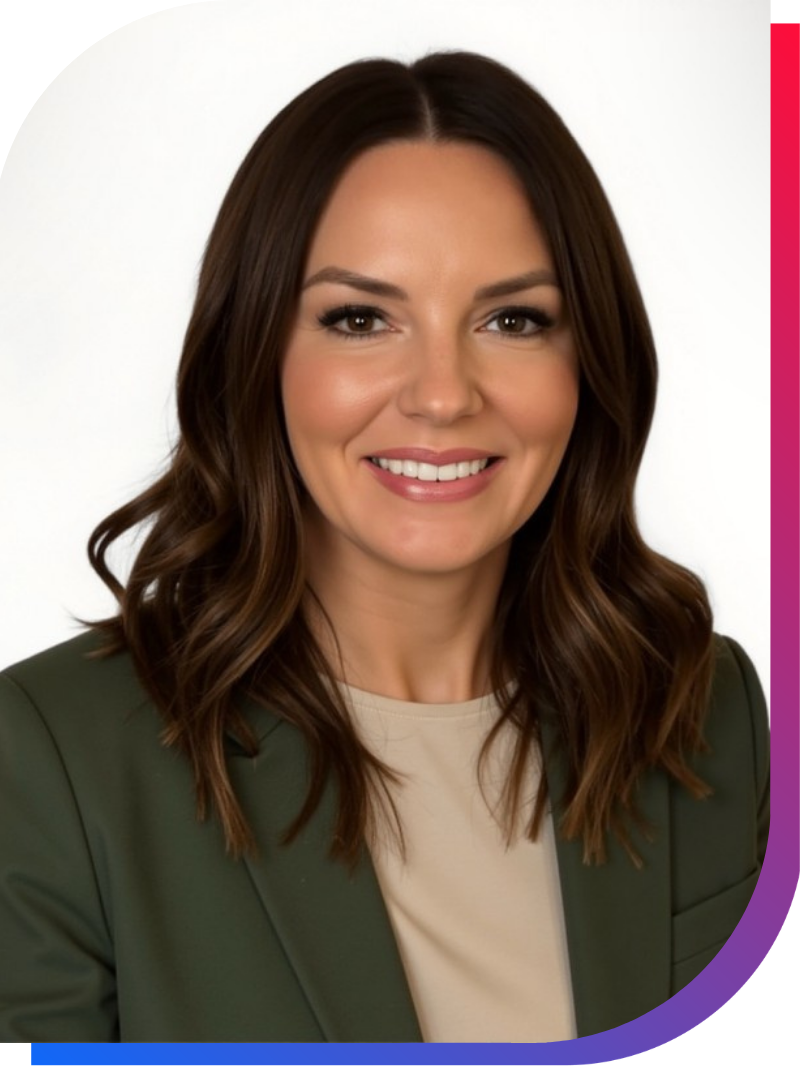
Brianna Peoples
AVP, Credentialing & Provider Enrollment
Privia Health
"If we do our jobs perfectly, nobody notices," Brianna Peoples says of healthcare provider credentialing and enrollment. "And if it breaks, everybody notices." That asymmetry is the reason so many healthcare organizations underinvest in the function until it fails, and by the time it fails, the damage has already reached patients, providers, and revenue.
Brianna leads provider credentialing and enrollment at Privia Health, an organization operating across dozens of markets with thousands of providers, each subject to different payer rules, state requirements, and accrediting bodies. On this episode of Don't Get Played, she joins host Matt Jaye to talk about why credentialing keeps getting mistaken for paperwork, and what that mistake costs.
The gap starts with how the function gets categorized. Most organizations file credentialing under administrative overhead, something that happens after a hire is made and gets forgotten about. Brianna's case is that this framing hides where the real risk sits, and how far it actually reaches into revenue, trust, and patient access.
The most common misconception Brianna hears, even from people inside healthcare, is that credentialing is just paperwork. Check the boxes, gather the licenses, push the forms through. In reality, it's the mechanism that determines whether a provider can practice at all.
"It really is like operational risk management," she says. "There's a compliance piece, there's a provider experience, there's revenue cycle, patient safety. It's all kind of rolled into one." A physician can be the best hire an organization has ever made, but if enrollment and credentialing aren't done properly, they can't see patients or bill payers, and access to care slows or stops as a result.
The downstream effects compound quickly. Delayed enrollment means delayed revenue, but it also means operational strain on the providers already carrying the patient load, a provider relocating their family only to learn they can't start on schedule, and a slow erosion of trust between clinical staff and the teams meant to support them. "People think that it's an administrative inconvenience," Brianna says, "but I think that it directly affects the ability to deliver healthcare."
What works for a small practice breaks the moment an organization scales. Brianna says that the institutional knowledge and manual workarounds that get a small team through the day become a liability once you're managing thousands of providers across dozens of markets, each with its own payer behavior, licensing rules, and contract terms.
The instinct to personally fix every problem, the instinct that made her valuable earlier in her career, doesn't scale either. "We like being the hero," she admits. "But I had to learn that standardization is not the enemy of quality. When you're scaling operations, you have to be consistent because it's critical." The goal is a repeatable process that doesn't depend on any one person catching what would otherwise fall through the cracks, rather than a string of individually heroic saves.
That view extends to how she talks about AI. She sees real value in it for document processing and administrative burden, but not as a stand-in for judgment. "It gets overpromised when people talk about fully replacing that operational judgment," she says, adding that credentialing teams "still have to have that experienced human oversight."
The single change Brianna wants senior leaders to make is a sequencing one: build credentialing into the recruitment strategy from the beginning, rather than treating it as the final administrative step after a provider is already hired.
She describes her team's role with a metaphor she returns to often: "I consider us to be a crossing guard, not a stop sign." The goal is to guide the process, flagging risk and explaining decision points before an organization commits to a timeline it can't actually hit. Too often, she says, organizations recruit aggressively without accounting for payer timelines or licensing realities, and credentialing becomes the scapegoat for delays that were predictable from day one.
The remedy isn't a single conversation. It's ongoing. "I think it's education and reeducation," she says, treating that repetition as a feature of the job rather than a failure of it. Every new hiring cycle brings people who haven't internalized the timelines yet, and repeating that education is what keeps the process from becoming a surprise.
Her framing puts credentialing back at the center of the hiring decision itself, the function an organization has to get right before a start date means anything at all.
Brianna Peoples:
What people miss is that a provider can't function without us. You can recruit the very best physician in the country.
But if enrollment and credentialing aren't done properly, they can't see patients, they can't bill payers, it kind of cuts access off. And so everything really slows down. So it's just one of those functions in healthcare that if we do our jobs perfectly, nobody notices. And if it breaks, everybody notices.
Matt Jaye:
Welcome to Don't Get Played, a podcast from Cisive.
This show is for talent acquisition leaders and people managers who care about trust at work. How it's built. How it's measured. And how leaders design systems that hold up when speed, risk, and accountability collide.
I'm Matt Jaye, SVP of Healthcare at Cisive.
Credentialing and provider enrollment is one of those functions that nobody thinks about until something goes wrong. When it works, it's invisible. When it breaks, providers can't see patients, revenue stalls, and the trust between a healthcare organization and its clinical staff starts to erode. And at scale, the stakes only get higher.
My guest today is Brianna Peoples, Associate Vice President of Credentialing and Provider Enrollment at Privia Health. Brianna oversees this function across dozens of markets and thousands of providers, and she thinks about credentialing not as an administrative task but as an operational risk management function.
Today we get into what most people inside and outside healthcare get wrong about credentialing. We talk about what happens to an organization when enrollment falls behind. We cover what breaks down when you try to scale processes that were built for smaller organizations. And we get into where AI genuinely helps and where it gets overpromised.
If credentialing runs well, nobody notices. The goal is to keep it that way.
Let's get started!
Welcome to the podcast, Brianna. We've been really excited to have this conversation with you. This is a topic that's near and dear to my heart, so, appreciate you joining us.
Brianna Peoples:
Yeah, thanks for having me.
Matt Jaye:
Absolutely. One of the first topics I wanted to dig in with you, because I'm really curious about this from your perspective and I have some opinions on it, but I think there's a lot of misconceptions when it comes to.
What's being done in credentialing, what your role is all the way through to bottlenecks, you know, the things that kind of stop up the process that folks might not be aware of. So maybe just kick things off, if I could ask you from your point of view, what's the most common misconception that you think people have about what you do?
Brianna Peoples:
Well, I would say for people outside of healthcare, I think that this role even exists or that this is a function in healthcare is probably the most common misconception that I hear when I tell people what I do for a living, they say, I, I didn't know that even existed. Or, oh, that seems important to have.
So the fact that the role exists at all is usually somewhat of a conversation starter. But I think that people also think that credentialing and enrollment is just paperwork. Like we just check boxes, we gather licenses, we push forms, but in reality, it really is like operational risk management.
There's a compliance piece, there's a provider experience, there's revenue cycle, patient safety. It's all kind of rolled into one, which really makes me so proud of the work that we do. And what people miss is that a provider can't function without us. You can recruit the very best physician in the country.
But if enrollment and credentialing aren't done properly, they can't see patients, they can't bill payers, it kind of cuts access off. And so everything really slows down. So it's just one of those functions in healthcare that if we do our jobs perfectly, nobody notices. And if it breaks, everybody notices.
Matt Jaye:
You made me think of something. You know, when. My wife is in the hospital, you know, giving birth with our kids. You think about all the blue coats, white coats that are in the room with you. And when I learned what credentialing really meant, I was like, thank God. Because there's so many people in the room.
And knowing that those folks have been properly vetted, they've gone through the appropriate steps. You know, I didn't really have a full understanding of it. I knew that, you know, background checks took place, but credentialing is much more of like a living, breathing thing. And I thought that was interesting.
The other thing I've heard a lot from folks is I think there's often a confusion or kind of a commingling of credentialing and enrollment. And they can both be functions of your department, but they're very separate items. Kind of curious if you tend to see that as well.
Brianna Peoples:
Oh yeah. So I think even when you talk to providers in, in the industry you meet a physician and you tell a physician what you do, they say, oh, you help me get paid. Well, so that's enrollment. And I, yes, we also do that piece. But our job is in the credentialing world and privileging world is to protect the patient.
To verify competency and oversee, you know, the life cycle of the provider. So absolutely, and I think the word credentialing oftentimes covers, it's all encompassing, right? So someone hears the word credentialing and it's just, that means enrollment. That means licensing, that means hospital privileging, that means vendors, you know, and all of those things.
And so it's such an all encompassing word that you really have to break down what you do, so, absolutely. I also, to your point with, you know, being in a hospital, having your own family in a hospital, to me kind of helps connect me to the mission of what we do. Knowing that it's my family in that hospital, it's my loved ones that might need that care one day, especially in the community that I live in.
So it, it absolutely keeps me very much connected to making sure there's access, timely access, there is safe access and all of those things. So, they're all related, but they're not the same.
Matt Jaye:
Yeah, I don't even think a lot of folks understand the ripple effect if somebody falls out of credentialing, you know, what that means from, you know, being considered in network, being able to provide services, all those things. So it's really serious business. I'm curious from a leadership perspective, you know, I think even internally within an organization, oftentimes folks don't understand all of the nuance that goes into it. Or why is this taking so long? Just wondering like what your perspective is on that and, you know, how do you educate folks within your own organization of, you know, one, the importance of it, but then also, you know, there are no shortcuts.
You have to go through this process.
Brianna Peoples:
Yeah. So I think that that's a misconception internally, that's a misconception externally, and I think the only people that really understand that plight are people who do what we do. So the way we, we hear a lot like, why can't we just expedite this? We have a provider ready to start in two weeks, how quickly can we do that?
And absolutely we can definitely control what we can control and improve pieces of our process. But there are timelines, there are verification requirements, there are payer dependencies that we have to depend on when it comes down to enrollment. But even for credentialing, there's timelines, right?
There are a million things that need to get done, number one. But then number two, there's meeting schedules and cadences by which we all have to perform those meetings, and there are steps in which we have to take, right? Certain levels of approval. And the process by which they're approved.
So even as fast as we might be able to work internally, there are so many external dependencies on what we do, and I think that's probably the most common misconception as to why things can't move quickly. Like I said, we can absolutely control what we can control and that's the tale as old as time.
But with the external dependencies there's only so much we can do with that.
Matt Jaye:
Yeah, I was blown away when I realized like how many different, for lack of a better word, actors there are in the process. How many different entities touch credentialing? And you know, I always think about these things. It's kind of a series of dominoes, right? If one domino doesn't lay right, then the downstream impact can be pretty significant.
Can you talk a little bit about, from your perspective, what happens when enrollment falls behind and, you know, what are the ripple effects that that creates for the organization, whether financially or otherwise?
Brianna Peoples:
Yeah, so I think it's all right. The ripple effect's huge. So it like delayed enrollment means delayed revenue. There's operational strain, there's scheduling implications because no one's hiring a provider just for fun, right? There's normally a hole that needs to be filled. There's scheduling, there's patients that need to be seen.
So not only is revenue just one piece of it, but pressure on existing providers who might be carrying heavy patient loads. From a provider perspective, it's incredibly frustrating, right? If you view it as a bureaucratic, red tape, onerous process. And then imagine relocating your family, joining a new organization, being ready to work, and then finding out that you can't even practice because somewhere it's behind.
And it just creates this distrust between the providers and the enrollment team or the credentialing team. And then obviously for patients, access suffers, like the availability of their, the availability of appointments. It doesn't exist. The wait times grow and then there, there's access.
It's just lost. And then there's a care, the trust that's built between the healthcare system and the patients and the communities. And then I think trust kind of dissolves there too. So, they think, people think that it's an administrative inconvenience, but I think that it directly affects the ability to deliver healthcare.
Matt Jaye:
My head's spinning and I'm think, I'm just thinking Brian like. I'm sure nothing keeps you up at night when you think about all these things, right? It's it's
Brianna Peoples:
I lay awake at three o'clock in the morning and think, well, I need to do this, this, and this, and this, this, and this. And if you just always keep in mind the provider and the patient at the end, right? I think we all need to remember we're on the same team. And that's the goal. It can absolutely keep you up at night.
Matt Jaye:
We always think about the do no harm approach, right? Like, let's make sure. You touched on it before the bureaucracy of the red tape, but we have to take a step back and think like, why are we doing this in the first place? Right? It's about patient safety. It's about taking care of the providers.
So I, I appreciate your insight on that. That's probably a good segue into what I wanted to talk with you about next, which is doing all of that at scale, right? So I think about it. This is hard enough to do when you're talking about a small practice that may only have a handful of providers and, you know, a couple folks maybe doing this work.
When we talk about an organization like Privia, correct me if I'm wrong here, but you guys are operating across dozens of markets. You have thousands of providers. You know, you have rules in different areas. You have, you know, NCQA or Joint Commission, different accrediting bodies that you have to keep in mind.
What does that complexity do to the operation?
Brianna Peoples:
Well, I say scale changes everything, right? Smaller organizations. To your point, you can kind of rely on institutional knowledge or maybe some of that homegrown information that you've kinda learned along the way. You also can depend on manual workarounds, right? So if the system's not working for you just perfectly, you can find ways to work around that.
But at scale, that becomes a liability. So with every market, to your point, having different payer behavior, different state requirements, different provider types, different license types, different contracts, and different realities, it just becomes that a standardized process is the only way to be able to handle things at scale, but still be flexible enough to handle local complexity because that is the nature of the beast. And you also have to think about things like communication, prioritization, automation reporting, being able to speak to your executive team, maybe to a board of directors, in different ways, right?
And then small efficiencies just become massive. So what worked for a small organization, being able to do one-on-one communications with brand new providers, that doesn't work anymore when you're onboarding a hundred providers. Being able to meet with a payer on a weekly basis doesn't work when you have 30 payers.
So you have to start thinking about ways to have operational wins and successes and being able to prioritize what scales for you. So I would say that absolutely that, and that knowledge that you have from being a small group moving into scale, just it doesn't translate, it's a liability.
Matt Jaye:
Yeah, one, one thing we didn't talk about yet, but I think sometimes folks forget it's not just credentialing, but it's re-credentialing. So you have reappointments and different cycles that people are coming due for those reappointments. I'm guessing that's adding a layer of complexity as well.
'Cause it's not like all thousand providers are getting re credentialed on the same date. There's a lot that you have to keep track of and make sure people don't fall out of compliance.
Brianna Peoples:
Oh, absolutely. That becomes a full-time role in and of itself, being able to just monitor the life cycle, right. Licenses expiring, board certifications, expiring the provider's appointment or credentialing, cycle expiring. Being able to move them through a process. Absolutely. And multiply that.
Matt Jaye:
Yeah, so we all know it. Not everything always goes perfectly. I'm thinking in general terms here for large organizations where the process typically breaks down within large organizations. 'Cause to your point, Brianna, the larger, the more complex and obviously you have to have really clear systems and processes in place. Where do you typically see that orgs are having challenges?
Brianna Peoples:
So, usually it's a systems problem, not a people problem, right? So our teams are filled with just incredibly hardworking people, and I'm proud to be a member of the team and of this industry that we work in, but. I think the breakdown usually happens when organizations underestimate the complexity of the work and there's disconnected workflows, things don't scale, and then also aligning departments around just timelines and accountability, right?
Being able to say, this is how long something takes, and holding folks to that. It also, you know, helps build the trust so technology can help. But. Just to that point about scaling, bad processes at scale are still bad processes, and those absolutely create bottlenecks and liabilities for what we do.
So I would say that the process breaks down from systems, not people, not technology, it's just the systems built around those things.
Matt Jaye:
Were there things that when you joined Privia, or maybe even not you personally, but you know when folks joined the team that maybe they've grown accustomed to a certain way and now it's a larger organization, and to your point, systems and processes change, I guess, in generality. Are there things that you kind of have to unlearn from earlier roles to be able to operate at the scale that you guys are operating at?
Brianna Peoples:
Absolutely. And I would say this is something I'm still unlearning and I think this is why MSPs are so successful at what we do. But I had to learn and I'm still learning to stop trying to solve every problem personally, and that is a difficult thing to do. But I would say I, you know, earlier in my career, and I think it kind of happens when you aren't an organization at scale yet, and maybe you're doing a startup or you're early in your days.
And you know, I was the person that I could jump in and solve and fix things, and that was valuable, right? And that's what got me where I'm at. But at scale, that breaks down. I can't personally handle everything, and I have to remind my team members that they can't personally handle everything that comes to them.
So you, you have to build systems that function consistently. Without, depending on a hero, you know, and that's hard for us 'cause we like being the hero. We like being the one to jump in and solve the problems. We like being the ones that find the one little thing, the one little nugget that changes everything.
But I had to learn that standardization is not the enemy of quality. When you're scaling operations, you have to be consistent because it's critical. And so, the goal is to build the repeatable process, you know, that we can bring at scale.
Matt Jaye:
Yeah, it's interesting to hear you share that because I think sometimes there's like this competition between speed and quality and you know, overall rigor. And you know, it may be a cute sign at a restaurant. Do you want it fast? Do you want it good? Do you want it cheap? You can't have all three. But it sounds like in, in your world, right, if you build out the right systems and processes, you don't have to sacrifice quality for the sake of scale or quality for the sake of speed.
It feels like from what you shared, they can really all live in the same world if you've built good systems. Is that fair to say?
Brianna Peoples:
Absolutely. They're not mutually exclusive things, and it's difficult coming from smaller organizations to remember that technology is not the enemy. AI is not the enemy. I keep saying you all, you still need a brain, right? And so, remembering that we need to work in harmony with these items.
Matt Jaye:
As you're sharing that, I'm thinking back to what you talked about earlier. I was just looking at my notes from a comment that you made about the experience for the providers when they come on board. And that really makes me think about just trust in general in the process. You know, if I heard you right, what you were sharing is, you know, that's the first impression a provider has of your organization.
And they may be moving across the country, they may be making sacrifices, and if your processes aren't in a row, you know, they could be in for a rude surprise that. I know you were expecting to start, but now we're gonna have to push this back by however many days. I'm sure that creates a lot of pressure on you as a leader and the organization as a whole.
I'd love to just get your perspective on, you know, what does that mean to you personally? You know, I get the sense that you take this really close to heart and it's kind of part of the ethos of the org that, you know, it's not just the bureaucracy, it's not just the red tape. But to you, what's it mean to be a leader and, you know, having these clinical teams rely on you?
'Cause at the end of the day it's their livelihood and their family.
Brianna Peoples:
Yeah, so I take it really personally, and that is because it's someone's livelihood. But then the other side is that you know, it's patients. And so trying to find that middle ground and the balance and the safety, and I don't think that there's any provider out there doesn't take their Hippocratic oath absolutely to heart, you know, and want to do good, but it is still our job to make sure that they are.
Safely able to see those patients. But then the other side of that's also the enrollment and the provider abrasion, the patient abrasion and all of that. So as a leader, I think it's my job to, number one, take the job personally and always take it personally no matter how small or how large of an organization I'm at.
But then secondary to that, make sure that my team is supported in what they're doing. I think that they also need to make sure that they stay connected to the mission and understanding the value in what we bring and go all the way back to the very beginning of this discussion to remember that we're providing access.
These are the communities that we live in, we. We, our children grow up in that. Our parents see these providers that are the people we worship with, you know, go to these hospitals and these clinics and remembering what we do and why it's so important. And so always trying as a leader to remember the human side of the things that we do.
And I, I think that's, that's really what makes this job important to me.
Matt Jaye:
Yeah, that, that's amazing and I love to hear that. I wanted to go back to something that you talked about a little bit earlier, and that was operating at scale and systems and processes. And you mentioned that, you know, more times than not, it's not the human element that is the bottleneck. It's a broken system or, you know, a technological issue or something like that.
I think in the world we live in, obviously we lean on technology really heavily. And then there's certain things that require that human lens, right? Like AI can't replace what your team does, but I think it can probably support it in some ways. So I'm curious with just all the talk right now about AI in general and how that could be potentially transforming credentialing as a whole.
Like what's your honest read on that and what are you seeing? Is it a help or a hindrance to your organization?
Brianna Peoples:
I think it's a help. And there's not anybody breaking down the door to do credentialing or provider enrollment. It's a field that I absolutely love, but I often joke that I didn't have a credentialing Barbie growing up. There was not, there wasn't a, a pathway that I knew of.
It's not a college degree pathway. So oftentimes this is somebody knowing about this role and getting into it you know, really purposefully. So, where we can leverage technology and AI and be able to make ourselves more valuable in these roles is absolutely crucial. And I think that's just the world we're in today, at 2026, right?
If you would've asked me five years ago if I thought AI had as much, I probably didn't know what AI was quite like I do today. So. It's changed a lot, but I think that the potential here is really around like document processing work, workflow management, data monitoring, and just reducing some of the administrative burden of the things that we do.
But I do think that it gets over promised when people talk about fully replacing that operational judgment, the payer strategy. The compliance expertise because it's so full of nuance what we do. And like I said earlier, you still have to have a brain. And so, AI is definitely has its place, but there are exceptions.
There are gray areas. We have to have some risk decisions, contract interpretations, provider specific situations, and you still have to have that experienced human oversight. And then of course, the human to human touch, right? Providers are humans as well, so we need to be able to make sure we stay connected to that. So I think that it can make a good team more efficient, but it is not a magic button that removes complexity from healthcare operations.
Matt Jaye:
Could. I couldn't agree more. I think those insights are spot on. I mean. Obviously our roles are different, but we use AI a lot here in our day to day, and I really view it as an assistant, right? It helps me get some of the mundane tasks processed faster so that it allows me to focus a bit more on the more intellectual tasks, you know, things that I really need to.
Have a human lens on a human level of judgment, on so it's good to see that our jobs are not gonna be replaced anytime soon by AI, but they certainly help us become more efficient. So, love that take. I guess as we look to wrap things up a few things that I wanted to ask you about that I think are gonna be valuable to the audience, just, you know, given the size of your organization, the complexity, if you could change one thing about how senior leadership, whether it's HR or other talent leaders, think about credentialing is there anything, you know, that immediately comes to your mind like, man, if they could just understand this, the world would be a better place.
Brianna Peoples:
Yeah, absolutely. Where do I start? So I think that if we could stop viewing, credentialing and enrollment as a final administrative step after recruitment, that it's, it should be integrated into the recruitment strategy from the very beginning. So the earlier that we're involved and have a seat at the table, the outcomes are better for everybody.
I try to tell my team that I consider us to be a crossing guard, not a stop sign, right? We wanna be able to guide the process, make sure we're consultative, make sure we're at explaining risk, explaining decision points, right? If you do this, this is what happens. If you don't do this, this is what happens.
I think that too often organizations recruit really aggressively without fully accounting for just the reality of onboarding for the reality of payers and their timelines. For market specific complexity or licensing timeframes. And then credentialing and enrollment kind of becomes a scapegoat for delays when really they were predictable from the very beginning.
So just making sure that we're stay really integrated with the process would be the most valuable.
Matt Jaye:
All right. So it sounds like, if I'm hearing you right, getting that seat at the table is really important and having a voice in how the organization sees this, but it sounds like there's a lot of education that needs to be done so that folks aren't just writing this off as an administrative task and they kind of understand a lot of the nuance that you shared today.
Brianna Peoples:
Yeah, and I think it's education and reeducation. And reeducation, right? Because I don't expect anybody who might be recruiting for a new physician for the first time in a practice to understand the complexity every single time. I don't expect them to understand it.
The 10th time, I often say that I want credentialing and enrollment to be my function, not yours, and I want you to let me do it right. So, I don't mind educating and reeducating and telling people timeframes and what to expect and what the nuances are over and over again. To me that means that I'm doing my job and I'm doing my job well and there are no surprises, and we can make sure we remain trusting of each other as well.
Matt Jaye:
I appreciate that. Last question I have for you and, I guess as we're thinking about technology and all these investments that organizations are making there's a bit of a dichotomy. There's the human element, there's the technological element. Outside of making a major technology investment, is there anything that's, I guess, top of mind that you would say, you know, this could be something you could implement pretty quickly without a major investment that would have a significant impact on your organization?
Or maybe more specifically to prevent delays.
Brianna Peoples:
So I think, I'll, I'll say this, I'll say it again, and I think we've kind of alluded to it a little bit throughout this. Providers, operational leaders, they don't do credentialing and. When a provider graduates from a medical school or a program, a PA school, a nurse practitioner school, they're not often again, this is a last step in an administrative process, right.
Credentialing and enrollment. I think one area that we could be really helpful in, if we ever get there and if I could just wave a magic wand I would love for there to be the ability for the providers to share information amongst organizations, I don't know that we'll ever get there, but if I could wave a magic wand and ask for something technologically, that would absolutely help providers and reduce the administrative burden for them, because I'm also very aware that I'm one administrative burden in a very complex healthcare landscape.
If I could do one thing to bring that down for them. I would love for organizations, state medical boards Medicaids and Medicares and all of those things, be able to share the information with each other to reduce some of that friction that happens to exist in the field.
Matt Jaye:
It's interesting you say that, and maybe we'll ping you for another podcast in the future, but I do think that's the future, right? It almost like a blockchain of validated credential information that regardless of where that provider goes to. You know that you have reliable, validated information. So, cheers to that magic wand and I want to thank you for spending time with us today sharing your thoughts.
This is really interesting and I can't wait for this podcast to drop. So thank you so much.
Brianna Peoples:
Yeah, absolutely. Thanks for having me. I really appreciate it and I love talking about this kind of stuff.
Matt Jaye:
Credentialing doesn't get a seat at the table often enough. And when it doesn't, organizations end up recruiting aggressively without accounting for payer timelines, licensing complexity, or market-specific requirements. Then the delays hit and credentialing takes the blame for problems that were predictable from the start.
The other thing that stuck with me is the distinction Brianna draws between a stop sign and a crossing guard. The job is not to block the process. It is to guide it, explain the risk, and make sure everyone understands what happens when steps get skipped.
And on the question of AI… it can make a good team more efficient. It cannot remove the complexity. The gray areas, the payer strategy, the provider-specific judgment calls. Those still require experienced humans.
Thanks to Brianna for her candor and for making a genuinely underappreciated function feel as important as it actually is. If you work in healthcare talent or operations, share this one with a colleague who thinks credentialing is just paperwork. And subscribe to Don't Get Played on Apple Podcasts, Spotify, and YouTube.
We'll see you next time. And remember, in the meantime… don't get played.
with Melissa Wheeler
Listen Now
with Christy Choice, Amanda Worthen
Listen Now
with Linda Brenner
Listen Now


Book time with one of our screening experts to find out how we can streamline your talent process with a free assessment
Get your free assessment