Episode 3
Clinical Onboarding & The Placement Gap: Getting Students from Campus to Clinic Is Harder Than It Looks
31 mins
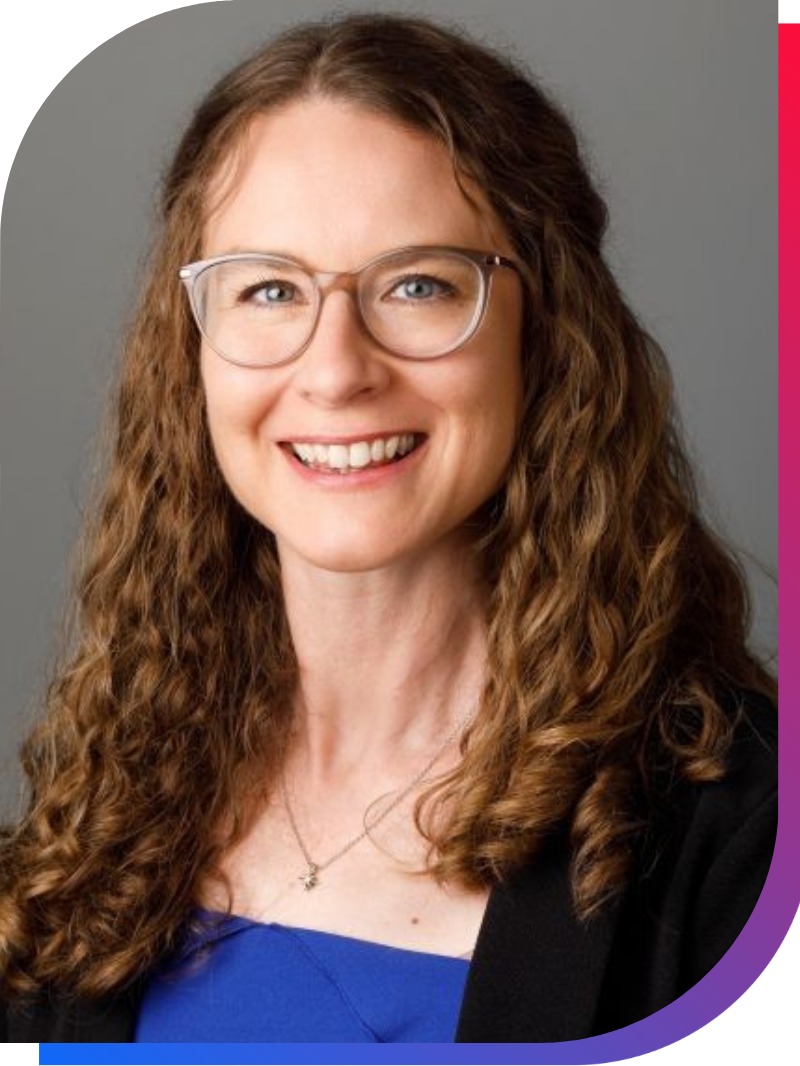
Heather Pierce
Director of Rotations
Kansas College of Osteopathic Medicine
• 32 min
The Placement Gap: Getting Students from Campus to Clinic Is Harder Than It Looks
Don't Get Played
Play
Nine out of 10 healthcare program students run into onboarding problems before they ever set foot in a clinical rotation. That's not a rounding error. That's a system that's quietly failing the people it's supposed to serve.
On this episode of Cisive's podcast, Don't Get Played, host Matt Jaye sits down with Heather Pierce, Director of Rotations at the Kansas College of Osteopathic Medicine (KansasCOM).
Pierce’s school runs a deliberately distributed clinical model — with students at hundreds of hospitals and clinics, many in rural communities — because that's central to their mission. But distributed means fragmented. And fragmented means Heather is managing 366 active clinical sites with two coordinators and a process that's different at every single stop.
Her view is pragmatic: The pipeline isn't broken because students aren't trying. It's broken because systems weren't designed with students in mind. Her experience mirrors the operational reality facing many healthcare education programs, according to Cisive research. The next generation of healthcare workers — the students Pierce is nurturing — is being held back by fragmented, manual processes that delay clinical readiness and strain relationships between schools, students, and clinical partners.
The Clinical Onboarding Friction Points Nobody Talks About
Heather doesn’t believe that students are dropping the ball. It's more nuanced. Every site has compliance and healthcare background check requirements. The problem is that no two sites have the same ones.
Some want documents emailed directly. Some require students to create accounts in a third-party platform — and occasionally pay for the privilege. Some send onboarding instructions from a system name nobody recognizes, and the email goes straight to spam. Heather remembers one site requiring an on-site drug screen on the first day of rotation, which created delays when lab results were slow to come back.
"Every single location is different," she explains, "and students don't know what to expect because it's the first time they've experienced this hospital or clinic."
That's the core problem — not negligence, but constant novelty. Nearly every administrator we surveyed said that students face at least occasional delays due to clinical site onboarding or documentation issues. Certainly, it’s important to verify credentials, complete healthcare student background checks, and weed out fake licenses and impostor nurses. But with clinical capacity already limited, preventable delays make staffing problems even more difficult to address and make it harder to reduce average time to hire in healthcare.
Why Screening Delays Derail Student Clinical Placements
Delays compound, and they create other problems. When a student arrives without completed documentation, the site can't set up electronic medical record (EMR) access or print a badge. The dayslong onboarding sequence remains on hold. The student loses time — sometimes a week, sometimes more.
"When students are off-schedule," she says, "they're not following the set plan with the rest of their classmates — and things do become a bit messy."
What the Data Says About Clinical Placement Breakdowns
Delays are pervasive. Our research showed that, among students who had begun clinical placement approval or onboarding, 88.5% encountered at least one challenge.
In the fourth year, that's manageable. A four-week rotation becomes a three-week rotation, and the student makes up the last week later on.
Third year is a different story. Core rotations run on a fixed-block schedule. Miss one, and you're pushed to the makeup block at year's end.
"If that happens more than once," Heather says, "it could impact their graduation date."
That’s not the only ripple effect. Delayed students compete for preceptor slots with the incoming class. The harder-to-find rotations — surgery, OB-GYN, psych, peds — have the tightest supply of preceptors. If a student needs a makeup slot in one of those, they're competing with the next cohort for spots that are already spoken for.
Clinical Sites Are Asking for More Lead Time
The deadline window is shrinking — or rather, sites are expanding their own window.
What used to be a one-week lead time for students to deliver onboarding documents is now two months at many locations. Sites are wary enough of missed deadlines that they've proactively created buffers.
"I have noticed our sites push it back," Heather says. "I don't know if it's because they've discovered there's so much more they need to do to be ready, or that they've learned over time that students tend to miss the deadline."
The answer could be both.
The relationship risk is real. Clinical sites aren't obligated to keep accepting students. They're partners — and partners that get burned too often will start second-guessing. "They have the right to say at any time, ‘We're going to stop taking your students,’" Heather notes. "We don't want to be difficult."
How Healthcare Programs Can Streamline Clinical Onboarding
There's no single platform fix here. Heather knows it. She'd love full interoperability — a world where students upload once, and every site pulls what it needs. "That would be lovely," she says. "Unfortunately, I just don't know that there would ever be enough consensus."
She’s not wrong. Our research showed that 99.3% of students navigated more than one system during screening, with the vast majority using two to four platforms. This reality clashes with the 31% of students who specifically want a single, unified platform for screening tasks.
The Role of Background Screening in Faster Clinical Placement
The practical solution, for now, is more deliberate than revolutionary and reflects healthcare employee onboarding best practices: Collect onboarding requirements from every site up front, put them somewhere students can actually find them, centralize immunization tracking for healthcare programs, automate reminders where possible, and communicate in ways that drive action rather than inbox clutter.
"How we communicate with our students is a very key piece of this," she says.
Part of reducing delays is better communication and integration, including automated healthcare employment verifications where clinical placement connects to hiring. One of the biggest takeaways from our research is the desire for standardized requirements. In addition, nearly 60% said that easier integration with institutional and clinical systems would most improve their screening process.
The clinical placement pipeline is broken in ways that are boring and operational but also entirely fixable. But the fix isn’t a moonshot. It can’t happen all at once or through a single, sweeping platform change.
A better way is possible: site by site, process by process, automation by automation. Heather Pierce is doing it with 366 sites, two coordinators, and a very good spreadsheet. Most programs don’t have an excuse not to get started.
Transcript
Heather Pierce: Currently, in this academic year, with our third-year students and our fourth-year students out on rotations, they’re at 366 different sites. But with that comes also the challenges that every different hospital system or clinic wants to receive their onboarding materials in different ways.
Matt Jaye: Welcome to Don't Get Played, a podcast from Cisive.
This show is for talent acquisition leaders and people managers who think seriously about trust in the workplace: How it's created, how it's maintained, and how the systems behind hiring, onboarding, and compliance actually hold up when speed, risk, and accountability all collide.
I'm Matt Jaye.
In this episode, we're focusing on one of the biggest operational challenges in healthcare education: getting students from the classroom to the clinical site.
On the surface, it sounds simple. But once you start looking at the number of hospitals, clinics, onboarding requirements, and systems involved, it becomes clear how complicated the process can get. When something slips through the cracks, the consequences can affect students, schools, and clinical partners alike.
To help unpack this, I'm joined by Heather Pierce, Director of Clinical Rotations at the Kansas College of Osteopathic Medicine.
Heather oversees a distributed clinical model where students rotate through hundreds of different clinical sites, each with their own onboarding requirements, systems, and timelines. In our conversation, she shares what those operational realities look like day to day, where the biggest friction points show up for students, and how programs can start tightening the process.
Let's get started!
Matt Jaye: Heather, welcome to the podcast. I've been looking forward to having this conversation with you.
Heather Pierce: Well, thank you. I'm excited to be here.
Matt Jaye: Before we dive in with a little bit of background on what we're going to be talking about today, can you tell us a little bit about the program you're responsible for?
Heather Pierce: Yes, so I am with the Kansas College of Osteopathic Medicine, and we are the first osteopathic medical school in the state of Kansas. So we're very excited to have that honor. And our inaugural class started in 2022, so we're at a very exciting time where our very first class of students is graduating this year. And so I am the director of clinical rotations, and so that means I work with the students in their third and fourth years, when they're out doing their clinical rotations.
And so this is an exciting time where, for the first time, we're dealing with three different classes. We just placed our second years with their schedule for next year. Our third-year students are out doing their clinical rotations, their core rotations for their third year, and they are working on preparing for their fourth-year sub-I audition rotations and electives. And then our fourth-year class is finishing up their last year, finishing up those last rotations, doing their rank order list. We're getting ready for Match Day, coming up in a couple of weeks, and then they'll graduate. So it's a very exciting time for our department.
Matt Jaye: Awesome. It sounds like there's a lot of spinning plates going at one time.
Heather Pierce: For sure.
Matt Jaye: Fantastic. Well, again, thank you for joining us. A little bit of background for our listeners. We were really interested in, overall, examining some of the friction points that we see getting students from the classroom to their clinical site. And in your role, I know that you have a lot of unique insights on that and wanted to just pick that apart a little bit more.
One of the things that we did recently is, we commissioned a benchmark survey. And in doing so, we surveyed several hundred students and program administrators to get a sense from their perspective of, what are the challenges? Are there challenges, first of all? If there are, what are those? And there were a few key themes that we heard from both groups from that survey that I thought were really interesting, and maybe we could use that to kick off our discussion.
Among those were, they actually said clinical placement was the number one operational inefficiency that they were dealing with. From a student perspective, roughly nine out of 10 were hitting some type of onboarding challenges. And the overall takeaway that we got from the respondents was, they all want fewer systems. They want less friction. And the bottom line is, it's costing time, talent, trust in the process.
So I'm curious, from your perspective, as we think about the pipeline itself and the fact that it's not working optimally, why do you think that is?
Heather Pierce: I can tell you, from our perspective, especially since part of our mission is serving the underserved and helping to address the disparity in healthcare, we purposely have a distributed model with our clinical rotations. So what that means is our students are going to many different hospitals and clinics, often in rural communities, to help address that issue. But with that comes also the challenges that every different hospital system or clinic wants to receive their onboarding materials in different ways.
And then, as our students go out and do their sub-I audition rotations or electives in their fourth year with some of the larger hospital systems, then it's the same story there — that each one will have a different way that they onboard their students and ask for that information. And sometimes, that does mean that our student has to create an account in their management software system in order to upload those documents. Sometimes the students even have to pay for those accounts. And when our students are moving around and accessing different systems, that means that they have to invest the time, talent, and everything you just said in order to get everything squared away so they're ready to start their rotation.
Matt Jaye: Wow, so if you had to ballpark it, how many different systems, on average, are you seeing your students having to work within?
Heather Pierce: Well, actually, I just pulled a report for our president yesterday, and currently in this academic year, with our third-year students and our fourth-year students out on rotations, they’re at 366 different sites.
Matt Jaye: Wow. So among the different sites, I mean, is that two, three, four, or five different systems that they might be using, like one individual student having to go through that many different systems?
Heather Pierce: Correct. So each place that they're onboarding could very possibly ask them to access the system. Many times, they just want them to email their coordinator their background check, drug screen, immunizations. Other times, we just need to attest to that as their school. We simply send a letter of good standing, which we say that the student is up to date on their immunizations, they have had a clear background check and drug screen, and they are willing to take that. And so every time it's a little bit different. So they may not have to access a different system each time, but they do need to understand how they onboard and how that information is cleared for them.
Matt Jaye: I'm just curious, what kind of feedback do you get from students on the process? Is that creating any sort of frustration or friction from their point of view?
Heather Pierce: It certainly can. Our students are very busy, and their focus, of course, is on their rotations, performing well. They have to adjust to a new system, to a new preceptor that may have different rules for how the rotation works. All the while, they're studying for their COMAT exam that they'll take at the end of that rotation. Then on top of that, they're also studying for their large board exam, which for osteopathic physicians is called COMLEX.
So they have a lot going on that they're trying to manage. And sometimes just the small details, like remembering to send over your immunizations to your next rotation, gets lost in the shuffle. And it creates stress for them, just trying to remember all the little pieces they need to keep up with.
Matt Jaye: I can imagine. And, particularly with the intensity of a DO program, I think that makes it even more challenging. Just kind of thinking out loud as you're describing this, how much of that process is automated for the students? How much of it is, you know, manual, either on your end, somebody having to prompt the student and remind them along, or the clinical site doing that?
Heather Pierce: Well, it's a bit of both. And so, for example, we do utilize the student check pretech services for our drug screens and our immunizations. And it's very helpful that, let's say, their tuberculosis is going to expire, the Century MD system sends out an email to the student 60 days, 30 days before, reminding them that this is about to expire, you need to get this taken care of. And so that is automated so that neither I nor the student have to remember. Now, they do have to pay attention to that email and get it taken care of, but in that sense, it's automated.
And then some of their fourth-year audition rotations, they apply for those through the AAMC's portal, which is VSLO. And through that, if they're applying for many different electives and sub-Is through that system, they can upload all those documents once into the VSLO system. And then every time they submit an application, they can attach that and send it out with it. And that helps keep it automated, but not every hospital or clinic uses that system, and it's completely their choice. And so they may need to apply outside of the system, and then it is up to them to keep track of, now am I required as a student to send in these documentations, or do they work with my school and my school attests that I'm cleared and ready for this rotation, and my school is handling it? And so it's really different every time.
Matt Jaye: So it sounds like there's not necessarily standardization across the board or interoperability. Is that something that you see as an opportunity? Like, if we think ahead to a better future state, if the systems could talk to each other better and be more interoperable, do you feel like that would have an improved experience for the students and for your team, too?
Heather Pierce: For sure, if they were able to talk to each other, and so the student didn't have to reupload it to a new system. Or even better, if everyone just understood, for any type of clinical experience, then we are all using the system. The student uploads it once, or we do it once as the school, and then it's done. That would be lovely. Unfortunately, I just don't know that there would ever be enough consensus, when we're dealing with all these different large hospital systems, and agreement to all use the same system. But it certainly would be nice if they talked to each other.
Matt Jaye: Yeah, for sure. The other thing where my mind kind of goes when we have these types of conversations is, ultimately the students that you're bringing into these programs, they're looking to get employed afterwards. And we know that there's a critical shortage in healthcare, whether it be physicians, nurses, across the health sciences spectrum, right? As we talk about these challenges, we see it as delays from getting them from campus to clinical, but I'm curious how that shows up in the real world.
So in other words, because of these friction points, do you see that delaying students being able to start clinical or complete clinical on time. And then, in turn, does that have a domino effect in terms of how quickly they can get employed and start entering the workforce?
Heather Pierce: We're very lucky. We have not seen it a lot. But I have had it happen where students, unfortunately, they did not get all their documents in on time. Maybe it was a miscommunication or misunderstanding. They thought we were sending it as the school, we thought the student was sending it, or they didn't understand that the site needed this information ahead of time. Because those sites need to set them up with EMR. They need to print their badge. There's usually several tasks that need to be done on their end that can't all happen right away if the student shows up the first day and hasn't submitted everything beforehand.
And so we've had some students that had to delay a week and had to miss a week of their rotation. And in fourth year, our students have more flexibility, so that four-week rotation just becomes a three-week rotation, and they've got to do an extra week later. And that's a little easier to make up.
In our third year, that is harder, cause our students are doing what we're calling core rotations, where everyone has to complete those same rotations. And we schedule those as their school, and we're following a set block schedule so we can organize testing and everything that goes along with those rotations. And so having a student lose a rotation means they become delayed. If they miss that entire rotation, then at the end of their year, they are making up that four- to five-week rotation. And as you said, that sets them behind. And if that happens more than once, then it could impact their graduation date, and they could end up having to graduate later in order to get all their required clinical hours in.
Matt Jaye: That's really interesting, so does that, in turn, have a domino effect on the program itself? So in other words, if you have a set number of spots for students and somebody were to get delayed and have to extend out, would that impact your ability to place other students, or is that nonrelated?
Heather Pierce: It can. So in third year, if we have a student redoing a rotation, we have kind of a month off where students are studying for COMPEX between their third and fourth year. And so that's kind of what we call our makeup block. And so we have preceptors in there that were ready to schedule those students who are doing a makeup rotation. But if it happens again, and they become double-delayed — they have two rotations to make up — then that is cutting into the beginning of our next class. And they have their rotation scheduled. I have my preceptor scheduled with that next class. And it becomes very difficult, sometimes, to find a spot for a student, especially in our harder-to-find rotations, which tend to be general surgery, OB-GYN, psych, and peds. Those tend to be the ones that we have the hardest time finding preceptors for.
Matt Jaye: As you're describing this, I have this picture in my head of you being like an orchestra conductor and everybody having to be right on time and right in the right place at exactly the right time. Otherwise, stuff can get a little bit messy.
Heather Pierce: Sure. Yes. And when students are off-schedule, you're right. It just gets messy 'cause they're not following the set plan with the rest of their classmates, and things do become a bit messy when that happens.
Matt Jaye: Yeah, so that's a good segue into the student experience. And we think a lot about that here. We want to reduce friction points on that end of things. In the benchmark survey, one of the things that came up from the student respondents was — and we were kind of surprised it was this high — but nine out of 10 of them had reported challenges during the placement-approval process. And a second ago, I think you touched on some of that.
I think about this as being like this holistic onboarding placement process. It's not just the background, it's not just the immunizations, it's the coordination with the facilities and all those other things. But, you know, 90% is a pretty high number. Outside of what you shared, are there any other examples that you have of maybe what those students are experiencing that you see as causing those problems? I guess in my head, I don't know if it's like outdated processes or technology, or there's just so much coordination going on, it's inevitable to happen.
Heather Pierce: You know, I think a lot of it has to do simply with the fact that every single location is different, and students don't know what to expect, cause it's the first time that they've experienced this hospital or clinic. One example we had, we had sent ahead all the student's information, but what we didn't understand was that they required a student to have a drug screen that day when they started their rotation, and then they were not able to start until the results came back, and there was a delay in it outside the student's control. Something happened at the lab on that site. And so they had to miss a week of the rotation while they waited for that to come back.
Other issues is, if a hospital or clinic uses their own system, sometimes their emails they're sending out to the students get sent to their junk or spam. Or we all live in this world where we're a little worried that it could be a phishing email, and the student simply ignores it because they don't recognize where that came from, understanding that that is from their hospital that they're rotating at next, cause it has a completely different name and just a short, general “click here.” And they didn't understand that that was their onboarding for that hospital, and then it got missed. And so those are some examples that I've seen where students arrived and were not properly onboarded, ready to start that rotation.
Matt Jaye: Is it usually the hospitals who are the ones sending out the communications to your students on the onboarding process, the next steps? Or does that filter through your office at all?
Heather Pierce: Typically, it goes directly from the site to the student, especially being a newer school, and our class sizes have grown so much. Our first class, we had 90 students. Our second class, we had 137. Our third class, we have 184, and that's where our class size will stay. And I have one coordinator for third year and one coordinator for fourth year. And so because of those limitations and the staffing we have, there's simply no way that one coordinator could do all those pieces for every student.
So our students are told upfront that it is your responsibility to check in with your next rotation, to understand what their onboarding is, and to make sure you've submitted all the correct documentation.
Matt Jaye: Got you. We talked a little bit about what delays can mean, and you shared some information on that. And I feel like I have a pretty good grasp, from what you shared, of what that means from the student's perspective, what that means from the school's perspective. But one thing we didn't get into is, what's that mean for the clinical site? I'm curious, from a relationship perspective that you have with them, is that impacted if a student's delayed? Does that put anything at jeopardy of being able to get students placed there in the future if delays are persistent or that becomes an ongoing challenge?
Heather Pierce: Yes, it certainly can. And we work very hard to build good relationships, especially with our third-year core sites, where we're sending students over and over again. We depend on them. They are an integral part of our students' education. And so, yes, we want to keep them happy, and they also have the right to say, at any time, “We're going to stop taking your students.” We don't want to be difficult. We want to make it as easy as possible for them.
And so when onboarding doesn't happen on time, they have to reach out to us and say, “I don't have your student's information.” And then we have to reach out to the student and ask them to get it done ASAP, cause they're now past their deadline. And so then they set a deadline for a reason: to give all of their team time to set up everything properly for our student. And so if they're kind enough to take the student past that deadline, that means they're asking all of their team to work faster and harder and outside of their normal rhythm. So we don't want to have to ask that.
And one thing that we are seeing is, it used to be, our sites would ask for this information a week before. And then it went to, “We really need this a month ahead.” And now we have sites saying, “We need this two months ahead” before they're going to start their rotation. So I have noticed our sites push it back. And I don't know if it's because they've discovered there's so much more they need to do to feel like they are properly ready for that student, or that they've learned over time that students coming from all the different places tend to miss the deadline, and they're building in that cushion. I'm not sure, but I have noticed that change.
Matt Jaye: Yeah, that's a good point. I'd imagine it's probably a little bit of both, I think. Having the added cushion probably helps.
Heather Pierce: Yes. And so it's very important that when they set that deadline, we help educate our students that you need to be working a couple months ahead and checking in, because now it's not just, look a month ahead of what your next rotation is coming up. It's you need to work at least two to three months ahead to make sure that you're checking in and you know what is required and when it is due.
Matt Jaye: Yeah. As we think about the relationships that you have with the sites, one of the things that I'm curious about — this actually came up in the benchmark survey, and this was pretty high at the top of the list, as well. When we ask folks some of the other challenges, say, not having enough faculty and staff to teach students. That creates enrollment caps. And then not having enough sites to send students to. You could have a thousand students accepted into a program, but if you only have relationships with so many sites that can support 200, you have to turn away the other 800 students.
I'm curious if that's similar with your DO program, if it's very competitive to get, I know you work in more rural areas, but I'd imagine just developing these relationships, nurturing them, getting new partnerships as you continue to grow is probably a challenge.
Heather Pierce: Yes, it is. And as I told you earlier, our class size has grown, and so that means all of our rotation portfolios need to grow, as well. And we will become fully accredited after we graduate our first class. So we're currently pre-accredited, and so working with our accreditation system, they have a requirement that we have to show that we have enough rotations to handle our class size, and so we are always planning for 120% of our class size. So we have that cushion because we don't know when we might lose some rotations.
Or it's also possible that we're planning for this class size, and then a student gets held back a year, and so then that class size becomes larger. And so we need to make sure that we have that cushion.
But I've learned being in this position that there will always be churn. It's not going to end. Because we have preceptors that retire. We have ones that move out of state, decide they don't want to take students anymore. Maybe they've been given more administrative duties and need to cut back on certain things, and so they're not able to take students. Or life happens. They go on maternity leave. They take a sabbatical. They have a sick parent. And so we will always have preceptors that need to cancel for some reason. So we need to have that backup pool ready to reschedule a student when it's necessary.
So you are right that recruitment is never-ending. Always recruiting new preceptors at the sites we currently have, but also generating new relationships and new sites in different areas of our state, since that's part of our mission, the disparity in healthcare across the state of Kansas, especially in our rural areas. But also, we send our students across the United States. So that's a part of our mission, but we know that some of our students may want to practice elsewhere. And so we are developing those relationships with sites around the United States.
Matt Jaye: You said something a few moments ago that kind of clicked with me a little bit, and that was the preceptor recruitment. Just knowing how challenging that can be for a lot of schools out there. Just wondering if you might be able to share best practices that your institution has followed in terms of recruitment, And how are you getting folks in at your organization. And what's helping you have that backup pool that you mentioned?
Heather Pierce: I think number one is relationship building. We're very lucky that our faculty here, many of them have practiced in this Kansas community for over 30 years, and they're very well-known in this community. And so having that reputation of a faculty member that was an outstanding physician in the community, reaching out and making that request really helps. Other things are adding those benefits for our preceptors, because teaching is fulfilling in and of itself, but we also give them access to our library, which they very much appreciate. We do provide a stipend that we pay to our preceptors per rotation, per student, and so those type of incentives on top of just the fulfillment of teaching are helpful in recruiting, as well.
Matt Jaye: Awesome. I appreciate you sharing that. Thinking ahead a little bit, so we talked a lot about just some of the challenges that are seen high level, maybe some things that could be done to improve it in the future. But when we think about fixing the pipeline, like in my mind, I think about two things.
One is the preceptor relationships that you talked about. How do you increase class size? Those are kind of longer-term items, they take a while to build upon. And then you have kind of nearer-term things. I would think about, I call them the controllables. That's kind of the thing that goes through my head, the terminology. And that's like the systems, the processes, the technology. It's a game of inches. What could be tightened up in those areas to improve things?
If you were to advise somebody who's running a new program today, what would be the first thing you'd look at or try to clean up to make the process more efficient?
Heather Pierce: One suggestion would be to collect as much information from the site as you can upfront about their onboarding, so students have a heads up of what that looks like, especially if you are going to have students take the lead on submitting that information. So it's helpful when we recruit a new site, if we find out upfront that students need to fill out this particular form, they need it a month ahead of time, and they need to submit X, Y, and Z along with it. And then we input that in our system. We utilize the eValue system, where we put in all of our sites and their information and create our schedules. And so we have a place in that system where we can input that information so students can access it to help give them as much information upfront as to what's coming. And so I think that would be a good piece of advice.
And then, to automate as much as you can on your end. Utilizing systems like PreCheck and StudentCheck to do the drug screens, background check, immunizations all together in one platform is certainly very helpful to us. And then organizing as much as you can of the common things that need to be sent. It's very typical that they need a proof of your liability insurance. And those other very common items, to have those all together and ready.
Matt Jaye: And is that something that you use a central platform for, as well? So in other words, if the student gathers all this information, follows your guidance, has it in one place, and then it's needed by X, Y, Z facility three months from now, they can easily retrieve it.
Heather Pierce: We don't currently offer that platform for our students, but that would be something I'd see where we could grow into offering for that. Currently, we advise students, create a file, put all these things in it, and then you'll have it ready to go. But we don't offer them a platform with which to do that. So that would be a place that I could see that we could grow and offer that to them to make it easier.
Matt Jaye: OK. And when you came into the program, was this something that was built up from the ground up, or were there already kind of pre-established systems in place?
Heather Pierce: It's something built up from the ground up. There were several MOUs in place with sites and preceptors that were necessary in order for us to receive that pre-accreditation to open our doors. But they were just simply MOUs. Those all had to be translated into actual affiliation agreements and actual numbers from preceptors and commitments for a schedule. And so we found when going through that, that there was certainly a shift in what that looked like from promises to actuality. And so there was some that was begun, but it was really moving that into concrete actual rotations, and that was building from scratch.
Matt Jaye: So as we think about maybe folks that are listening in and evaluating their program, a lot of the people that we have experience talking to, they're not necessarily new programs. They have legacy systems and processes in place, but a lot of it tends to be manual. It sounds like from what you've described in your experience, maybe it's not necessarily a complete overhaul, but kind of an evaluation, and maybe identifying what's the low-hanging fruit that you could implement automation or systems or interoperability with. Is that fair to say?
Heather Pierce: That is fair to say. And then I think another key component is communication. As we talked about email fatigue and overloading students with texts and just what is the best way to communicate with them in a way that it doesn't overwhelm them, provide them the information that they need in digestible chunks that will create action on their part. I think that's a very key piece of this is how we communicate with our students.
Matt Jaye: Incredible. Really good insights. I appreciate you sharing all this with us, and I'm excited for our listeners to hear your take on things and some of the things that you've implemented to drive progress. Thank you so much.
Heather Pierce: You're very welcome. It was lovely visiting with you today.
Matt Jaye: Heather, thank you again for joining us and for sharing such a practical look at how clinical rotations actually work behind the scenes.
Clinical placement friction is real. When students are rotating across hundreds of different sites, every system, requirement, and onboarding process introduces another opportunity for delays.
Small breakdowns can create bigger consequences. Missing documents, miscommunication, or unclear expectations can delay rotations and create ripple effects for students, schools, and clinical partners.
And better systems matter. Clear onboarding requirements, centralized documentation, and smart automation can remove a lot of the friction that students and administrators deal with today.
If this conversation gave you something to think about, and you want to hear future episodes, subscribe to Don't Get Played on Apple, Spotify, or YouTube. Or share it with a colleague who works on clinical placements, healthcare education, or student onboarding.
We'll see you next time. And remember, in the meantime, don't get played.
More Episodes
EP 16
September 22, 2026
The Day a Clinical Director Spread Years of Compliance Records Across a Texas Highway
with Brian Bright
Listen Now
EP 14
August 25, 2026
Speed to Lead in Trucking: The 24-Hour Rule That Stops Candidate Drop-Off
with Francisco Lopez Roualdes
Listen Now


Ready to get started?
Book time with one of our screening experts to find out how we can streamline your talent process with a free assessment
Get your free assessment