The Screening Gap in Hiring Truck Drivers: Better Transportation Hiring Requires More Than Clean Records
with Mitch Ashby, Jared Alexander
Listen Now


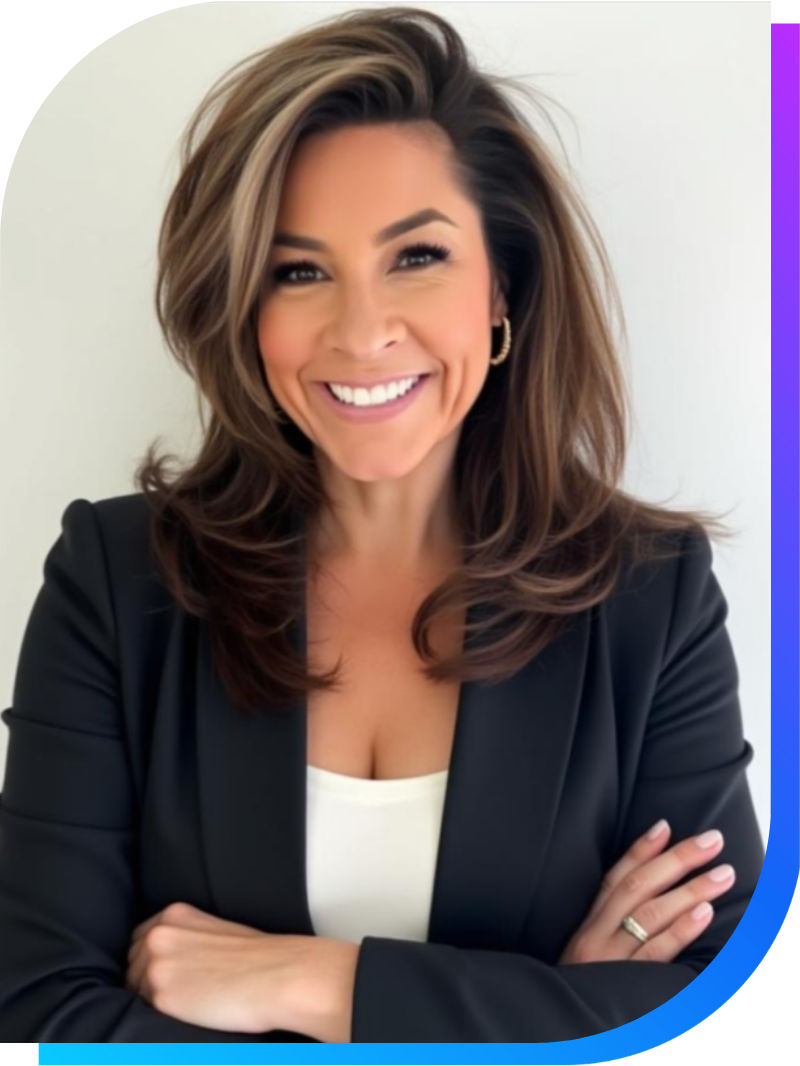
Jaime Frankos
Social Media Screening Expert
AI has made every candidate look polished. Resumes are cleaner, interview prep is sharper, and the professional veneer is easier to maintain than ever before. But the public digital footprint? That's a lot harder to fake.
Jaime Frankos, a social media screening expert, joined host Sarah O'Melia, VP of Learning and Employee Communications at Cisive, on Don't Get Played to make the case that social media screening has moved from an optional add-on to a screening essential, especially for organizations in industries where culture, safety, and brand reputation carry real weight.
The argument Jaime builds throughout this conversation is that social media screening operates in a different register entirely than criminal background checks. It reveals values, patterns, and character in ways that no formal document ever could. For HR and talent acquisition leaders trying to build teams they can actually trust, that distinction matters.
Criminal background checks have a clear scope: documented legal history, driving records, and prior drug use. That's the point. They're scientific, verifiable, and consistent. But they were never designed to answer the questions that keep HR leaders up at night: Will this person represent our brand the way we need them to? Are their values aligned with ours? Could they create friction inside a team we've spent years building?
Social media background checks don't replace those traditional checks, but it does help complete the picture. As Jaime puts it, “A criminal background check, driving background check, drug background check, they're all pretty black and white. You did a crime, or you didn't. Whereas social media screening could be subjective, in terms of what you consider to be a trigger point for your organization.”
That subjectivity isn't a flaw. It's a feature. Different industries have different risk profiles, and the screening process should reflect what matters most to a specific organization's culture and compliance environment, including candidate red flags to watch for in hiring.
The pattern Jaime sees most often isn't malicious. It's just late. A company skips social media screening, something surfaces publicly about a new hire, and suddenly everyone's in crisis mode: Legal is involved, communications is drafting a statement, and HR is asking why nobody caught this earlier.
“Organizations that are turning a blind eye to social media screening is typically when they start to get in trouble,” Jaime says. “Nine times out of ten, those organizations were never doing proper screening on those potential candidates that they were bringing into their organization.”
The fix is process, not panic. Building social media screening into the standard hiring workflow, rather than treating it as a reactive tool deployed after red flags appear, is one of the background check best practices that separates organizations that manage reputational risk from those that simply respond to it. Healthcare, financial institutions, nonprofit organizations, and public sector entities have been among the fastest to adopt social media screening proactively. The stakes in those verticals don't leave much room for surprises.
The most common question Jaime fields from HR leaders considering a social media screening solution from Cisive for the first time: Is this even legal?
It is. The FTC deemed it compliant in 2011, placing social media screening within the broader structure of FCRA compliant background checks, and the framework is clear: only public posts are reviewed, no passwords are requested, and post history is capped at seven years. The process is built on what candidates have already chosen to share with the world.
But legal clearance is the floor, not the ceiling. Jaime recommends that any organization starting a social media screening program begin by building a thorough internal policy. “I always say to organizations, the more thorough your policy is, [the more] all your employees know what the expectation is. I'm a big believer in transparency.”
A thorough policy does two things simultaneously. First, it defines what it considers flag-worthy behavior for the organization's protection. Second, it makes the rules visible before the process begins in order to protect candidates and support fair hiring practices for talent acquisition.
For HR teams researching top social media screening platforms compared, the AI layer in modern screening platforms paired with human analysts reviewing flagged content helps reduce false positives and keeps the process from drifting into bias. “The more transparent you can be with your applicants, the better.”
Jaime is clear that neither element works well without the other: “The combo approach is really ensuring that you get a report back that isn't biased one way or the other.”
There's a version of this conversation where social media screening feels invasive or overreaching. Jaime doesn't pretend that concern doesn't exist. She just thinks the framing is off.
The screens are limited to what's already public. The process is governed by FCRA. The classifiers are customizable, and organizations set their own thresholds. What's being evaluated isn't someone's private life. It's the version of themselves they've already decided to present to the world.
“Social media screening is an extension of your brand, even though it's your personal account,” Jaime says. “If you are posting things publicly, that is an extension of where you work.”
For talent acquisition leaders trying to build organizations that hold up under pressure, that reframe is worth sitting with. The digital footprint already exists. The only question is whether the hiring process is taking it into account.
Jaime Frankos:
Social media screening is revealing pretty much what interviews can't. I mean, in the world of AI, everyone's got a perfect resume. I mean, everyone's resumes look amazing. In fact, everyone's probably got great interview skills as well.
But what social media screening can reveal is things that interviews cannot, which is more of authentic character, maybe your real values, a little bit more of cultural alignment through what their footprint looks like digitally.
Sarah O'Melia:
Welcome to Don't Get Played, a podcast from Cisive.
This show is for talent acquisition leaders and people managers who care about trust at work. How it's built. How it's measured. And how leaders design systems that hold up when speed, risk, and accountability collide.
I'm Sarah O'Melia, VP of Learning and Employee Communications at Cisive.
Social media screening is the process of reviewing a candidate's publicly available social media activity as part of a background check. Not their private messages. Not anything behind a login. Just what they've chosen to put out into the world. And what that public footprint reveals about who they actually are.
A criminal background check tells you what someone did. A drug test tells you what was in their system. But neither one tells you what they value. How they show up. Whether they're going to represent your brand the way you need them to. That's the gap social media screening is filling.
Today I'm joined by Jaime Frankos, a Social Media Screening Expert. Jaime works with organizations across industries to help them understand what social media screening is, what it isn't, and how to build a compliant process that protects their people and their reputation.
In this episode, we get into why social media screening is the fastest growing segment in background checks. Where companies tend to get tripped up. What a governance model actually looks like. And how AI and human analysts work together to keep the process fair.
Social media is already telling a story about every candidate you're considering. The question is whether you're listening.
Let's get started!
Hi Jaime. Welcome to the podcast. So I wanna kick us off by asking, social media has been around for a while, so why is social media screening accelerating now in this moment?
Jaime Frankos:
Hi Sarah. Thanks for having me. Social media screening, you're correct, it has been around. It actually has been around since the early days, and in 2011 the FTC regulated it to be something that's completely compliant. So we are seeing quite an uptick in social media screening, I think, to be quite honest.
COVID actually helped quite a bit. Everyone was home sitting at their computers and started to post their life online. But what we are seeing is that it's the fastest growing background check in terms of product offerings and it's outpacing the traditional methods of criminal background checks and so on.
And mostly that is driven by regulatory demands for more compliant technology and the critical need to protect your brand reputation, especially as we're in a digital first world, I think, as we all would agree on that.
Sarah O'Melia:
Absolutely. So you mentioned that this area is a fast growing facet of background checks. So what type of risks are employers actually trying to mitigate through these processes?
Jaime Frankos:
That's a great question. I think that, you know, to be honest, with a little bit of stats, I think that you're seeing that there are no signs of social media screening, or social media use in general, decreasing. In fact, we're seeing an increase every year, anywhere from 35 to 45% an increase in terms of users across platforms.
But as far as risk goes, what's nice about social media screening is that organizations can determine what they consider to be risks. But really I would say the top three things that people are probably looking for when it comes to risk is cultural fit in terms of their social media postings and how that fits, aligning with their own organization, performance in terms of increased productivity or boosting motivation, and then as well I think one of the more important ones is brand protection. So safeguarding their reputation and ensuring, I would say, ethical alignment.
Sarah O'Melia:
That makes a ton of sense. And as much as employers are trying to mitigate those risks for themselves, right, the reputation, the branding, the culture fit, where do they tend to get into trouble? Right? Like where are those snagging areas for them?
Jaime Frankos:
I think organizations that are turning a blind eye to social media screening is typically when they start to get in trouble, and they take more of a reactive approach versus a proactive approach. I think that you always see something in the news of something happened on social media, and nine times outta 10 those organizations were never doing proper screening on those potential candidates that they were bringing into their organization.
So I think that if organizations took more of the approach of being proactive with social media screening and making it part of their workflow in terms of looking at a candidate from an overall picture.
Sarah O'Melia:
When we think about those areas of focus, are there specific industries or verticals that need to see sort of different components when it comes to the social media screenings?
Jaime Frankos:
Sure. I mean, I can justify social media screening across the gamut in terms of verticals, but I think that you're seeing verticals that are really embracing social media screening as anybody that really has a forward facing role within their organization. So think of sports, think of colleges, think of churches, think of non-profits, financial institutions.
But also in social media influencers, you're finding that a lot of brands really want to make sure that the people that they're vetting for certain jobs obviously would be a good fit with their brand. And so looking at social media can give you a good insight in terms of what they're posting, kind of what their behaviors look like, and kind of what their patterns are overall.
Sarah O'Melia:
When you're looking at these general patterns and activity, where is the line between a company doing their due diligence and corporate overreach?
Jaime Frankos:
So for compliance purposes, we follow FCRA obviously, and we're only looking at public posts. So we're never asking a candidate, or expecting the candidate, to give us their username or their password or change their profile settings. Everybody who has social media has the ability to make your settings the way that you want, whether you want them public or private.
For FCRA purposes, we are only looking at public accounts. So what anybody could go find, if I went on Facebook and searched your name, anybody could see that. What we're doing is taking the bias off of those hiring managers and creating a process that is universal throughout your organization.
Sarah O'Melia:
So when it comes to making sure we have a large scale of what we're looking at, right? We're looking at different platforms, right? All these different considerations. What are some of the platforms that you look at?
Jaime Frankos:
Yep. We try to bring on platforms that make sense for the end user, in this standpoint of what are the most common platforms of daily users. So currently right now we are monitoring public posts from Facebook, Instagram, Twitter or X (I still call it Twitter sometimes), LinkedIn, TikTok, Reddit, and Pinterest.
We also do a web news search through Google as well. But I think what is important for people to understand is that social media screening is revealing pretty much what interviews can't. I mean, in the world of AI, everyone's got a perfect resume. I mean, everyone's resumes look amazing. In fact, everyone's probably got great interview skills as well.
But what social media screening can reveal is things that interviews cannot, which is more of authentic character, maybe your real values, a little bit more of cultural alignment through what their footprint looks like digitally.
Sarah O'Melia:
That's a really good point. And when we're thinking through the legality and the audit aspect of background screening, in your opinion, what governance model should exist internally if we're starting to go through this process?
Jaime Frankos:
I highly recommend any organization that's going to either start doing social media screening on candidates, or even if you already are, make sure that you have a very thorough social media policy in place. And if you don't, then that would be something you'd wanna work on, maybe with your internal legal team.
But definitely making sure that you have a transparent social media policy in place before you start doing social media screening with your candidates.
Sarah O'Melia:
Let's say that you are an HR leader in a highly regulated industry. What's your first move in the social media screening space?
Jaime Frankos:
My first move would be to get consent. You wanna make sure from an FCRA standpoint you are getting consent from your applicants in terms of doing a social media screening. You can, again, I would consult your internal legal team, but I would make sure that obviously you are getting some sort of checkbox that says, yep, we're okay with doing a social media check, just the same as you would with other background checks as well.
So including social media screening in that verbiage. The more transparent you can be with your applicants, the better.
Sarah O'Melia:
Perfect. And then when we're looking at sort of the future of what this looks like, are there specific industries that are driving more adoption than others?
Jaime Frankos:
Again, I think that you can pretty much justify social media screening across the board. Where we've seen a lot of adoption is obviously professional sports, financial institutions, public sector customers, marketing agencies. Healthcare has actually been huge in terms of social media screening, that's been continuing to grow, nonprofits, schools.
So I think that we kind of cover everywhere in terms of getting social media screening to be adopted. I think the best way to get it adopted though is to actually really start implementing it into your workflow.
Sarah O'Melia:
When you introduce this idea to different leaders, right? Different HR leaders, and we're talking about the benefits of it, what are some of the sort of common concerns that these folks bring to the table, and how do you navigate that?
Jaime Frankos:
The biggest, I would say the biggest number one question we always get is, is this legal? Are we allowed to do this? And again, we are looking at public posts on these social media platforms. We are never asking a candidate for their password, or asking them to log in and change their profile settings.
We're never asking them to do that. So we are looking at public posts that they are already doing or have done in the past. We are following FCRA, which for social media screening means we can limit our post history to look at, seven years is the max timeframe to look at those public posts. So the number one question is, is this legal? And the answer is yes. It was deemed legal in 2011 by the FTC Federal Trade Committee.
Sarah O'Melia:
We see all of this technology transforming. So what does that look like in terms of background screening in this social media space that has constantly transforming and changing?
Jaime Frankos:
Yeah, I think that's a great question. I think that social media screening is going to continue to grow. I think obviously the buzzword of today's world is AI. And we are using a combination of AI but also human analysts in the loop. I think it's important to have human eyes on these posts to make sure we're not doing any false positives when we get the report back.
But I really do think in the next three to five years, my hope, obviously fingers crossed, is there'd be some regulatory demands in terms of making this, like criminal background checks are required, it would be nice that social media screening would be the same. And I think that we're starting to see that.
And we're starting to see that, especially for example, in the UK, they implemented a bill a couple years ago that required anybody that works in a school system to get a social media background check. So I think you're starting to see these types of demands and it will be more of a global situation versus split out by region.
Sarah O'Melia:
That's really interesting. And I do wanna mention, right, so AI technology, right, that's all creating efficiencies. But when it comes to automation, do you feel that it reduces the bias or has the potential to scale it?
Jaime Frankos:
I think both. I think to be honest though, the biggest advantage of AI is obviously analyzing those publicly available data points and identifying flags and generating a report. But I also think it's also crucial to have human analysts in the loop as well, to have those eyes on it.
So I think the combo approach is really ensuring that you get a report back that isn't biased one way or the other.
We have our own, what we call behavioral classifiers, built into the platform. So organizations can choose with those or the combination of keywords, what do they deem to be something that they would consider to be flag worthy? Right? It doesn't always have to be negative, it could be positive.
So each organization kind of has their own, what I would call, kind of trigger points in terms of what they would consider to be concerned. And what's nice is that you can use the platform in terms of different ways for different industries and different organizations. What I may seem to be risk versus what you do, Sarah, could be completely different, and that's okay.
Sarah O'Melia:
Is that where the social media policies come into play, with sort of defining what that looks like and what our expectations are?
Jaime Frankos:
Absolutely. I mean, I always say to organizations, the more thorough your policy is so that all your employees know what the expectation is. I'm a big believer in transparency, so I think that if you can lay out kind of what your organization says as a no-no, or we're all for it, great. I mean, I've seen social media policies go into detail in terms of you're not allowed to post this, or we encourage you to post these types of things.
So I think people need to remember that social media screening is an extension of your brand, even though it's your personal account. If you are posting things publicly, that is an extension of where you work. And God forbid you're out there posting, you know, I hate my boss, and then it's a public post. People can see that.
Sometimes social media screening can obviously, just based on those public posts, kind of start to create a vision and a pattern as to what's going on with them internally that maybe is affecting their everyday work.
Sarah O'Melia:
And have you noticed a trend, and this is pure curiosity here, but have you noticed a trend where certain positions are more likely to get a background screen? Right? So if they're going to be senior leaders, if they're going to be in marketing or PR, is there a differentiator there?
Jaime Frankos:
I'm gonna say yes and no. Yes to the fact that I think that a lot of organizations still are under the assumption that maybe it's management and above, or director level and above, whatever their titles are positioned as, because they're more of the prevalent kind of employees in the organization, so to speak.
But what we're also finding is that organizations are doing social media background checks of any level. Because at the end of the day, does it really matter if it's a manager versus a C-level that's talking or posting things on social media? It doesn't. Some might carry a little bit more weight, but if it's talking in regards to your brand, then you should be concerned about it.
Sarah O'Melia:
And this is me sort of just double checking here, right? So when our listeners are hearing this, it's really more so along the lines of the brand, the culture fit, a little bit into the insights of how this person is going to behave and articulate themselves, versus let's say like a background check, which is a little bit more black and white.
Jaime Frankos:
So that's, I would say what you just said exactly. So a background check, the traditional criminal background check, driving background check, drug background check, they're all pretty black and white. You did a crime or you didn't, you have a DUI or you don't, you did drugs or you didn't. Like, it's very scientific, right? Like it's very black and white. It's all documented.
Whereas social media screening could be subjective, into again, what do you consider to be a trigger point for your organization? What matters to you? You're already gonna get those other background checks, but this is helping you get a thorough picture that you're not gonna be able to see on those background checks.
You're not gonna be able to tell on a criminal background check if they could potentially pose harassment to employees, what they're doing on the weekends. I mean, you're just not gonna get that on a criminal background check or drug or driving.
Sarah O'Melia:
So let's say I'm listening to this podcast, right? And I say, oh my goodness, this is such a great component of a background screening. I want to move forward with this. I need to bring this to my leader, right? Or my executive. What are some points that you would want, if you were in the room, right, you would want them to articulate as they're encouraging their leadership or their HR team to consider this.
Jaime Frankos:
I would go back to the character matching, which really emphasizes business results of your culture fit, which reduces turnover, enhances team harmony, the performance which increases productivity and potentially boosts motivation, and brand protection, which is safeguarding your organization's reputation and ensuring ethical alignment.
That's what I would pitch to my leadership team.
I would go on a little bit further and pitch that, let's take a proactive approach rather than a reactive approach. Let's not get into this in the spirit of, oh no, something's happened, now we need to do something, and now we're all in panic mode. Versus if this was just part of our everyday workflow.
Sarah O'Melia:
Another thing that we wanted to talk about were some things that we've heard about from different, whether it's clients or simply concerns or questions of people who are not super familiar with the social media screening process, is how do companies, and not giving legal advice, but how would companies try to ensure and encourage that their hiring process was free from human bias.
Jaime Frankos:
Yeah, that's a great question. I think what's great about working with an organization like Cisive is you have the ability to customize what you want on that social media report. Obviously, from a compliance standpoint, we follow all of the regulations, FCRA, et cetera.
But along with our behavioral classifiers, we have 13 of them, things anywhere from drug images, disparaging comments, profanity, prejudice, weapons, et cetera. You also have the ability to use keywords, and you also have the ability to redact images. So I think that each organization has their own unique criteria in terms of what they're looking for, but what we can do is not only deliver the report, but deliver the report in a more customized fashion based on what you're actually looking for.
Sarah O'Melia:
And that's a very good thing to consider and know that you as an organization have specific options that you can work with your internal teams to set and define and move forward with.
Jaime Frankos:
Absolutely, and I would say be proactive about it. And it's fluid, it can change at any time. What you consider to be something you're looking for today could change next week, and that's totally okay. And that's the beauty of a social media report. It's all based on what people are posting in real time.
Sarah O'Melia:
Perfect. Is there anything that you want people to know about social media screening in general that we haven't covered today?
Jaime Frankos:
I think the takeaway is that, you know, we're using AI as well as human analysts and we're analyzing publicly available data. We're identifying flags that your organizations would consider to be flags and generating a report that's gonna give you more of a thorough look into the candidate's online personas.
And I think that's important, again, to take a proactive approach rather than reactive. And I think with partnering with someone like Cisive, you're kind of giving your customers a one stop shop.
Sarah O'Melia:
I love that.
All right. Well this has been such a great conversation. Thank you, Jaime, for your time and your insights today.
Jaime Frankos:
Thanks Sarah for having me. It was a pleasure.
with Mitch Ashby, Jared Alexander
Listen Now
with Melissa Wheeler
Listen Now


Book time with one of our screening experts to find out how we can streamline your talent process with a free assessment
Get your free assessment