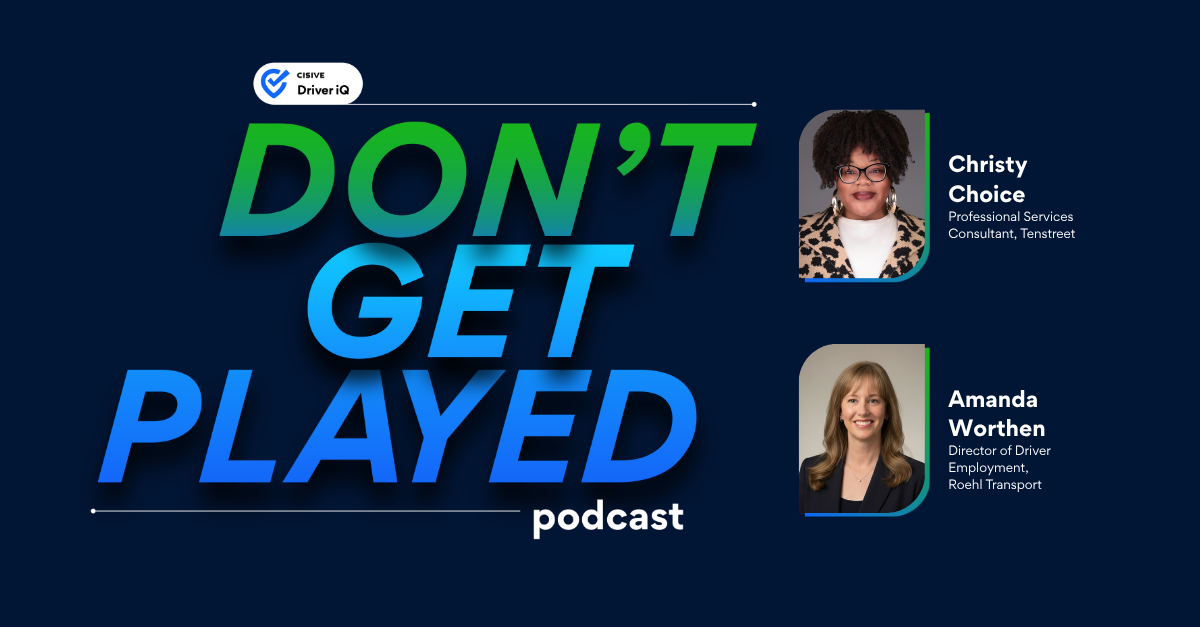
The Driver Hiring Process Problem Speed Alone Can't Fix
with Christy Choice, Amanda Worthen
Listen Now


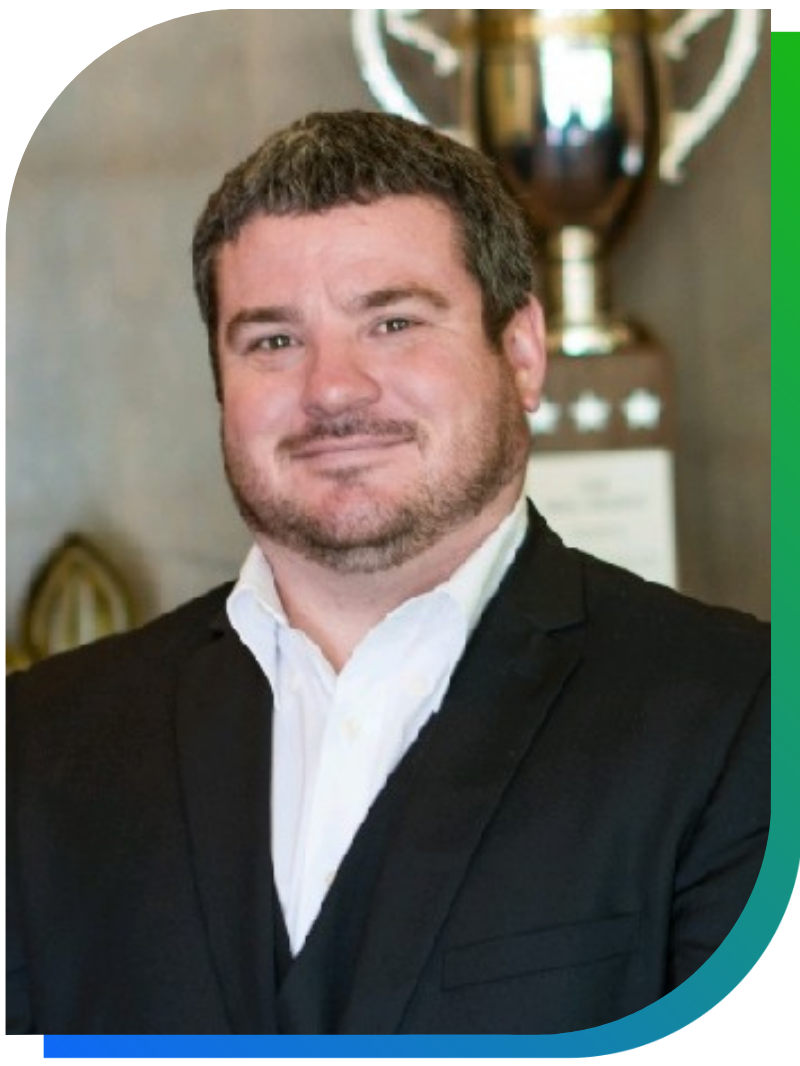
Mitch Ashby
VP of Talent Management
Andrews Logistics
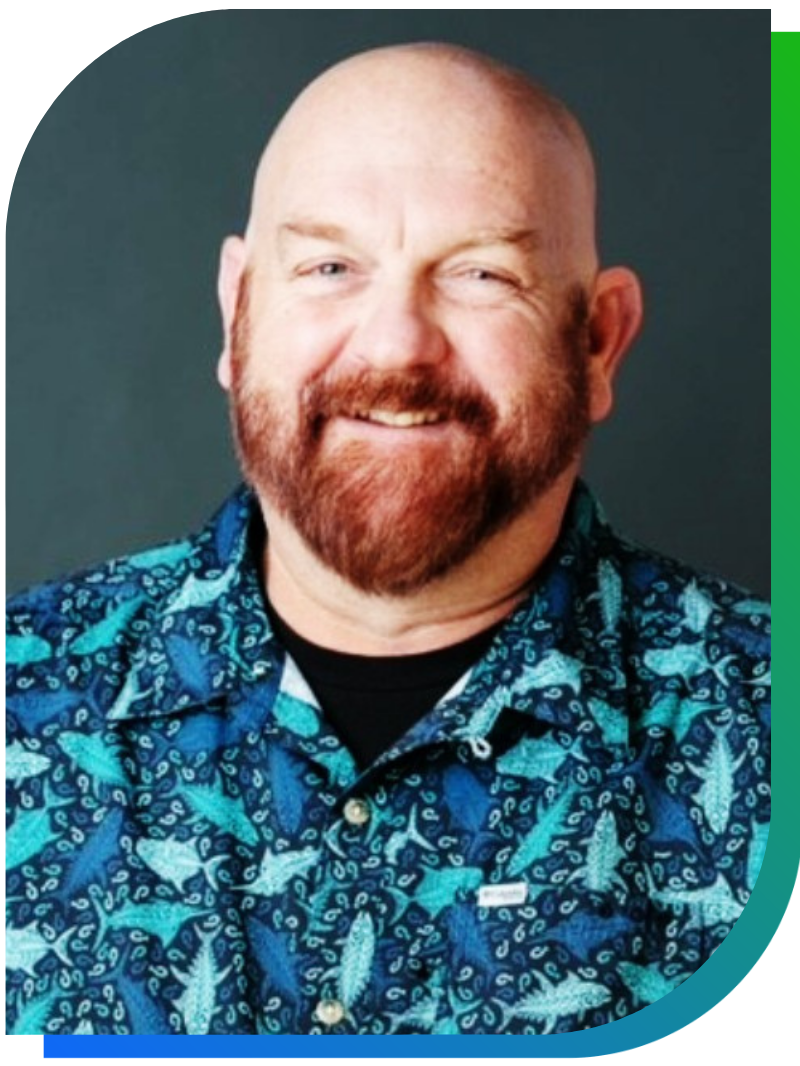
Jared Alexander
Vice President
Cisive Driver iQ
Every transportation company has to run background checks. Most of them think that means they're hiring safe drivers.
They're wrong.
A clean motor vehicle record (MVR) screening and a spotless criminal record tell you what someone hasn't done. They don't tell you what happens when that driver's alone on a midnight run, under pressure, making a decision no one will see until it's too late. That is why transportation leaders need driver background checks beyond MVR screening: a hiring process that combines record review, operational judgment, and the discipline to keep asking what the data cannot answer.
Screening creates the illusion of certainty. That illusion can be expensive in an industry where one bad hire can mean an accident, a lawsuit, or a contamination event that makes the evening news when they skipped essential driver safety checks.
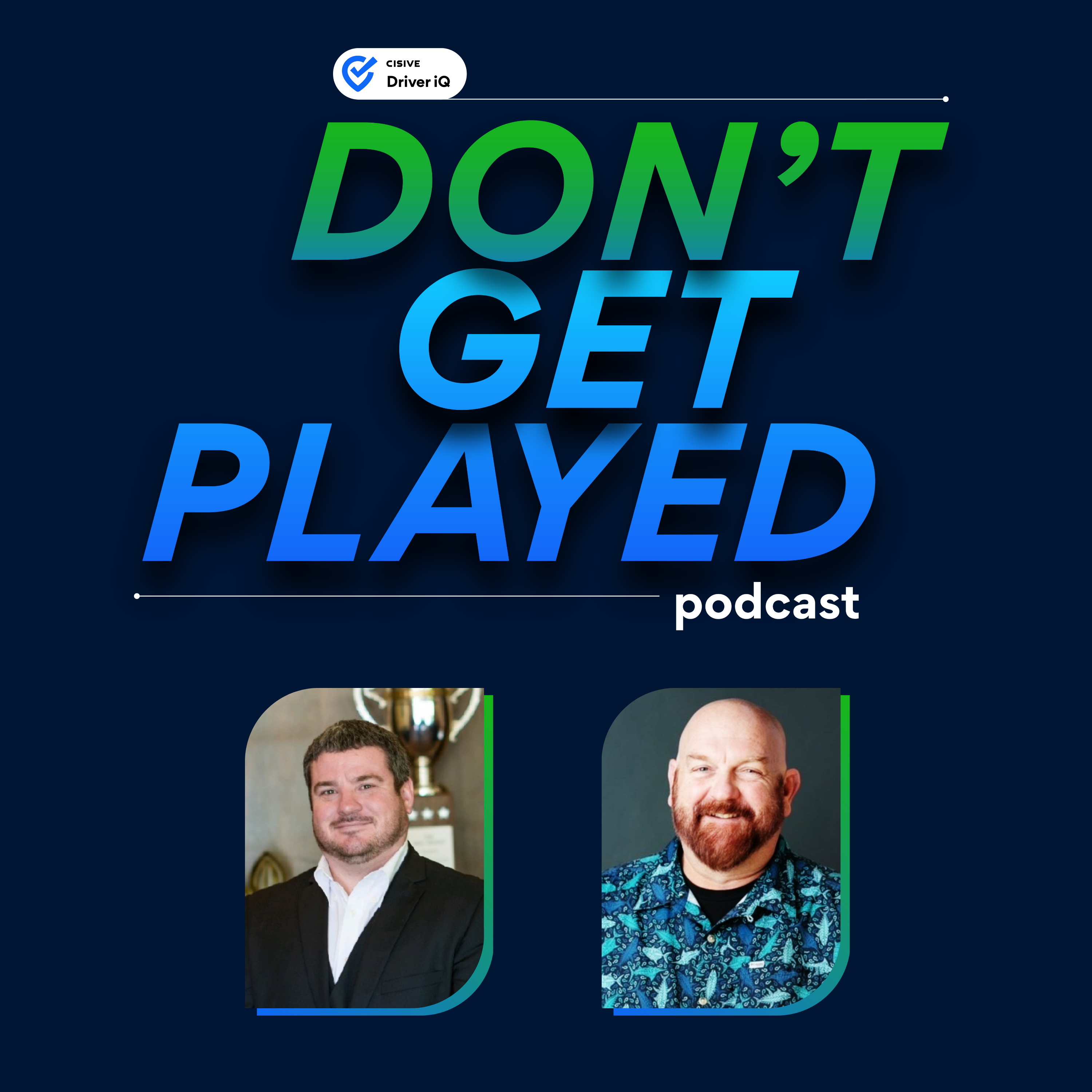
On this episode of Cisive’s podcast, Don't Get Played, Carlo Solorzano, Senior Director at Cisive Driver iQ, sits down with Mitch Ashby, VP of Talent Management at Andrews Logistics, and Jared Alexander, VP at Cisive Driver iQ.
Andrews Logistics hauls chemicals and lubricants all across North America. It’s freight that doesn't forgive mistakes. That’s why Mitch has spent 15 years building a hiring system that refuses to confuse compliance with competence. His position is uncompromising: Screening is necessary, but it's never sufficient.
“You can never predict human elements, human decisions,” he says. “Everybody makes a bad decision, but there’s a difference between a bad decision and the wrong overall hire.”
We dig into how Andrews built a hiring system that layers judgment on top of data, why screening creates false security, and what it takes to hold standards when you're desperate for drivers.
Mitch came up through safety before moving into talent at Andrews Logistics. That path shaped everything. “I knew exactly what safety was looking for,” he says. “So it's really helped knock some of the barricades down that you run through when you have recruiting and safety.”
Andrews built a three-tier system. Talent screens first, safety reviews next, and then terminal managers make the final call. Every hire goes through all three.
That third layer matters most. A resume might look perfect. The background check might be spotless. However, if the terminal manager senses something off during the in-person interview, Andrews is comfortable walking away. “Everybody sees something different,” Mitch explains.
Jared sees the opposite approach constantly, as companies desperately try to fill openings. “Just because somebody has a clean background check and their CDLIS is clear, their MVR is clear, they're PSP, and they're good on FMCSA doesn't mean they're a good driver.”
Which raises the question: when something does show up on a screen, how do you know whether it matters?
When a flag appears on a background check, Andrews doesn't just cut bait. Hard flags, like multiple accidents or disqualifying violations, are automatic nos. But soft flags require investigation.
Name mismatch because the applicant listed their middle name first? They fix it and rerun the check. Employment gap that turns out to be medical leave? They dig deeper before making a call.
That same mindset applies when teams are navigating DOT previous employment verification requirements, where the goal is not simply to check a box, but to understand the context behind a driver’s work history.
What separates Andrews from most carriers isn't just how they investigate flags. It's what they do when the answer is no.
“We try to show them that, ‘Hey, we're here to work with you even if we can't hire you,’” Mitch says. If a driver doesn't have the right endorsement, Andrews doesn't ghost them. They explain what's missing, when to reapply, and follow up when that timeline hits.
It works. Drivers get their hazmat certifications and call Andrews first. “They're blowing us up or shooting us a text or whatever. 'Hey, I got it now. I'm very excited. Is there still an open position?’”
The loyalty starts before anyone's hired. Drivers tell their friends that Andrews was straight with them, explained the gap, and treated them like people. Those friends call, too.
Most companies treat disqualified candidates as dead ends. Andrews treats them as future hires.
This long-term approach is one of the most practical CDL driver recruiting strategies in a market where trust, timing, and follow-through can determine who calls back first.
Early in his career, Mitch would accommodate candidates who needed to start immediately. "I shaved off a day,” he says. “Well, there's a reason you shouldn't shave off that day.”
When a candidate pushes to compress the timeline now, Mitch asks why. Maybe they genuinely need income. Or maybe they had a crash last week, and they're trying to slip through before it hits the system.
The problem isn't legitimate urgency. It's that you can't tell the difference until you've done the work. Skip steps to move faster, and you lose the visibility that would have caught the problem.
Jared sees it constantly. “There are bad actors everywhere, and people slip through the cracks.” Even robust screening can miss recent incidents that haven't hit the system yet. Compress the timeline, and you're betting nothing recent exists.
Andrews holds the line. Mitch won't start someone tomorrow, even when desperate for drivers. “Everything's at stake because one accident, one spill, contamination, something to that aspect could change the whole game.”
In transportation, that's a gamble you can't afford to lose.
Trust in safety-critical hiring is built on systems, judgment, and the discipline to stay true to your process when pressure mounts. The companies that thrive are the ones that balance speed with thoroughness, not the ones that fill seats fastest.
Related: Continuous Driver Monitoring
Mitch Ashby:
If you don't do the work upfront, if it goes south, it goes south in a hurry. And I don't believe anybody's perfect at this. You do your research, you check the paperwork, you spend the time, you have the conversations and you follow the path it leads you down. So really at the end of the day ... I mean, everything's at stake because one accident, one spill, contamination, something to that aspect could change the whole game.
Carlo Solorzano:
Hi, welcome to Don't Get Played, a podcast from Cisive. This show is for talent acquisition leaders and people managers who are tired of talking about trust in the abstract and want to talk about what it actually looks like when the stakes are real. When decisions have consequences and when speed, risk, culture, and accountability collide. In safety critical industries, trust isn't a value on a wall. It's a system. And when that system breaks, the impact is operational, legal, and reputational all at once.
I'm Carlo Solorzano, senior director for Cisive Driver iQ. And on this first episode, we're digging into what trust looks like on a deadline in the transportation industry, where people literally keep the world moving and where mistakes aren't theoretical. In this conversation, you'll hear from Mitch Ashby, vice president of talent management at Andrews Logistics.
Andrews moves liquid bulk and contract carriage freight across North America for customers who place a premium on both safety and service. For Mitch, hiring isn't about filling seats. It's about protecting people, freight, brand reputation, and the ability to deliver every single day. You'll also hear from Jared Alexander, vice president at Cisive Driver iQ. Jared works with transportation leaders across the country and brings a clear eyed perspective on screening, risk, and why a clean background check is never the same thing as certainty.
We get into the real decisions leaders make when hiring under pressure. We talk about where trust breaks quietly, why screening creates a false sense of safety, and how shortcuts and exceptions creep in. We'll also cover what it takes to hold the line on standards, when speed and risk are pulling in opposite directions. So let's dig in and together find out how to not get played. Mitch. Hey, how you doing? Welcome to the Don't Get Played podcast.
Mitch Ashby:
Hey, how are you? I'm doing well. Thanks for having me.
Carlo Solorzano:
Well, let's just get started. Let's just jump right in. Tell us a little bit about what Andrews Logistics does and what freight you guys are hauling.
Mitch Ashby:
Andrews Logistics, we're a family-owned and operated company. We've been in business almost 30 years and we haul some chemicals, we haul a lot of lube oils. Pretty much everything tanker related we dabble in.
Carlo Solorzano:
Awesome. And how about you? What's your role and what does talent look like in your operation?
Mitch Ashby:
I'm the VP of talent here at Andrews. I have been here 15 years. So I started in the safety department and then I moved on over into the recruiting talent side, which is really important for us because I knew exactly what safety was looking for. So it's really helped knock some of the barricades down that you run through when you have recruiting and safety. When they work together, you can make it a lot quicker process for the applicants. And also you know what they're looking for so you're not wasting anyone's time. And you can also coach applicants on, "Hey, this is what I'm seeing. So maybe right now is not the right time, but let's give it six months or a year and then we can revisit." Not that we know all the answers that we're going to get, but we have a pretty good guideline of what they're looking for. They have a very strict guideline, but we understand it.
So understanding, it makes us be able to adapt, so that we can either direct the applicant in a very quick process to move forward, or we can help educate them and build a bond with them. So once they either have enough experience or they have some different qualifications that they might need on the hazmat side and things like that. We try to be their first call back so that they're, "Hey, they spent the time to talk to me." So we try to really hook them from the front end as in helping them. Hook's probably the wrong word because at the end of the day, even if they don't work here, we do want to help them get employed with another company and chase their dreams.
Carlo Solorzano:
Yeah, that's good stuff. And I think one of the key things you said right there that was so interesting is, when you got recruiting and safety rolling in the same direction and it frequently doesn't happen, but if you guys have that going there, good on you. So thanks.
Mitch Ashby:
Yeah. We're definitely in the same direction. Sometimes different speeds, but always same direction.
Carlo Solorzano:
Awesome. We also have today Jared Alexander with Cisive and Driver iQ. Jared, tell us a little bit about Cisive and Driver iQ and what you're doing to support transportation clients.
Jared Alexander:
Yeah, absolutely. So Driver iQ has been in business for over 30 years. We're a 100% transportation focused company, full-service for transportation on the private and for hire side. So it's your background screening, drug and alcohol, OHS, all the way down to your verifications of employment. You name it. We help keep drivers on the road, keep them compliant, and to help companies just continue to make revenue. We are 100% focused on transportation from our CSR team all the way up to our leadership team. We all come from some form of transportation, so that's all we speak. Mitch has been a great partner of ours for quite a long time. It's relationships like this that really speak volumes for Driver iQ.
Carlo Solorzano:
Awesome. Well, great. Hey, so let's just jump right into the first topic, which is stakes and trust in bulk liquid transport, shall we? So Mitch, you're hiring finished lubricants, antifreeze, additives, et cetera. What's at stake if a hire goes wrong?
Mitch Ashby:
And it's not even on the lube side or the chemical side. There's different verities of how ... When it goes wrong, how bad does it go wrong? But if you don't do the work upfront, if it goes south, it goes south in a hurry. And I don't believe anybody's perfect at this. You do your research, you check the paperwork, you spend the time, you have the conversations and you follow the path that leads you down and you try to hire the most qualified, safest individual that fits your family and you also fit their family. Because it's very important to fit their family as well.
So really at the end of the day ... I mean, everything's at stake because one accident, one spill, contamination, something to that aspect could change the whole game, which the good part is ... We have a safety net, as I call it, on the talent side, because we are so close with our safety department. So even though on the talent side, as we go through it and we make a group decision on taking that driver on board, we also understand that we're going to have some of the best trainers in the market to train them. Our trainers that go through our programs that we teach to do it our way and we make sure that it's done the same way every time.
So when that occurs, it doesn't eliminate the risk, but it helps you sleep better at night. And it also helps you know that ... We're not just putting in a couple phone calls to a gentleman. We're putting these guys through a system to train them, if they're with us or with someone else, as in, they're safe and we know they're doing their job properly. Driving down the road beside my kids and other people's families. It's very important to us and it's a passion of ours.
Carlo Solorzano:
That's awesome. Love to hear that. So when you're talking about trust and behaviors, what does that look like in real life? Like you said, an Andrews driver's an Andrews driver. Tell us a little bit about what that looks like in real practice, not in your break room posters and such.
Mitch Ashby:
Most definitely. Of course, everybody has the handbooks and things to that nature. But our hiring process is something that took a long time to come up with because we interviewed a lot of people. We've met with some people that's been in the industry a long, long time, and we revamp it often because we want to make sure we're staying up with the times because times have changed.
There's multiple different reasons you can get a citation now, that you couldn't even get one. Like cell phones that you couldn't even get in the past. So we always keep updating our policies and procedures to make sure that we are keeping our goal at that top few percent because we want to make sure that we are hiring the best for ones.
Carlo Solorzano:
Awesome. Can you give me a real world example of where trust gets tested in your world?
Mitch Ashby:
Yeah. We had a situation the other day, you get a driver and I was speaking with him and he was all set up. He's came in, he's interviewed, he's road tested, done all the things. Everything's going great. And he calls the day before orientation and had a family emergency. Well, some just ... Hey, just call us when you're ready. Ours was, "Okay, you know what? Take care of that. Let us know what you need." We follow up the next day. "Hey, you still have a position with us. We're still looking forward to hiring you. Take care of the house first." Because if the house isn't right, there's no way they can be doing 100% their job while they're here.
We don't quit. Whenever we talk to somebody, if we make you a position offer and we work through the process, we're going to work through speed bumps. So that's a really good way that we ... We try to extend that trust. Now, granted, the trust can be broken on the either side. Nobody's perfect. As you said earlier, there's no perfection, but we do try to work together. I think communication is the main way that we can keep trust because even if it's not the best answer, if it's an honest answer, most people respect that.
Carlo Solorzano:
Yeah, absolutely. All right, Jared, your turn. We've listened to Mitch and some of the unique complexities of the type of stuff that they haul. That's pretty common for the trucking space and the people that we work with every day at Cisive and Driver iQ. When you hear that level of operational risk, Jared, what do most non-transportation HR teams miss?
Jared Alexander:
Well, I mean, they're really missing the true type of people that they're hiring. When you're looking at a driver, there's so many different pieces that go into ... That driver application, that physical, that drug test, that MedCert. There's so many boxes to check. It's not a traditional hire. And as Mitch alluded to, you're trying to hire quality because they're a brand ambassador on the road. So if they see an Andrews truck in a car accident, what are they going to remember? Andrews truck and a car accident.
So I mean, it's really important in the transportation industry, whether it's on private or the public side, really to make sure that quality drivers are being hired, but at the same time, retaining them. And we're really starting to see now in the industry companies coming forward and offering a lot of great ... Not even just so much salary increases, but like Mitch said, making them like a family. You're important to us. You're not just a driver that gets behind a wheel and delivers something and at the end of the day, you clock out, you leave. So I think that's a crucial piece in transportation right now. And it's not even so much a knock on HR, it's just a different animal.
Carlo Solorzano:
Yeah. Great. Well, thank you, Jared. Let's jump into our second topic if that's all right with everybody, which is hiring under pressure. And so we'll go back to Mitch for this. Are there shortcuts that you just refuse to take even when you're short-staffed? It sounds like you guys have a hard line and you don't take shortcuts. Am I correct with that?
Mitch Ashby:
Yeah. You have to hit ... Our certain standard, it's an in-house standard that we set. So if they hit that standard, then they are qualified to be an Andrews driver. If you don't hit the standard, there's no probations, there's no this or that because we need you. That's not the case. We just have to look within and figure it out, so we can get those drivers on board to move from there.
Carlo Solorzano:
Okay, let's say you've got a driver that meets qualifications when you're looking at bringing them on board. What are some variables that predict success at Andrews that you might not pick up on the resume?
Mitch Ashby:
Yeah, there's a lot of that. So we actually have a three-tier process. On the talent side, we go through ... We make sure that we think safety would approve this application to move forward with it. Once they look at it, they say, "Yes, he meets our standard." But every driver that's hired here is hired by our terminal manager. They have a conversation, they meet in-person to make sure that we're checking all of our boxes for one, but we're also making sure that it meets with everybody. Everybody sees something different. So we do that.
We're not successful a 100% of the time. If we were, we'd probably be on a lot of these podcasts. But no, it's one of those situations where we just try to add layers of protection in that doesn't necessarily slow us down because we try to be very efficient when we do it, but it does add layers in to help us achieve our goal, which is retention.
Carlo Solorzano:
Got it. Got it. So where do companies accidentally break trust with their drivers without even realizing it? And it sounds like you guys are really intentional about setting expectations and managing those expectations and maintaining your part of the equation, but you're a multi-generational trucker and your company's been in business a long time. And so I know you've interacted with organizations that might not be putting that emphasis on it. When you hear about companies breaking trust with drivers, where does that typically happen?
Mitch Ashby:
I have a handful of those, to be honest with you, because ... I call them our pinch points and I always say, "Hey, these not non-negotiable, but these are items that we have to pay attention to." Because if you tell somebody the truth, they're going to accept the truth. They might not love it. I mean, you can tell me a lot of things, and if it's truthful, I'm going to deal with it and figure it out. So I always tell them ...
First thing we do is ... If we set a time up to call them or we were going to call you back today, we call them back that day. That's a non-negotiable. If you can't do it ... We have a team for a reason. They would rather talk to somebody on our team than nobody call them back. So that's a big one for us. Our second one is ... I feel like a lot of people are, "Hey, I can get you in four days. I can get you in here." That's a question you get asked a lot. Well, the good part with us with Driver iQ ... I can give you a really good point because Driver iQ is very consistent, they're very precise. They have models to tell you like, "This MVR usually takes this amount of time." That team, it really supports our efforts because as we lay our timeline out in our first call, we know that they have our back as well.
And then the second one is over hiring. I know it's going to sound totally crazy, but a lot of times it's like, "Hey, we've got all this freight, we got all these miles, we got all these things." Well, they're telling 20 people that a day and next thing you know, they hit a hot streak and 18 of them come on board and then they're like, "Oh, man. I only had room for six." So now you got a lot of guys that came on board that's not making the living they need to, or you're taking money out of your current driver's pockets, which hurts your retention.
So I think having a clear timeline and good partnership is where we go with that. So the first is us setting the expectations of the timeline. The second is our service teams like Driver iQ and our application processing system doing their part because if they didn't, then they would make a liar out of this. So that would break trust. And then the other one is make sure you're not just cattle guarding them in. I always say, "Hey. Look, I got this many spots and I've got this many coming in, so you're X on the list." Multiple different reasons why, but we're very transparent. And I think with being transparent, then they don't mind asking you the question they might not ask others or they beat you up a little bit because they're like, "Well, he's been pretty accurate with me across the board."
I think the last one on the breaking trust is just whenever you say, "Hey, give me a call back in 90 days or 60 days." And then either you don't make that call back. A lot of times, "I've been waiting on this, but they're not calling me or they haven't touched base." Do your due diligence on calendar reminders and stuff like that.
Carlo Solorzano:
Well, let's move on to our third topic, which is screening doesn't equal certainty and the illusion of safe hires. So Jared, you've said screening isn't just compliance and transportation. Why is that?
Jared Alexander:
It's a good question. There's bad actors everywhere and people slip through the cracks. Every background screening vendor generally will try their best to eliminate bad actors. And just because sometimes somebody has a clean background check and their CDLIS is clear, their MVR is clear, they're PSP and they're good on FMCSA doesn't mean they're a good driver, but they look really nice and people want to hire them. It's hard to vet out the type of personality to say this person's going to be a good hire.
We do our due diligence to try to streamline everything we can as far as showing that this person is a acceptable hire from technology and license, whatnot. But I think that unfortunately we see in our industry, people do come through the cracks and end up being costly and that keeps everyone up at night.
Carlo Solorzano:
Got it. So next question for you, Jared. What can screening tell you with confidence and what can it never tell you?
Jared Alexander:
Confidence, that just goes back to what I said before. With confidence, it's going to tell you when you look at it that this person has a good driving record. This person hasn't had infractions or failed roadside inspections, they have a valid driver's license. They've had their three years of DOT employment. It's checking the box. But again, it just goes back to ... You can't validate if the person's a good person. So I mean, that's something that's really unavoidable and hard to control.
Carlo Solorzano:
Got it. Sticking with you, Jared. Where do you see leaders get a false sense of security just from someone passing a background screen?
Jared Alexander:
They're leaning too hard on what the background check comes back with. A lot of companies will rely solely on a background check and a drug test and a physical and so on. I think the false sense of security is again, not knowing really who you're hiring. There's different ways for you to validate through training. Just really through training to figure out if this person is going to be a good driver, a brand ambassador.
I talk to large companies every day and ask them what keeps them up at night. And it's just, "We're just worried someone's going to do something stupid and it's going to cost us a ton of money and we're going to be on the front page of the news and it's going to hurt our brand." I think a lot of times leadership loses true understanding of what's really important and tries to get lean. So a lot of trunking companies and it makes sense, are trying to watch their budgets, but at the same time, would you rather spend a little bit more money and have a very qualified background check and have a better idea of what that driver really looks like? Or would you rather shortcut it and spend less for a very watered down background screen just because it does check the box to only hire someone that's going to end up costing you a lot more money in the long run?
Carlo Solorzano:
Yeah. Got it. Got it. So I do have a couple of fresh questions for you, Mitch. I don't want to make it too easy for you. So how do you balance being the best employer with being uncompromising on safety?
Mitch Ashby:
I almost think they go together. I don't think there's a compromise there because I do think if you strive to be the best employer, you have to have a route of safety to that because you can't grow a best employer if you don't have safety as your route. If that's not where you're starting to grow from, safety to where you are today. I feel like they're one and the same hand now. I'm not saying that's the case everywhere, but that's ... You caught me off guard with the question because I mean we just ... We really see it that way as in we have the safety first and if it gets through that process, we're going to be the best employer because we're hiring the best employees. We're hiring the best people out in the market. And you can never, as Jared said earlier, you can never predict human elements, human decisions. Everybody makes a bad decision, but there's a difference in a bad decision and the wrong overall hire.
Carlo Solorzano:
Absolutely. Good stuff. So what I want to do next is I want to throw out a specific scenario and then I'll have some follow-up questions for each of you. So here's the scenario, you've got a great candidate, strong interview. You run some screens, it raises a flag. Let's talk about what happens next. Let's start with Mitch. In a situation like that, you've talked to the driver. Man, they seem great. Everything was good. Something pops back on one of your DIQ reports. Who at your organization has the final call at Andrews?
Mitch Ashby:
That's a tricky question because we also lean on each other's strengths. If it's a non-negotiable, then it's a non-negotiable at that point. So we have to have the conversation. We have to explain ... I can explain the situation, so we don't run into it again or they don't run into it with another carrier and then go from there. But if it's not a non-negotiable and a red flag comes up, then we're going to figure out where that red flag fits into our organization and then talk with each other. I mean, we have to have open doors because at the end of the day, we all support the effort and we could all tear down the effort if we don't. So it really depends on the situation on that. We have multiple people that can end the process, if that makes sense, because we do want to empower our people.
Carlo Solorzano:
So on this, one of these flags pops up. What are some situations where the flag is a hard no, and you cut bait versus there's a flag, but it's not a hard no, and we want to flush it out a little bit more before we make a go, no go decision?
Mitch Ashby:
Yeah. I mean ... One of the easiest ones is whenever we get our syllabus back from Driver iQ, sometimes it says not found. Well, they might have their name on the application with their middle name, put with their last name or something to that aspect. That's a soft red flag, if that makes sense, because then we get ahold of them. We have a picture of their license, we talk to them, we have them fix it, we rerun it. And if it comes back good and that matches, then we move forward. It's not a committee deal, where one person has to determine that.
Now, if it comes back that the driver has multiple accidents on one of the employment verifications, then at that point, if it's outside of our point system, then at that point it'd be a hard no. And that's where I always tell our team that like, "Hey, guys. Do me a favor, don't just cut bait and run because the more time you spend with him ... Now within reason, with that driver, but the more time you spend with that driver and educate them too. So maybe on their next application they fill out for you or someone else, they put everything on there that they can, so they know what true shot they have at the position."
And also that goes a long way of like, "I wasn't able to get on there, but they did help me because nobody else either called me back or nobody else followed up or said, Hey, this is probably what's holding you up." They just ran to the next one. But if you do it the proper way that we try to do it is ... Well, he tells this buddy, "Hey, I didn't get on because of X, Y, and Z." Who knows what they tell him, but you know what? They did educate me. Well, then he's like, "Hey, why don't I call them?" And then maybe if I get on, great. They're willing to work with me." So we just try to show them that, "Hey, we're here to work with you even if we can't hire you."
We have a lot of them call back. We'll have somebody call that doesn't have the correct endorsement, like apply. And then as we find out. Like, "Hey." As soon as they get it, they're blowing us up or shooting us a text or whatever. "Hey, I got it now. I'm very excited. Is there still an open position?" And then we start the process over with them, but it's one of those that we try to build upon conversations because you don't always hire somebody the first time they apply or the first time you meet them. Sometimes it's a year or two down the road.
Carlo Solorzano:
Yeah, relationships they matter, for sure. In this situation, a flag's popped up and you've given it some additional context and flushed it out a little bit more and you decided you're going to move forward with a candidate. Let's refer to that as an exception. How do you prevent an exception from becoming an unofficial policy, so that it's just scooted through without getting additional context flushed out the next time or the next time?
Mitch Ashby:
Yeah. And with trucking, the cool part is it's never the same day. I have a new job every day of the same task. Every phone call's different, every exceptions, we could call it, it's different. You could have a very minor exception or you could have the same exception that has different roots and groundwork to it that's actually a major one. So we really just ... And I'm not trying to sound like a broken record, I promise. But I mean, we really stick with our core non-negotiables. And then if it's below that, it's not really maybe an exception, but it would be a, "We track this down, here's what we can prove." Or, "Here's what data we have to prove it." Then we can either move forward or not move forward at that time.
Carlo Solorzano:
Okay. So as we start to wind down a little bit, I want to give you guys a chance for a couple of parting shots and we'll start with Mitch again for this. Mitch, what's one hiring principle that you will never compromise on again?
Mitch Ashby:
Dude, you said again, so I feel like you're setting me up. That means I had to-
Carlo Solorzano:
Or what's one tough lesson that you've learned, a mistake you've made that you won't ever repeat.
Mitch Ashby:
No, and I have it for you and it's one of my ... Now I stand on the hill. There's not many hills I'll stand and die on, if that makes sense, but this is one of them. You get the phone call and you run the individual and everything does look good. Well, they've got to start tomorrow. They've got to start tomorrow. I'm not saying you start them tomorrow, but it's like you start putting yourself ... Even if you don't try, you start putting yourself at a faster pace and you start, "Oh, I shaved off a day." Well, there's a reason you shouldn't shave off that day. There's a reason that you have a process in place that is very thorough because if you shave off that day ... There's a reason they're rushing to come to work.
Now, it could be a total honest reason of, "I just need to get to work." Or it could be, "I had a crash last week and I'm just trying to get in before it goes through." But I'm just saying, there's a lot of them too. So I think early on doing some of it was like, "Hey, if they're ready fast, I'm ready fast." Like, "Hey, I can run as fast as you can run." But now as I've gotten a little older and more gray hairs, I've realized that there's a reason that you one, reevaluate it often because we are faster hiring now than we probably ever have been, but that's also because we have tools now that allow us to do so. We're not having paper applications anymore.
You're saying this because I've always done it that way, you have to really keep up with technology. That's probably my biggest one is like ... There's a reason that we have a timeline and a plan in effect and you got to stick to it. You can't just, "Oh, yeah. I'll get you in tomorrow." Because you're going to break trust or you're going to break something. So it's better to just do it the right way.
Carlo Solorzano:
Great. Last parting shot for you, Mitch. With Andrews Logistics, what's one thing that you all do that really lets your drivers know that when it comes to security, y'all are standing on business, you mean what you say?
Mitch Ashby:
We innovate. We are always looking at it. I mean, this is a couple year old example, but we jumped on the Wingman Fusion system with Bendix Systems that came out, where the truck will help brake and things to that nature. We look at AI trends because there is stuff out there now that can help you be safer. And the safer you are, the more business you're going to get, the more miles you're going to run. Everybody's going to get home to their family. So that's a big one for us is we just try to really stay on the top edge of the safety side of what we can do to get them the tools in their toolbox to get home safe every week. Make as much money as possible and see their family and kids and also protect mine that are driving beside them.
Carlo Solorzano:
Right, exactly. All right, Jared. Your turn. What's one misconception about hiring that you wish recruiting leaders would drop immediately?
Jared Alexander:
Cheapest is the best. Price is king. Especially in our industry, shopping for the best price, when you look at what's important is ... You want a company that talks transportation, they understand the nuances of transportation. They stay on top of all the changing in transportation. When someone from the company calls in and talks to a CSR, that CSR knows transportation. That's what's important. So many companies shop solely on price and it's, "I want the Mercedes for the Yugo price." That's not how it works. Not saying that we're the most expensive, not saying we're the cheapest, but at the end of the day, to me, what's important and I try to preach this from the mountaintops is, "Hey, you know what? You might pay a little bit more, but you're going to work with an entire team, an entire vertical that only speak transportation." And that should be what is the most important thing to any company out there.
Carlo Solorzano:
Sure. And then always that cost versus price. So Jared, one more for you. If trust is built on a deadline, what's one habit that keeps teams from getting played?
Jared Alexander:
Building that relationship, building that trust, that's key, right?
Carlo Solorzano:
Yeah.
Jared Alexander:
Building that relationship. It's the old playbook of, "Oh, don't be a used car salesman." I would say that our sales team goes in as a consultant, not as a sales rep. How can we help you? Maybe we can't. Maybe we can, but we're here to help. There's a reason that we have such an immense amount of clientele in the trucking industry on the for hire and then the private side because we earned that trust. And there's a reason that a lot of our clients have been with us 10 to 15 plus years. We've earned the trust. And I think that is the most crucial thing you can do is if they trust you and they know that you're a trusted consultant to help them be successful in their business, that keeps you from getting played.
Carlo Solorzano:
Awesome. Well, Mitch, Jared, we're out of time. I want to thank you both for joining us here on the Don't Get Played podcast. We really appreciate you coming in.
Mitch Ashby:
Hey, thanks for your time as well. Thanks for having me.
Carlo Solorzano:
That's today's conversation. If there are a couple of things to take away from this episode, it's this. First, trust in high risk environments is built through systems and standards, not speed and shortcuts. And second, judgment still matters. No amount of screening or process replaces leaders being willing to slow down, ask harder questions, and own the consequences of their decisions. I want to thank Mitch and Jared for a grounded, honest discussion about what trust really looks like in a 24/7 zero tolerance industry.
Thanks for tuning in to Don't Get Played, a podcast from Cisive, for talent acquisition professionals and people leaders navigating the messier reality of trust at work. Who gets it, who abuses it, and how leaders must rethink culture in today's workplace. You can find Don't Get Played wherever you get your podcasts, including Apple, Spotify, and YouTube. If you enjoyed this episode, follow the show, leave us a review, or share it with a colleague who's making tough hiring decisions under pressure. We'll see you next time.
with Christy Choice, Amanda Worthen
Listen Now
with Tommy Valenzuela
Listen Now
with Jaime Frankos
Listen Now


Book time with one of our screening experts to find out how we can streamline your talent process with a free assessment
Get your free assessment