Episode 15

The Operational Risk Hiding in Your Clinical Placement Data
32 minutes
Kunal Vaishnav
Chief Operating Officer
Exxat

• 32 min
The Operational Risk Hiding in Your Clinical Placement Data
Don't Get Played
Play
A student shows up for day one of a clinical rotation, and the coordinator can't clear them. Something's missing, or mismatched, buried months earlier in a spreadsheet or a vendor portal nobody double-checked. Either way, the student waits in the lobby, or gets sent home, and a canceled rotation can take weeks to reschedule. For a program running on a fixed timeline, that delay is a lost semester.
Kunal Vaishnav is Chief Operating Officer at Exxat, an education management platform used by more than 1,600 health science programs. From that vantage point, he's watched this exact pattern repeat across program after program.
On this episode of Don't Get Played, he joins host Matt Jaye to trace the failure back past the lobby, to the operational risk that's been sitting, unmeasured, in a spreadsheet or a vendor portal for months.
Fragmented Data Is an Operational Risk You Can't See
Operational risk, by definition, comes from failed internal systems and processes, not from bad students or bad luck. Most programs don't think of their own patchwork of tools that way. A compliance tracker, an LMS, a background-check vendor, and a spreadsheet or two feel like reasonable coverage. Kunal has spent years watching that assumption fail.
Exxat works with more than 1,600 programs, and the pattern holds across almost all of them. Most arrive running four to six disconnected tools. There’s a spreadsheet for immunizations, a vendor portal for background checks, a third-party system for competency records, and email for placement coordination. Each tool made sense on its own, at some point. None of them were built to talk to each other.
"Programs often don't know what they don't know," Kunal says. "They feel like they're managing it until the moment they are not."
That moment tends to arrive at the worst possible time, such as an accreditation audit, a clinical site's documentation request, or a student's day-one check-in. The fragmentation was there the entire time. Nobody could see it because nobody had a single view of the data, so the risk remained invisible right up until it became a failure.
Manual Workarounds Turn Regulatory Compliance Into a Liability
The workaround that feels the most careful is usually the most exposed. A diligent coordinator with a well-kept spreadsheet looks like diligence. Kunal's point is that this is exactly what turns regulatory compliance into a liability. The more a process depends on one person's memory and one file, the more fragile it becomes.
He walked through the scenario that plays out when that fragility catches up with a program. A student arrives on day one of a rotation. The site coordinator checks requirements and finds something missing, or worse, mismatched. "A lot of the times students ends up paying the price for an institutional system failure that it did not cause," Kunal says.
From there, the damage compounds fast. A canceled rotation can take weeks to reschedule. Students in a fixed-length program can see graduation pushed back an entire semester. And the site coordinator who got burned tells their manager, who starts questioning whether the program can be trusted with the next cohort.
"That relationship that you have created, you have worked upon for months and years," Kunal says. "It just takes one small incident to start to erode and create that distrust itself."
Data Integration Is the Fix, Not Another Tool
Kunal's prescription isn't to buy new software. It's to take an honest look at what's already there. "Fifty percent of the battle is won when you realize you already have a problem," he says. Most programs don't reach that realization until an audit forces it, and by then the fix costs more than it needed to.
The first move is mapping the existing systems and where the data actually lives. Kunal has seen programs get genuinely surprised by their own results as they discover records scattered across spreadsheets, vendor portals, and shared inboxes, and in at least one case, stored entirely on paper. The second is mapping the handoffs between those systems, which tend to be manual, inconsistent, and owned by no one in particular. The third is prioritizing by impact instead of trying to fix everything simultaneously.
For programs looking for a fast win, Kunal points to compliance documentation first. Consolidate everything into one system, one view, one owner. A full overhaul, the kind that connects academic, clinical, and compliance data into a single student record from enrollment through graduation. This typically takes 12 to 18 months and requires institutional commitment, not just a purchase order. "The platform is just necessary, but not sufficient itself," Kunal says. Technology, process, and leadership all have to move together, or the fix won't hold.
The programs that get ahead of it treat data integration as the infrastructure project it actually is, not a rescue mission that happens after something breaks. Programs that wait for a forcing event regret not starting sooner. The next student who shows up on day one shouldn't have to find out the hard way.
Transcript
Kunal Vaishnav:
A lot of the times students end up paying the price for an institutional system failure that it did not cause. Now let's walk through a scenario. Student arrives on day one of their rotation starts. The site coordinator greets the student. They welcome the student, they check for the requirements.
At that point in time is when they find out something is missing or worse. It's mismatched there. That relationship that you have created, you have worked upon for months and years. It just takes one small incident to start to erode and create that distrust itself.
Matt Jaye:
Welcome to Don't Get Played, a podcast from Cisive.
This show is for talent acquisition leaders and people managers who care about trust at work. How it's built. How it's measured. And how leaders design systems that hold up when speed, risk, and accountability collide.
I'm Matt Jaye, SVP of Healthcare at Cisive.
On the surface, keeping a health science program organized sounds simple. Track the paperwork, clear the students, and send them out for clinical. Easy, right? Except most programs are quietly running four to six different systems that were never built to talk to each other, from spreadsheets and vendor portals to learning platforms and email threads. Some of it's still sitting on paper. And that fragmentation stays invisible right up until a student shows up to their clinical site with an incomplete record.
My guest today is Kunal Vaishnav, Chief Operating Officer at Exxat, the education management platform used by health science programs across the country. Kunal works with more than 1,600 programs, so he's seen just about every way this can go sideways, and what actually fixes it.
Today we get into what separates a well-run program from one that's struggling. We talk about the real cost when a student gets turned away at a clinical site, standing in a lobby with nowhere to go. We look at the workforce shortage bearing down on nursing programs. And we walk through a practical plan any program can start today… no boiling the ocean required.
One missing form can cost a student their rotation. And it can cost a school its reputation.
So let's get started!
Kunal, welcome to the podcast. This has been one that I have been very much looking forward to and a topic that I think we're both extremely passionate about.
Kunal Vaishnav:
Thanks Matt. I appreciate you having me on your podcast. Thanks for the time today.
Matt Jaye:
Wanted to kick us off, I think. This is an area that we both see show up in our worlds. I think there's a bit of a data problem that nobody's really talking about out there, and we see it a lot.
I'd love to get your take on it, in particular. Exxat sits at the center of how health science programs are managing their student information, particularly before they go out for clinical. And I'd love to understand from your perspective, what's a well organized program look like versus one that might be struggling a little bit.
Kunal Vaishnav:
So, from our perspective you know, having worked with more than 1600 plus programs allows us understanding to figure out what does a well structured program look like. You know, a well organized, a well structured program is where they have one single system that threads from everything from enrollment through graduation.
When you think about compliance documentation, competency assessments, placement records, and having everything available in a single view from a program administration perspective is vital from a program success perspective. When an administrator can answer the question, is the student cleared in seconds?
That's what makes a program most efficient. On the other hand, when we see programs struggling, it's when immunizations are organized in a spreadsheet. Your background checks are in a vendor portal. Your competency records are in some third party tool. Your placement coordinations are all done through email.
Now, each of them was a right answer for a program at a specific point in time. However, none of those systems are designed to talk to each other itself. When you think of a program, they have a combination of multiple systems. They have their sort of information systems, they have the learning management platforms.
They might have Excel spreadsheets. They might have SurveyMonkey or Qualtrics going on the site. They might have Google Docs, and none of those things talk to each other. So when it comes time from an accreditation, compliance perspective, all of those things become a logistical nightmare, you know?
From the vantage point of looking at it from a 1600 plus programs perspective, you know, this pattern and is unmistakable from our point of times. Most programs, when they come to Exxat, they have been running four to six different tools from a student compliance and a clinical coordination perspective itself.
A good example would be one of the big state systems that we are working with, which is essentially a consortium of schools and hospital systems in a particular state. And they used to manage multiple systems out there from a clinical placement perspective, compliance side of things, curriculum mapping, background checks and drug settings.
And none of those systems used to give them a single unified answer, which they were looking for. And so when it comes time to scale those programs, opening up new campuses, opening up new disciplines, that's where most of the programs struggle.
Matt Jaye:
Got, so you touched on something that's pretty interesting to me. You said most of the programs when you start talking with them, I think you said they're using anywhere between four to six different tools to keep track of it and you know, I always, you know, kind of shake my head a little bit when I hear about like Excel files, right?
You'd think in this day and age with all the tools that we have, like nobody would be using Excel anymore, but. It sounds like we see similar things. A lot of folks are still using it in addition to other stuff. One of the things we noticed, we had commissioned a benchmark survey about a month or so ago,
Kunal Vaishnav:
Mm-hmm.
Matt Jaye:
and in the survey, I'm just looking at some notes here, It found almost 90% of students were hitting onboarding friction. And you know, you talked a little bit about how these different systems can impact the school and their level of efficiency. But on the flip side. It. There's also this friction with the students, and I think when those two things kind of converge, it starts to create a lot of problems and headaches.
I'd love to understand, you know, from your point of view, how much of the friction do you think is a data problem that you know, is really happening upstream to all these other things? Yes.
Kunal Vaishnav:
You know, the fragmentation usually is invisible to, I would say the program itself. This fragmentation issues and the friction issues only surfaces when something falls apart. When a placement falls through, you know. When an accreditation audit request arrives when a clinical site requires for documentation that can be produced on the spot, right?
Programs often don't know what they don't know. They feel like they're managing it until the moment they are not. From that perspective, a significant portion of the clearance friction, I would say, is inherited. You know, by the time a student reaches the screening process. They're often carrying those errors or gaps that have been in the system for about six to 12 months at that point in time.
The clearance process is where the friction mostly surfaces. It never originates there from our per side of things. You know, you mentioned about your study itself. You know, if the programs can't verify that the proper training has happened and was properly evaluated. Because the data lives in fragmented system, the training quality itself suffers, and that leads to friction all around.
Friction happens at the program level. Friction happens at the learner level. Friction happens at the site level itself. So having an good infrastructure layer is key to solving the friction problem.
Matt Jaye:
I think about this in terms of you don't necessarily know you have a bad insurance policy until you go to file a claim, right?
You don't know you have a bad process until an audit comes up or there's a missed record or, you know, whatever that case might be. From your perspective, where do you think programs have the biggest blind spots right now?
Kunal Vaishnav:
You know, programs, what do programs, first of all, do well? They handle enrollment well, they handle course grading well, all of the basic administrative data is handled reasonably well through pseudo information systems. Where I see blind spots is around immunization students schools not having an understanding in terms of what our students immunization requirements, what is their status.
They might not have an understanding of, from a granular perspective, that competencies also what students are competent in before they go out to their clinical rotation. The gap itself can be thought about in terms of you are thinking of a student in a rotation and said, did the student just complete the rotation or did the student actually demonstrate all of the skills they were supposed to do when they were, we actually went out on the rotations to schools don't have a good mile marker today to verify and assess all of that because data, again, is fragmented.
But compliance documentation side is where the fragmentation creates the most risk. I feel. You know, there are different expedition windows. There are different vendor relationships. They, so single system maintaining real time status of the student there. So that would be a big blind spot from a school side of things as well as assessing where the students are competent.
You actually want health systems to be a good partner for you in becoming a good partner. One of the key aspects is obviously ensuring that the students are compliant with all of their paperwork, but giving your site partner and understanding in terms of what are the skills and competencies students already has acquired and what do they hope to achieve when they're coming to the site.
In terms of new skills and new competency, students want to.
Matt Jaye:
Yeah, I think you hit the nail on the head, like the partnership component is so important, right? It's easy to look at an affiliation agreement and say, okay, we have to check the box. These are the things that we need to do. But in practice, right? We wanna make sure the students are educated, they're learning the things that they need to learn, they're not creating an issue of safety.
And, you know, from where I sit, I think the stakes are probably a lot higher than what people realize. Right. Because these students can end up pretty far downstream before something is realized that it's missed. We see that a lot in our world. I'm wondering from your perspective. You know, have you seen issues where the student shows up to a clinical site and, you know, maybe their record's incomplete or it's mismatched?
And if so, from your point of view what's the reaction? Like, what's the downstream impact to that?
Kunal Vaishnav:
You it's funny you asked me this question. A lot of the times students ends up paying the price for an institutional system failure that it did not cause. Now let's walk through a scenario. Student arrives on day one of their rotation starts. The site coordinator greets the student. They welcome the student, they check for the requirements.
At that point in time is when they find out something is missing or worse. It's mismatched there. Now what would be, what would happen in that case? Student would be asked to wait in the lobby of a clinical site. They might be asked to wait in the car. Worse come, they might be asked to leave the site itself there.
You know, when a student gets turned away because of a lack of documentation and lack of requirements, you know, sometimes a rotation might get canceled. When a rotation gets canceled or delayed, it takes weeks to reschedule that rotation. If you're coming with a group of students, you have missed that window of opportunity to start with that group, and you have to wait then for your school coordinator, your clinical coordinator, to work with you again, to reschedule you into the next group.
In programs that have, I would say, fixed length, that can lead to graduation delays also. And we have seen that quite a bit when people don't adopt compliance processes and stuff like that. Now. Now if you think about the ripple effect here, you have a site coordinator who is frustrated because of the lack of documentation.
They go and tell their manager. At that point in time, the site actually starts to question the reliability of the program itself. So it's not an issue with just students not starting the rotation of time or delaying to graduation. This can actually materially damage the relationship that you have built so hard to cultivate between you.
The school and the site partner itself. That relationship that you have created, you have worked upon for months and years. It just takes one small incident to start to erode and create that distrust itself. At the end of the day, the site are working with hundreds of students, right? And if one school exhibits partner consistently of sending students with missed documentation, then they might want to, they might end up deprioritizing that relationship and not giving you enough clinical side capacity.
Matt Jaye:
I think that's a good point. And it's so competitive. I mean, from what we see, like these schools are really neck and neck trying to get students in for clinical and I feel like if you make a misstep, like to your point, it inflicts a lot of reputational harm. To the organization, but then you have these delays with the students.
So when we think about like that negative domino effect, and I'm hearing the stuff that you're saying it's really interesting because it doesn't start like when somebody is outta school looking for a job.
It starts like, while they're in school. So if we delay that student graduating a semester or a quarter or whatever the case might be those ripple effects really start to become pretty prevalent. So interesting to hear your take on that.
Kunal Vaishnav:
There was a study which was done by Georgetown recently, which says they expect the nursing healthcare work for a crisis to deepen, and they expect to have about 2.3 million nurses that might be needed in this country by 2032. End of the day, you know, the healthcare workforce crisis is compounded by various factors.
A big part of it is though, clinical site capacity. Now, when you think of missed relationships and clinical site capacity issues itself, you start to question the gap actually can be filled by having stronger processes and having a stronger infrastructure layer. What do I mean by having an infrastructure layer?
An infrastructure layer is just not having systems in place. It's having the right kind of systems in place, right? You need to more and more. What we have seen after COVID is a lot of chief academic officers CIOs at schools, deans of health sciences and nursing programs, different programs are placing a lot of emphasis in terms of system consolidation.
And essentially having a single source of growth there you know, in the next three to five years. We feel that along with LMS and SIS there has to be a consolidation in terms of systems that allow the schools to actually get a lot of data points from one single platform that not only allows them to have visibility in terms of.
How many students should they accept into their program? Very important when schools are actually increasing enrollment or putting up new campuses or increasing more disciplines, like you said, Matt, going in radiology, medical imaging, nursing, allied health spaces, but also when it things comes time from accreditation perspective or putting in the angle of do I have access to information from a school perspective in terms of have I admitted the right student?
Is the student on track to meet the graduation requirements, and I'm going to, am I going to graduate the student with the right skill and competency? All of that actually comes to bear in terms of having that discussion.
Matt Jaye:
Yeah. As you're saying this, like in my head, I, it kind of all leads back to this common denominator of, I think it's the institutions have made it difficult for the educators to focus on their job and educate and they end up becoming kind of task masters of. All these different administrative processes and I think academia is trying to catch up in a lot of ways to, you know, other areas of industry. Right. I guess I'm curious from your lens, do you feel it's primarily a technology problem? Is it a process problem? Is it a people problem? Is it all of the above?
Kunal Vaishnav:
Yeah, I think it's all three. Matt. And I would say the fix that has to happen has to address all three. The problem usually starts off at a, as a process problem, right? You know, workflows, which were built at small scale. When programs grow, they break at that point of time. When the workflows were designed for a specific program for a specific system, they might have made sense for that point in time, depending upon the program's growth.
I would say technology over time has made, exacerbated the problem. Every problem now has its own software solution out there. Every single point has its own software solution out there, and that makes discussion about technology fragmented and you have point solutions that have taken hold in both the school as well as health system side of things.
You know, and that leads to fragmentation of data and fragmentation of answers itself. Now from a people perspective, this also requires, I believe, a leadership commitment from our side, you know, Dean or a program director, or I would say a chief nursing officer who treats data infrastructure as a strategic priority understands what it needs to happen in order to solve.
This problem at the end of the day, you cannot buy your way out of this problem, right? The platform is just, is necessary, but not sufficient itself. You have to work all the three angles in order to work out of this problem, I would say. Mm-hmm.
Matt Jaye:
Yeah. So as you were describing that, it made me think back to something that you said earlier. I think the consortium model is a great one, right? Because it can aggregate groups of people, get them to follow a standardized process and a best practice. Outside of that though, 'cause we know that's not always possible. At the institution level, at least from what we see on our side is there does tend to be a lot of fragmentation there as well. Right. So what I mean by that is the nursing program may be doing one thing, the medical program another, and so forth and so on. From your perspective, how are you addressing that and like, what are you seeing in terms of maybe best practices that if a consortium isn't available, even just within the institution, how do they kind of band together and. Not operate in silos.
Kunal Vaishnav:
A great question. You know, after COVID we actually have seen the rise of a role, which is called a Dean of Academic Clinical Partnership an associate dean position a manager of clinical placements team. So having a centralized function is key, Matt. When each program is looking at this information from their program lens perspective, it starts to create silos within.
University itself. So I would say having an institutional role, which actually directly works with the dean's office. I is going to be key here. The new role that we are starting to see is essentially responsible for all three parts of the things people, process, technology, hiring the right people who have that visibility from an institutional lens side of the thing, having processes that allows each program to scale.
Itself and from a technology, a solution that they are able to bring to the table that allows each program not only to meet their accreditation requirement, but also meet institutional objectives, whether it be accreditation, whether it be compliance, whether it be competencies, tracking having a single system at an institution level also allows you to get the power of data.
Right. What are the kind of students am I sending to a clinical site? Imagine a dean of a College of health sciences having a discussion with one of the most important clinical site partner, and they walk into the door having data that last year I sent hundred students across multiple programs, PT, OT, PA, nursing, speech.
All of them went to your site. Now from an interprofessional planning perspective and increasing the strength of relationship, the power is in the data and the conversations that the data is able to drive for you. So we are seeing institutions take a positive steps to create this role, fund this role, have a person really responsible for it, and so that they're able to make change effectively within their own organization.
Matt Jaye:
So that's interesting to hear and I'm thinking about it from the side of the clinical partner. Because, you know, we talked earlier about how competitive this is, and it sounds like when programs are showing up in the right way and as a true partner and they're able to come to the table with this data and with real validation that the students have met the criteria, you know, whether they're using a tool like Exxat and us combined, whatever the case might be it feels like that signals credibility to the clinical institution. I guess what I'm getting at is I'm curious if you're seeing that the clinical institutions are kind of starting to take that into account and also if they're starting to maybe better recognize the risks of the programs that aren't taking those steps.
Kunal Vaishnav:
We have seen more and more sites give priority to partners who have their house in order. These sites are inundated with a lot of placement requests from a lot of the school partners. On an average, a site has about a hundred to 200 contracts they have to manage with the school partners themselves.
Now, when there is a such a volume involved, people who have their things in place they have their data issues sorted out. They are sending the students with the right information already gathered. They are having the right conversations. It just increases the credibility and reputation of the school partner in terms of the sites.
At the end of the day, from a clinical capacity and a placement perspective, imagine you are a healthcare organization and you are being asked to take students from five different schools at the same time. People who will get probably the first steps and getting that slot and placement are people who actually have shown over the years.
That they are able to better manage the student records, better able to manage all of the information that was agreed upon in the affiliation agreement to begin with,
Matt Jaye:
Yeah, and I, due to the scarcity and the competition, I would imagine schools are starting to you know, see this more and, you know, have a larger appetite to, as you said, get their house in order so that they can be competitive, you know, they can be at the top of those lists. Yeah, that's probably a great segue into, you know, I think about this as a house, right? For you to have a good house, you have to have a really good foundation. The foundation of this is the quality of the data. Whether you're meeting the standards that you say you're gonna meet in the affiliation agreement, and, you know, I think there's maybe a couple of things, right?
A lot of schools, I think by the time they reach either one of us there's been a faulty foundation in place. So it's kind of like we need to take a step back. Let's look at this. Let's be good partners and really fix this foundation because if we start to build the house on top of it, things are gonna fall apart. I'm thinking in terms of the audience that's listening to this, right? We're gonna have folks that are both on the clinical side at the hospitals and then also at the academic institutions. I'd love to be able to maybe point out some actionable takeaways of things that they could start doing today to take a look at that.
And I think. A lot of times what's scary is kind of the boil the ocean concept. You can't necessarily do all things at once. What would you suggest if a program's listening to this and they're like, you know what we got some issues. We gotta take a closer look. We're seeing the negative impacts. Where do they start?
Kunal Vaishnav:
I would say the first thing you need to do is realizing there is a problem. Great. 50% of the battle is won when you realize you already have a problem. A lot of the programs don't realize they have a problem until much later down the pipeline. But once you realize there's a problem sitting in your program, I would say start with an audit, an honest audit.
Figure out, start a mapping exercise in terms of where, what all systems do you have in your program? Where does all of the data set itself? When they will do that audit, they would actually be surprised with the results of that audit. They would find data sitting in spreadsheets, in vendor portals, shared inboxes, emails on paper copies.
We had one program where they had stored everything on paper itself, and that was a realization when they started to do an audit. I would also say start to map the handoffs, right? In terms of a lot of the times handoffs are manual, they are inconsistent. Usually not owned by anyone explicitly, right?
That's where the discomfort really starts to show itself. The third thing I would ask the programs to do is once you've identified where the gaps in the processes are, you start to prioritize them by impact itself. As you said, you don't want to boil the entire ocean. There are things which are high priority from an impact perspective.
Where are the actual failures happening in the system right now? Clinical clearance is maybe the most visible pain point, but for that, the fix has to go upstream. You know, the clearance is just a diagnostic, in my opinion. The disease is essentially happening in the system months earlier in the process there.
So identify what you will do to have the highest impact in this value chain and start prioritizing fixing those impacts to either putting in more governance, more processes, and putting in more hardened systems in place.
Matt Jaye:
The very start of what you mentioned with the data, right? Being in all these different areas and even being like on paper, what's a realistic remediation process of that look like to get it converted into a digital format?
Kunal Vaishnav:
Yeah. I would say from a realistic timeline, if you think of a quick win, right? I would say start to look at your compliance documentation to begin with. Start to consolidate that, into one single system, one view, one owner, right? I would say that would be an easier fix for programs to start thinking about there.
I would say in order to do a very meaningful overhaul of the entire system, we have seen programs take about 12 to 18 months there. What happens over the course of those 12 to 18 months is they typically build a single student record, which connects your academic, clinical and compliance data all the way from your enrollment to the graduation processes there.
You know, that kind of a thing requires institutional commitment, just not buying a software. Buying a software is essentially putting in that layer, but you need your higher ups and institution to commit. To essentially making sure that change is in effect we have also seen that programs who usually move fastest through this process have a forcing function that is put on them.
When I say a forcing function, it is essentially an accreditation review that is coming up over the next few years itself. You know, a major clinical partner has told you that they're gonna reduce clinical slot capacity because of violations. Because of poor institutional governance processes, you know, or you actually have a documented placement failure, which is embarrassing enough to warrant a whole clean out of the system itself.
You know, the one, the schools that usually wait for the forcing function to happen, almost wish that they would've reacted in a more timely manner there.
Matt Jaye:
Yeah, I think that's section important. Point. We just had a conversation last week with a pretty large health system, and they're evaluating all of the schools that they work with right now because they had an audit and the school had completed an attestation indicating that everything was good. And then due to the audit, they actually had to request documentation.
And when they requested the documentation, the school was like yeah. We don't have it.
So you can imagine, I mean. The way that I think about it is, right, you obviously have egg on your face in a situation like that, but more importantly, depending on what that deficiency is,
it could be a patient safety issue, right?
If somebody's indicating that their immunizations are clear for something and they're not, and they're out there in a clinical setting you know, I think that's something that's a. You know, we can't overstate enough. It's an important red flag or, you know, there was a missed criminal record, something like that.
And you know, unfortunately we've seen those situations as well.
Yeah, it's it's incredible. Kunal. This has been an incredible conversation. It's always great to connect with you and I appreciate you being so generous with your time with us today.
Kunal Vaishnav:
Always a pleasure, Matt. Thanks for having me on.
Matt Jaye:
Data problems don't start at the clinical site. They start months earlier, buried in a spreadsheet or a vendor portal nobody's checked in weeks. Maybe even in a filing cabinet.
A program can look organized and still be one missed record away from a canceled rotation. The programs that hold up aren't the ones running the most systems. They're the ones with a single source of truth, from enrollment through graduation.
Kunal says start with an honest audit of where your data actually lives. From there, map every handoff and figure out which gaps are actually costing you the most, then fix those first. You don't need a new platform on day one, and you don't need to overhaul everything at once. You just need an honest look at what you have and where it breaks down, which Kunal says is about half of the battle right there.
Thanks to Kunal for laying out exactly what that looks like in practice. If you're trying to get your house in order before the next audit finds it for you, share this one with someone on your team. And subscribe to Don't Get Played on Apple Podcasts, Spotify, and YouTube.
We'll see you next time. And remember, in the meantime… don't get played.
More Episodes
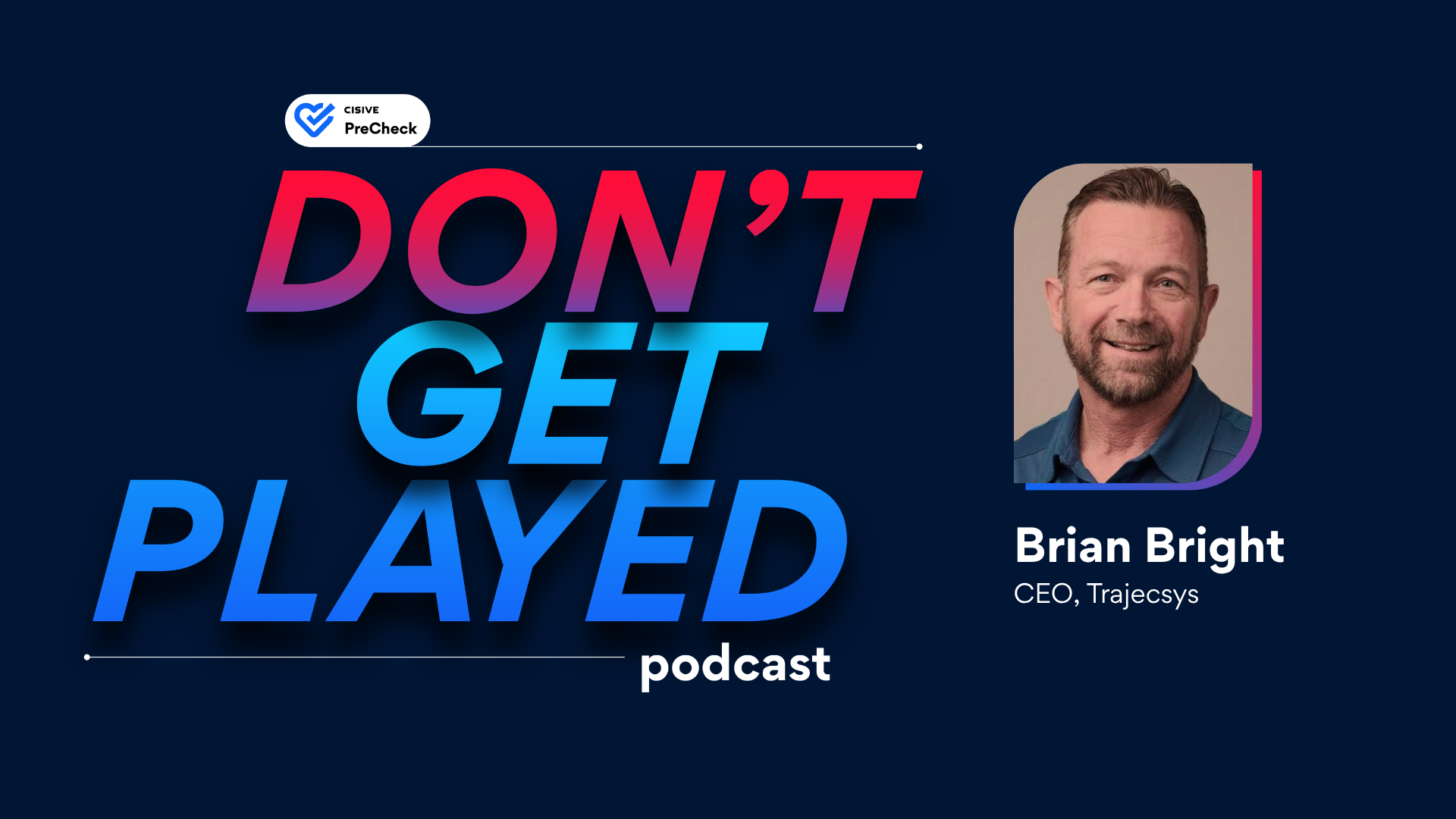
EP 16
September 22, 2026
The Day a Clinical Director Spread Years of Compliance Records Across a Texas Highway
with Brian Bright
Listen Now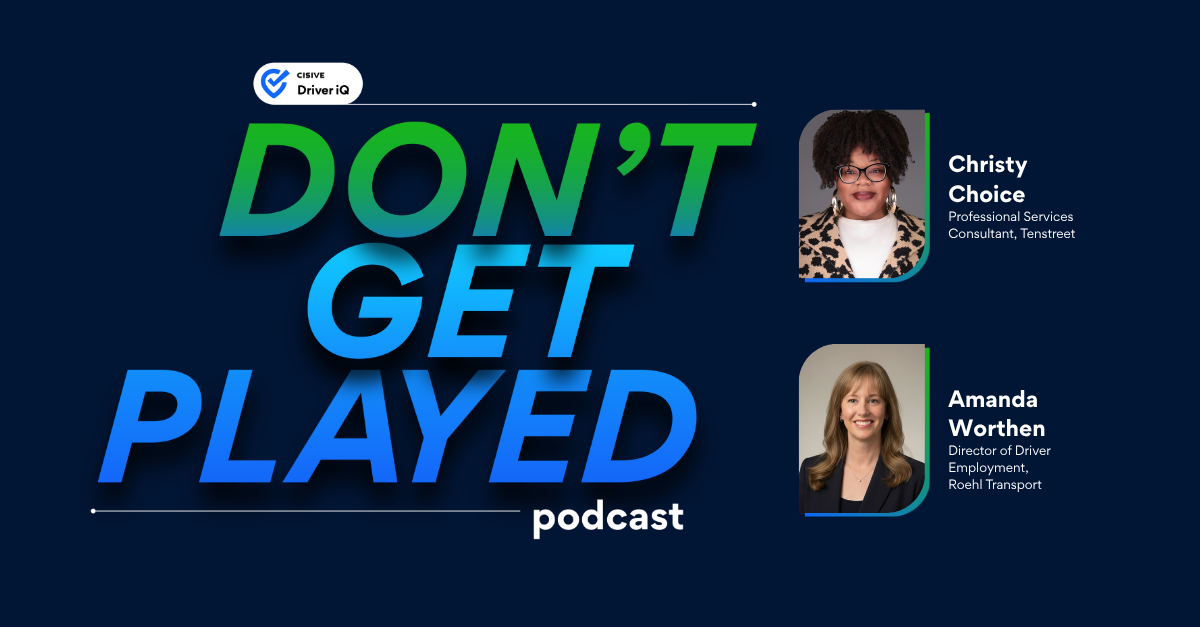
EP 13
August 11, 2026
The Driver Hiring Process Problem Speed Alone Can't Fix
with Christy Choice, Amanda Worthen
Listen Now


Ready to get started?
Book time with one of our screening experts to find out how we can streamline your talent process with a free assessment
Get your free assessment