Every transportation company knows that qualified drivers are essential to operations. When a driver fails a Department of Transportation (DOT) medical exam or receives a disqualification notice, the consequences extend beyond a single route. Medical disqualifications can expose your business to regulatory penalties, increase liability risk, and disrupt workforce continuity.
The biggest vulnerability is when your business doesn’t monitor medical status changes between exams, misses expired certifications, or relies on incomplete communication from third-party examiners. In an industry already under pressure from high turnover and compliance complexity, employers need to manage DOT medical requirements with a clear framework.
Table of Contents
Overview of DOT Medical Requirements
DOT requires all commercial driver's license (CDL) holders to meet specific medical standards before operating vehicles in interstate commerce. These standards protect drivers, motorists, and the public from risks associated with medically unfit operators. DOT medical certification evaluates physical and mental fitness through a variety of physical exams and health assessments.
What Is the DOT Medical Exam?
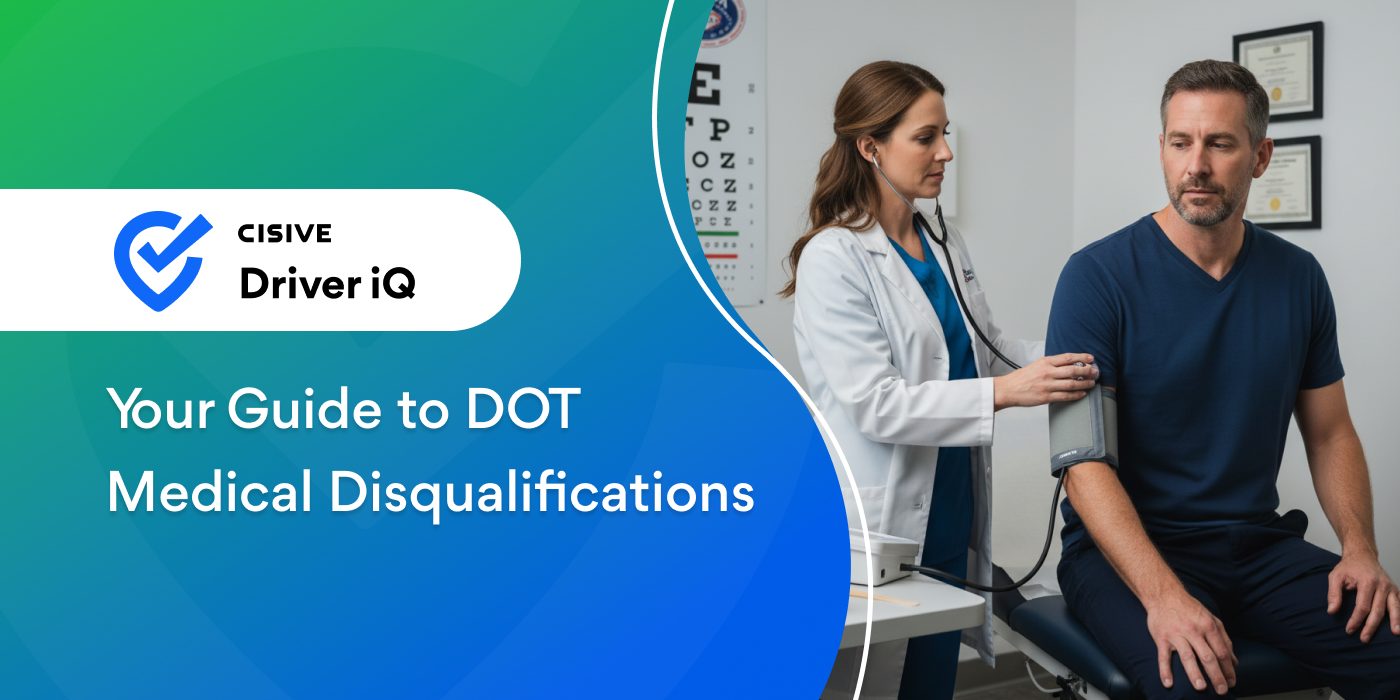
The DOT physical exam is a federally mandated evaluation performed by a certified medical examiner listed on the Federal Motor Carrier Safety Administration (FMCSA) National Registry. The exam includes medical history review, physical assessment of cardiovascular and respiratory function, vision and hearing screenings, blood pressure checks, and urinalysis.
When symptoms warrant, examiners may order additional testing for certain conditions, such as sleep apnea. Passing the DOT physical examination typically grants a certification for up to 24 months, though certain conditions may result in shorter certification periods.
Why Are DOT Medical Exams Important?
Meeting DOT physical requirements ensures commercial drivers can safely operate large vehicles. For employers, compliance:
-
-
Enhances workforce reliability and safety
-
Minimizes liability for accidents and regulatory breaches
-
Prevents costly fines or business interruptions
-
Supports early identification of health issues, improving driver wellbeing
-
The consequences of not following standards can be severe. When drivers experience medical events while operating commercial vehicles, lives are at risk, and employers can face liability.
Common Reasons for Medical Disqualification
Understanding DOT disqualifying medical conditions helps employers manage compliance and workforce safety effectively. Some disqualifications are temporary and can be resolved, while others may be permanent. Continuous driver monitoring is important for detecting any changes that might disqualify a driver.
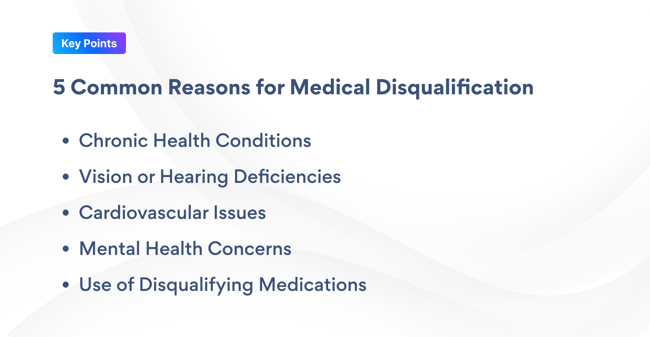
Chronic Health Conditions
Uncontrolled diabetes, particularly insulin-dependent diabetes that isn’t properly managed, can lead to disqualification due to hypoglycemia risk. Examiners identify this through medical history review and glucose monitoring. For employers, uncontrolled diabetes creates liability exposure if a driver experiences an on-the-job medical emergency.
Severe respiratory diseases, such as sleep apnea or chronic obstructive pulmonary disease, are problematic if untreated. Neurological disorders, including epilepsy, seizure disorders, and narcolepsy, will disqualify drivers who aren't seizure-free for required periods. Inner ear conditions that affect balance, such as Meniere's disease, can be disqualifying.
Vision or Hearing Deficiencies
Examiners test vision acuity during physical exams. Vision below 20/40 in each eye or poor peripheral vision is disqualifying, as vision deficiencies prevent drivers from detecting hazards or reading signals. Hearing loss that prevents detecting a forced whisper from 5 feet away also leads to disqualification, even with a hearing aid. Drivers need to demonstrate their ability to hear warning sounds, backup alarms, or emergency sirens.
Cardiovascular Issues
Cardiovascular conditions represent some of the most serious disqualifying factors because of the risk of sudden incapacitation. Examiners assess cardiovascular health through:
-
-
Blood pressure and pulse monitoring
-
Medical history review of heart attacks, surgeries, or heart disease
-
Documentation from cardiologists when necessary
-
A recent heart attack, severe coronary artery disease, congestive heart failure, uncontrolled hypertension, or dangerous arrhythmias all result in disqualification. For employers, cardiovascular events can occur suddenly, creating catastrophic liability exposure and putting public safety at risk.
Mental Health Concerns
Active, severe, untreated mental health disorders, including major depression with suicidal tendencies, bipolar disorder, schizophrenia, or untreated post-traumatic stress disorder, may disqualify drivers when symptoms interfere with safe operation. Examiners can evaluate stability and treatment status during a medical history review, and well-controlled conditions may be approved. Employers must ensure drivers in safety-sensitive roles are medically cleared, as mental health crises while driving create serious safety and liability concerns.
Use of Disqualifying Medications
Medications impairing cognitive or motor function disqualify drivers, including narcotic painkillers (oxycodone, morphine), strong sedatives (benzodiazepines, sleeping pills), and certain antipsychotics. Methadone and anti-seizure medications can also trigger disqualification in the absence of exemptions. Examiners review all medications and may consult prescribing physicians. Employers face risk when drivers operate under impairing medications, as reaction time and judgment are compromised.
Employer Responsibilities for Compliance
Employers have specific legal obligations regarding DOT medical certification. Meeting these ensures regulatory compliance and protects your business from liability.
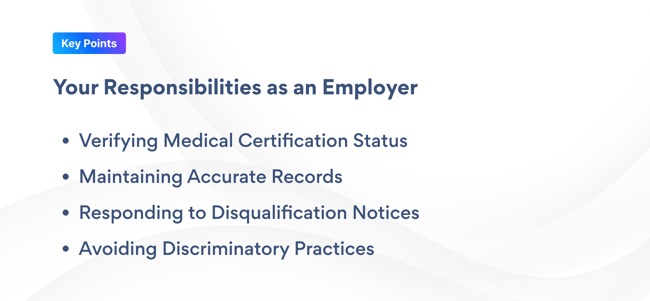
Verifying Medical Certification Status
Employers must routinely confirm that all active drivers hold current and valid DOT medical certificates. These are verified against the FMCSA National Registry. Best practices include:
-
-
Conducting monthly audits of driver qualification files
-
Using electronic systems to track expiration dates
-
Cross-checking certifications against official databases, including state MVRs, to confirm expiration date and certification status is what they were expecting
-
Sending drivers for exams 60 days before expiration, so the driver has time to correct any issues before their certification expires
-
Expired, missing, or voided certificates must be addressed immediately. For example, if a driver operates with an expired certificate and is involved in an accident, your company faces enhanced scrutiny, fines, and potential negligence claims.
Maintaining Accurate Records
Employers must retain copies of all DOT medical certificates for three to five years, depending on document type. Digital records are preferred, though some states require paper copies. Records must be securely stored and ready for audit. Proper recordkeeping provides defensible audit trails and helps track fleet patterns. For instance, if multiple drivers receive waivers for the same condition, you may want to assess recruitment processes.
Responding to Disqualification Notices
Employers who learn of a driver’s medical disqualification must immediately remove that person from safety-sensitive duties until the issue resolves. Confidentiality must be maintained. Employers should facilitate communication between the driver and examiner while supporting drivers as they pursue waivers or treatment. For example, a driver disqualified for high blood pressure may regain certification after treatment and stabilization.
Avoiding Discriminatory Practices
Medical certification requirements must be job-related and applied consistently. Employment decisions must be based on objective medical criteria and the ability to perform essential functions, not assumptions about disabilities. Key requirements include:
-
-
Maintaining confidentiality of all medical information
-
Providing reasonable accommodations when feasible
-
Conducting individual assessments for each case
-
For instance, if a driver has temporary restrictions, explore whether alternative duties are available. Discriminatory practices result in legal liability and reputational damage.

How Driver iQ Can Support Your Screening Process
Managing DOT medical certifications manually is time-consuming and error-prone. Employment verification services such as Cisive Driver iQ automate tracking, verification, and documentation to keep fleets safe and compliant. The platform reduces paperwork, minimizes compliance risks, and provides confidence that fleets remain qualified and audit-ready.
Driver iQ consolidates medical certifications, motor vehicle records, and drug testing into one secure platform with automated expiration alerts. It streamlines applicant screening by verifying prior employment, safety violations, and criminal background. The integration of Driver iQ with FMCSA Clearinghouse drug testing ensures every hire meets federal standards before operating vehicles.
When disqualifications do occur, the platform manages workflows to ensure compliance with removal requirements and tracks return-to-duty protocols. Continuous driver monitoring provides immediate visibility into status changes, reducing the risk of employing noncompliant drivers. The platform also offers instant verifications with SingleCheck to streamline your hiring process.
Hire with Confidence & Start with Driver iQ
DOT medical disqualifications are critical safeguards for your business, drivers, and the public. Employers that prioritize compliance will keep track of disqualifying conditions, maintain proper verification processes, and respond promptly to medical status changes.
The right systems help you manage risks proactively and build a more reliable workforce. Ready to strengthen your compliance process? Speak with a Driver iQ expert to learn how our solutions can support your fleet.