The Driver Hiring Process Problem Speed Alone Can't Fix
with Christy Choice, Amanda Worthen
Listen Now


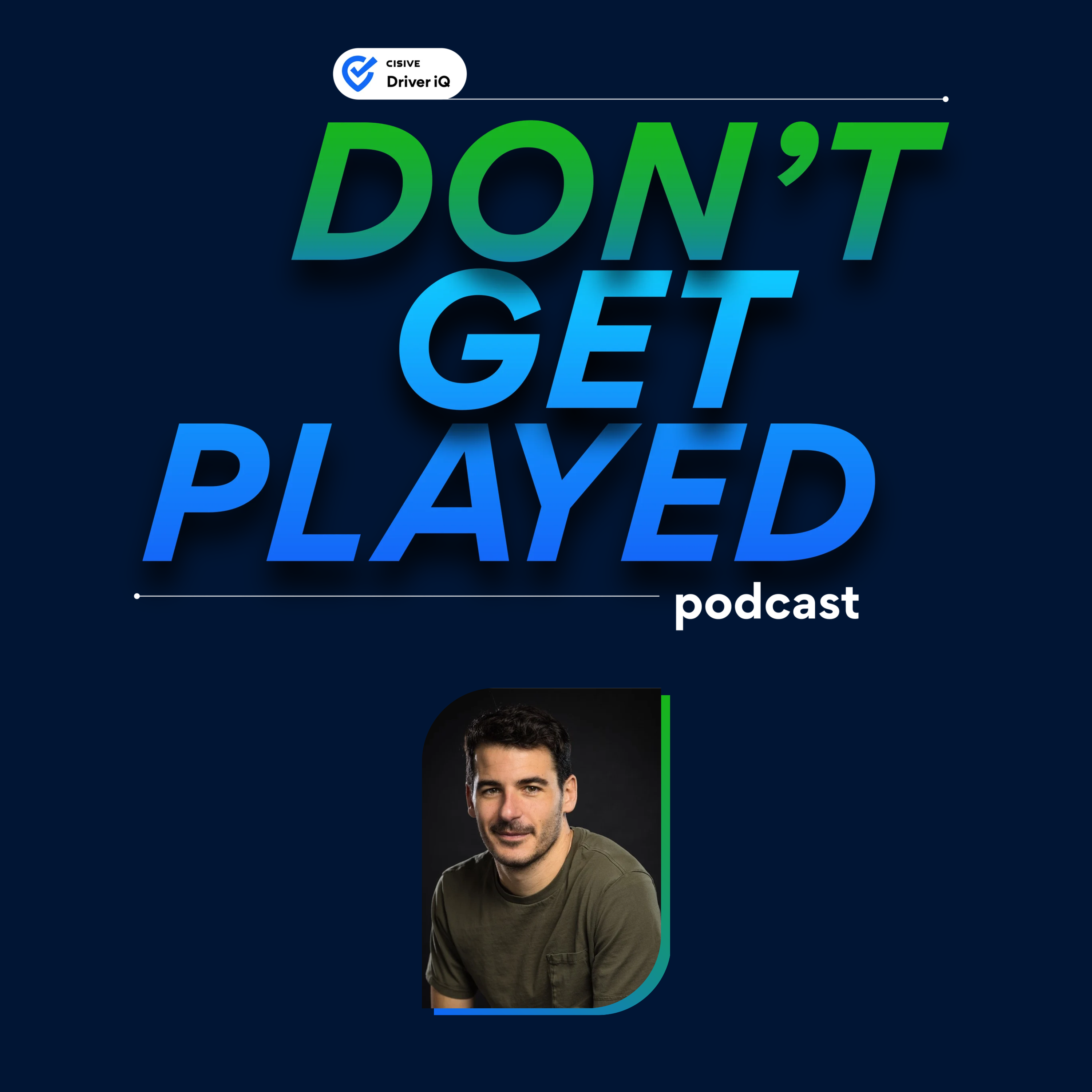
![[CIS] Dont Get Played - Francisco Lopez Roualdes HEADER IMAGE](https://www.cisive.com/hs-fs/hubfs/%5BCIS%5D%20Dont%20Get%20Played%20-%20Francisco%20Lopez%20Roualdes%20HEADER%20IMAGE.png?width=800&height=1066&name=%5BCIS%5D%20Dont%20Get%20Played%20-%20Francisco%20Lopez%20Roualdes%20HEADER%20IMAGE.png)
Francisco Lopez Roualdes
Co-Founder and CEO
Double Nickel
A driver applies to a fleet on a Thursday night. Nobody calls until Tuesday. By then, the driver has already talked to two other carriers who called back the next morning.
Speed-to-lead in trucking is treated like a race to the phone. Whoever calls first wins. When the process goes quiet right after application, that silence is where fleets lose drivers they should have hired.
The problem is rarely any single vendor. Screening, the Applicant Tracking System (ATS), and onboarding all work fine on their own. It's the seams between them where drivers fall through. The fleets with the best speed-to-lead aren't the ones running the most recruiters. They're the ones treating the application-to-offer journey as a single continuous workflow rather than three disconnected steps.
This episode of Don't Get Played pairs host Carlo Solórzano with Francisco Lopez Roualdes, Co-Founder and CEO of Double Nickel, a recruiting and compliance technology company built specifically for trucking. Their conversation digs into where candidates actually drop out of the funnel and what the fix is.
Most carriers treat background screening, the ATS, and onboarding as three separate purchases. Each one gets its own budget, its own vendor relationship, its own owner. On paper, that looks like specialization. In practice, it's where candidates disappear.
Francisco sees the pattern up close. "A driver file might be touched by up to three, four people during the process," he said, and not all of them are even talking to the driver directly. They're each acting on a different piece of the file, often in a different system, often without a full picture of what the others have already done.
That inconsistency turns into a procedural problem. As he puts it, recruiters within the same company "might do things slightly different, or significantly different," depending on how long they've been there and what habits they picked up along the way.
The fragmentation creates friction. Every tool a carrier adds without connecting it to the rest of the stack is another speed bump between the application and the offer, and every bump is a chance for the candidate to decide the wait isn't worth it.
Carriers assume their manual follow-ups are fast enough. The delays that actually kill a lead are invisible until it's already too late. It’s a few hours between shifts, an evening application nobody sees until the next day, or a report sitting in a queue.
Francisco described the moment most fleets recognize immediately. "When you start doing the qualification on a candidate, you pull your Driver iQ reports, you get back to them to finalize the date, silence." No system was tracking whether the driver had heard from anyone in three days, and by the time someone noticed, there was nothing left to notice.
The numbers explain why. Fifty-two percent of drivers apply outside standard business hours, mostly between five and 10 in the evening, yet most recruiting operations run no overnight or weekend coverage. Time to hire typically runs 12 to 20 days, and Francisco is direct about the cutoff. If a carrier hasn't reached a driver within five or six days, that driver has already moved on, either to another carrier or back to whatever they were doing before they applied.
The cost isn't only time. It's trust. Drivers don't usually ghost because they lost interest. They ghost because nobody gave them a straight answer. Silence reads as an answer of its own.
The speed-to-lead fix isn't a single platform or a clever workaround. It's deciding, before any contract is signed, that screening, the ATS, and onboarding have to share data as a condition of doing business, not as a nice-to-have negotiated later.
The fleets doing this well can see it in the numbers. "I think fleets that do really well can go from an initial conversation, a submission of a full app, to getting an offer within 24 hours, or at least a conditional offer," Francisco says. Those carriers post contact rates of 60 to 70 percent, well above the roughly 50 percent industry average. What separates those two numbers is integration, not effort. Technology will never be a replacement for process.
Speed-to-lead was never really about outrunning competitors to a fresh lead. It's about not losing the leads a fleet already paid for, already qualified, and should have closed. The fleets pulling ahead right now aren't hiring faster because they found more candidates. They're hiring faster because they closed the integration gaps and stopped losing the candidates they already had on the line.
Francisco Lopez Roualdes:
I think fleets that do really well can go from an initial conversation, a submission of a full app, to getting an offer within 24 hours, or at least a conditional offer. No, if that process, if someone puts in an app last thing on Thursday, and you get back to them with a conditional offer on Monday afternoon after you get done with orientation, like, I would expect the driver, you know, much higher possibility of the driver, like ghosting you. Or maybe he has moved on or he has, you know, followed another lead or decided he was not gonna actually make the change.
So I think momentum becomes a big thing.
Carlo Solórzano:
Welcome to Don't Get Played, a podcast from Cisive.
This show is for talent acquisition leaders and people managers who care about trust at work. How it's built. How it's measured. And how leaders design systems that hold up when speed, risk, and accountability collide.
I'm Carlo Solórzano, Senior Director for Cisive Driver iQ.
Most carriers assume that when a driver goes quiet, the driver made a choice to walk away. But what the data shows is that the drop-off usually has less to do with the driver and more to do with how the carrier runs its funnel. Slow follow-up, no shared visibility across the team, inconsistent communication… these are the things that lose the candidates carriers should have been able to hire.
My guest today is Francisco López Roualdes, Co-founder and CEO of Double Nickel, a recruiting and compliance technology company built specifically for the trucking industry.
In this episode, we talk about where candidates actually fall out of the funnel… and why it's rarely where fleets assume. We get into the real cost of a dropped candidate when freight rates are up and an empty truck runs you a thousand dollars a day in lost revenue.
We cover what separates a follow-up habit from a follow-up system and why that gap gets more expensive as a team grows. And we dig into what carriers that are winning right now are doing differently, from how they structure the offer to how they manage the days leading up to orientation.
The follow-up gap is costing fleets more than they realize. So let’s hear from Franscio on how to fix that. Let's get started!
Francisco, welcome to the Don't Get Played podcast.
Francisco Lopez Roualdes:
Thank you. Thank you for having me, Carlo. It's great to be here and excited to, to chat today.
Carlo Solórzano:
Yeah, me too, me too. Let's start off by just jumping into a problem and solve it real quick. Let's talk about the drop off problem. When you look at carrier recruiting funnels, where are drivers most likely to fall off? And is it the same breakdown point across most fleets, or do you see variants there?
Francisco Lopez Roualdes:
When you think about fleets at scale, doing advertising to try to get candidates interested, to try to get them, you know, to, to show interest and start a process, I think I would say every fleet right now struggles with the same, that is making first contact, and getting that first contact with a candidate.
I think, you know, fleets that do really, really well, have a strong brand name, have a strong process, like how to, you know, very good speed to lead, can get anywhere from 60 to 70% contact rates. I think that's very strong at scale. But that still means, you know, a third of, you know, the leads that you're paying for are going cold, you know, and then, you know, probably more on average we see, I would say like 50% contact rate.
Obviously it varies by lead source, varies by carrier size, varies for the type of position that they're hiring. But when you think about, you know, your typical regional OTR fleet hiring at scale, I think that is definitely the biggest drop off point. I would say though, something that has started to, we've been hearing more and more, and I wouldn't say I have a very strong stat around it, but something that we've been hearing more and more over the last two, three months, since the market has gotten tighter, is significant drop off from people committing to them not showing up to orientation.
And that's, I think, a lot more painful. One, you've invested a ton of money into these people, but two, you sort of earmarked them and operations had a truck ready for them. They were ready to get dispatched. You had them in the planning for next week, and people don't show up. So I think, when you think about money invested and marketing dollars and whatnot, I think probably the initial drop off is more costly.
But the second one is much more painful from a perspective of, you know, operations and keeping the rest of the business moving.
Carlo Solórzano:
Yeah. At that point they've already counted the egg, right?
Francisco Lopez Roualdes:
Yeah, I mean at some point you're ready to, okay, we have a big class for next week. We're netting, you know, five, 10 drivers over the course of this month, and then all of a sudden, you know, 50% don't show up. And, you know, you need to go back and explain that in your recruiting, you know, in your weekly recruiting meeting.
Carlo Solórzano:
Right. So how often do you think carriers believe that a candidate ghosted them, but in reality, the carrier actually dropped the ball on follow up? And like, what are some examples of what that might look like?
Francisco Lopez Roualdes:
Yeah, that's a great question. I think in the end, you know, what it becomes really hard here is how do you track that? No. And how do you track that ghosting? What does that ghosting mean? You made, you know, initial contact. I think oftentimes then it's like, is it ghosting, or is it that, you know, they went somewhere else because your product was not good enough for them, or they were looking for something different.
So I think there's always a little bit of this. It's a little bit of a gray area to separate that exactly. I think what we see, you know, what, you know, a typical point of, you know, when, going back to your first question, where do you see the most drop off is? We do see quite a bit of, you know, first contact made, first conversation had, and then driver doesn't, you know, go ahead and, you know, submit a full app, or doesn't go ahead and sort of, you know, finalize the process on their end, or gives you everything they promised on their end for you to be able to continue the process.
And I think that, you know, has become more and more of a thing over the last few months, as drivers are, you know, maybe drivers had sit quietly, you know, getting somewhat good money at their current fleet. You know, they have been sitting, sitting there, you know, quietly for the last two, three years.
A lot of uncertainty in the market are now putting out feelers and trying to understand, hey, what is a good opportunity for me with my experience? How much money could I make? And they have a few conversations, and if they don't find anything that they think is too compelling, they just go back. You know, they don't continue with their process.
I think that is definitely one place where it's happening. The most painful place where it's happening. You know, it's, you know, when you start doing the qualification on a candidate, you pull your driver IQ reports, you get back to them to finalize the date, silence. No, and I think oftentimes where we see a lot of that, and where we see a little bit of this, hey, is it the driver is ghosting you?
Or, you know, you drop the ball. I think it's on the time that passes. No, I think fleets that do really well can go from an initial conversation, a submission of a full app, to getting an offer within 24 hours, or at least a conditional offer. No, on a drug test and whatever needs to be accomplished, no.
But if that process, if someone puts in an app last thing on Thursday, and you get back to them with a conditional offer on Monday afternoon after you get done with orientation, like, I would expect the driver, you know, much higher possibility of the driver, like ghosting you. Or maybe he has moved on, or he has, you know, followed another lead, or decided he was not gonna actually make the change.
So I think momentum becomes a big thing. And keeping that, you know, some of the carriers that we see on our end that do best are doing, for anyone that's in the pipeline, trying to have, you know, a touch point every day. And that is sort of the way they keep them more.
Carlo Solórzano:
Absolutely. I think the longer that cycle drags out, the greater the propensity for something to go wrong. So that makes total sense. What's the cost of a dropped candidate that most fleet operators don't account for, and what's the downstream impact beyond just the missed hire?
Francisco Lopez Roualdes:
What's starting to happen now is the freight market has gotten so attractive, you know, for, you know, every load makes significant more money than it used to, you know, a few months ago. So I think in the end, where a lot of fleets are trying to like get their head around this, hey, with these rates, I think just the most expensive thing that can happen is just having an empty seat, right?
If we need to put more money, if we need to order all of the reports all at once, just to get the process moving and get someone in, if we need to run multiple orientation classes every week just to make sure that people don't sort of lose momentum, I think all of those things are starting to become almost negligible versus the cost of having a truck sitting in the yard. You know, you might be losing, you know, up, up to a thousand dollars per day, you know, and sort of cross profit from that truck not moving. So it's like, hey, compared to that, spending more on reports or spending more on travel or getting the driver to fly in today and rent a car today versus, you know, waiting for a few days.
That is, I think obviously operationally there's some considerations to that, but I think that's where fleets are today. You know, trying to, you know, play those trade offs now, going faster, spending more money, doing more advertising now, almost all of that sort of compensates with how attractive the freight market is.
So I would say when you think about the cost of a dropped candidate, I think now the biggest thing that fleets are looking at is what is my sort of revenue loss from having that truck sitting in the yard, or from not bringing in one more owner operator for my fleet. And I think that's how more and more fleets are starting to think when, you know, it makes sense to throw as much money as we can into their hiring process.
Because if someone is with us even for four months or six months, that already sort of more than pays for all of that investment.
Carlo Solórzano:
Yeah. And so, you know, so when you start thinking about the problem, right, and how it's allocated, do you see this as a recruiter problem, a process problem, or technology problem? Like, where do you see that the failure in the process typically living?
Francisco Lopez Roualdes:
Yeah, this is probably the worst answer ever, but I would say it's a mix of all of them.
Carlo Solórzano:
It's probably the most accurate though too.
Francisco Lopez Roualdes:
Yeah, that, that is true. Yeah, if someone was expecting me to sort of drop a silver bullet, there's not, no, it's a combination of the three, I would say. I think that for me, the recruiter, where you see, when you see a lot of disparity between recruiters, that is typically linked to process challenges.
No, I think process is the foundation of all of it. I think technology without a good process, or, you know, either good recruiters without a good process, it's very hard to get consistent outcomes. And I think one of the things that we typically see is even larger fleets, you know, sometimes, you know, we close a large customer, they're coming on board, the first thing that we tell them is, hey, could you share with us your SOP? Like, how do you hire drivers, so that we can start to understand that in a lot more detail and, you know, find the best way for that to be implemented into Double Nickel or look at opportunities. We are, we're most of the time surprised at how the documentation exists.
And, you know, when you talk to different co, when you talk to different recruiters there, they might do things slightly different, or significantly different, right, depending on how long they've been there, you know? So I think process is a big part of it. Know, having very strong, having one, a very clearly defined process, and two, having ways of tracking it and being able to sort of, you know, track if we're adhering to it.
I would say those fleets that have the least documented process, I think is where we see the most variation in outcomes across recruiters. So that's one piece. Then I would say technology also plays a big part, but it's an enabler of your process. No. Yes, we can help you do, you know, automate a lot of these daily touches to make sure that you're always keeping the candidate warm.
But you need to be able to assign your process so that every day, each one of those touches is actually meaningful and has a purpose. No, and I think that comes from process more than from the technology per se.
Carlo Solórzano:
So we, we've kind of danced all around this next question a little bit, but let's, let's focus in on it explicitly. Let's talk about the difference between a follow-up habit versus a follow-up system, and why that distinction matters when we're at scale.
Francisco Lopez Roualdes:
A few things about habits. Know, when you think about the definition of a habit, know it's something that I do, you know, that I've built into my day out of repetition, that habits can break, you know, if they become painful, you know, they're also very dependent on people.
Some people are much more rigorous in sticking to their habits than some others, like. Yeah, I know people that work out religiously every morning at 4:00 AM. I do it sometimes, yes, but like, I don't say, you know, I'm, I stick too much to it. No. So I think that is where things get risky at scale.
No, you're, you know, you're expanding your team from three recruiters to five recruiters. Are those two other recruiters? You know, yes, you try to think about traits as they're coming in, but then they might have different habits, they might think about differently. It becomes a little bit too dependent on the person.
At the same time, before we were hiring, you know, before it took us maybe, out of every 20 leads we could get a hire. Now the market is much tighter. People are shopping around, we need a hundred leads. And then, you know, your habit of calling every person six times, now it's painful. Can you keep up that habit?
And I think that's where systems come into place. And that's where it becomes a lot more important to have a very strong follow up system. And that can enable, you know, that can enable you to scale that follow, to keep that follow up consistent, to keep that experience consistent even as you scale the team or you scale the volume, you know?
That's where technology, I think, plays a role, know. And how do you scale that follow up? Or how do you make it that simple? For the recruiter to scale that follow up, and also for, you know, the manager to be able to keep the recruiters accountable and to actually track what has been done and what have not.
Carlo Solórzano:
We talked a lot about systems and processes, and when you think about those, shared visibility across recruiting teams comes up a lot when you're talking about, you know, the system that you have in place. And talk a little bit about what that looks like in practice, and what tends to break when a team doesn't have that shared visibility.
Francisco Lopez Roualdes:
Yeah. I think this is something that becomes more and more important as you think about more sophisticated or larger teams, where you might have, you know, depending on carrier size and team structure, a driver file might be touched by up to three, four people during the process. No, they might not all interface with the driver, but they all need to take action on different things throughout the process.
And I think that's where visibility, you know, lack of visibility can break, and can, you know, either have, you know, provide a disjointed experience to the driver, or can have drivers fall through the cracks, you know? So I think that is sort of, that is a, how we think about, you know, shared visibility.
How do, how can anyone at any point in time in the process know clearly where a driver sits in the process, what things have been done, what things are pending, who needs to review them, and what are the things that need to take action to get that driver to the next step? Because when those things are not in place, yeah.
If you're a one-man show running, you know, recruiting one or two drivers every week, where you know you have everything in your head, that works, and you can have a consistent experience for all drivers and consistent outcomes with one person without having a lot of shared visibility. When you start to add people that have to play a role in the process, I think that's when things become challenging, or when you have, you know, big classes, and operations need to be able to have a heads up on, hey, what do I need to get ready for next week?
I think that's where those things break, and that's where I believe, you know, having that shared visibility becomes more and more important.
Carlo Solórzano:
I've always said that you can tell a lot about a carrier's recruiting operation by watching how they handle that gap between the application and first contact. And we've talked a fair bit about that being a real problematic spot for missing out on opportunities. What have you seen be most successful in that space?
Francisco Lopez Roualdes:
Yeah, I think from a, I, we always have this discussion. I think we were the first to sort of come to market with, like, our an AI recruiter that would automate the initial call. And I think that the endless discussion, the endless back and forth, was like, hey, nobody wants to, you know, they, we always hear this, hey, I, you know, I want my, you know, I want real recruiters to call drivers, you know, the moment that they apply, and I agree that's the optimal.
I think that if we could scale that to, you know, to every driver that applies at any point in time, that's fantastic, and we should aim for that. The reality, you know, and that I think is a gold standard, you know, being able to, whenever someone applies, get in touch with that person within the first, you know, 30 minutes, let's just say.
So they have, you know, your brand is fresh in their head. They know who you are. They just saw your app. They just applied. The reality is that today we see over 50%, 52% is exact, like the exact number, 52% of drivers applying outside of business hours, be on the evening during the weekday or during the weekend.
So in the end, there's sort of, you know, for 50, most shops, even large, you know, large recruiting operations, do not have overnight or weekend coverage. So that means, you know, there's 50% of your applicants that are not, you know, that you're not hitting in that gold standard. So then it becomes important, hey, how do you keep momentum on those?
How do you make 'em move quickly on those? How do you sort of make sure that whenever they saw their ad, you're already making a first impression, you're trying to move. So I think, you know, we're seeing fleets starting to maybe overlap schedules if they have multiple recruiters. So they say, hey, we have recruiters that come in very early and leave earlier, and we have recruiters that come in later and leave later, to try to get more coverage.
I think it continues to be a challenge, you know, and, and that is sort of the a big point. How do you provide 24/7 coverage for drivers that are applying? Yeah, we have very few drivers that apply at 3:00 AM, but we have a lot of drivers that apply between 5:00 PM and 10:00 PM.
You know, and how do you touch those very quickly?
Carlo Solórzano:
Yeah. That's when the drivers aren't driving. So if, yeah, it stands to reason. We certainly hope they're not filling out an application on their phone while they're driving. Right.
Francisco Lopez Roualdes:
Yeah. I mean, a hundred percent. But the other thing there, I, I would say you bring an interesting point, that's like, how do you spread out your outbound? No, I think if you call, like if you're only calling drivers, we talk to a lot of shops and say, you know, we call new applications between, you know, 9:00 AM and 11:00 AM, like, yeah, but if that's when you're doing your outbound, like, it can be that, you know, some drivers are working at those, things are driving, and they might not pick up. So it's like, how do you spread that out? How do you think about your outbound blocks in a way that you're also accounting for these things?
If you're always calling people at the same time, it might be that a lead that comes in one evening, you're never gonna get them because you're always driving at that time.
Carlo Solórzano:
You know, I think there's the longstanding truism around the importance of the time to that very first contact after application, but like, moving past that first touch, with regard to the response time threshold, is there a number of days or hours after a last contact or a last outreach from the driver that might, you know, that lag time between that last touch and when you respond to them, where a carrier's effectively lost that driver candidate?
Francisco Lopez Roualdes:
Yeah. You know, you probably, I think that consistently the data that we see is that most of our companies, you know, and the carriers that we work with, have a full sort of time to hire that is somewhere between, you know, 12 days to 20 days, depending if they're owner operators, and there's more things that need to be collected or not.
But, you know, for a company driver, I think, thinking, you know, 10 to 14 days is like a very good sort of time from first contact to, you know, driver showing up for orientation. So if you think about that Carlo, and you think probably drivers, you know, might be, you know, they up, you know, they're thinking, okay, I'm gonna look for a job.
They probably applied to four or five places, you know, over the course of 1, 2, 3 days, you know? If after five, six days you haven't gotten a hold of that driver, it means that driver either has sort of withdrawn from most of the processes, or is already very far advanced in some of the other processes, and they've already committed to someone else.
No. So we always say, you know, and this is something that we try to enforce as part of, you know, the rules and the automation that we send into the system is, hey, if after seven days you haven't made contact with the driver, you might as well sort of move them into like unable to contact, and start thinking about a different communication sort of cadence, or some sort of drip, because they're probably gone or they have withdrawn from processes altogether now.
So I think that's what we typically see. Very unlikely that, you know, you call someone on the ninth day, you know you've never made contact, you call 'em on the ninth day, and they're like, yeah, I'm still looking, like I'll fill an application, and you know, I'll, I can be there next week.
Carlo Solórzano:
Right. Right. So do you see that there are types of carriers, types of freight, or other market conditions where the follow-up problem is especially acute, be that like smaller fleets, or carrier type, or certain geographies?
Francisco Lopez Roualdes:
Yeah, I would say definitely for owner operators, I think it's a lot more challenging, because if you think about the nature of the work, know, one, the time to hire is typically much longer. The driver, you know, might be somewhere else, or like they might be, you know, um, they need to go to a terminal to get their decals done, or whatever, in order to pick up their ELDs, et cetera.
And they might be somewhere else in the country. It's not that they can fly, they need to take the truck with them. No. So that takes time. So, you know, time to hire for owner operators, from first contact to sort of activation, know, it can be, you know, a little bit longer, maybe 20 days, 25 days.
When you think about that, I think just the time that you have in your pipeline, if you need to hire 10 a week or 15 a week, that means that at any given point you probably have 20, 25, 30 people that you're working through. So I think that makes it exponentially more complex, in the sense that you need to keep them engaged throughout all of this time.
And the amount of documentation that the driver needs to provide, vis-a-vis a company driver, significantly larger, no. So there's a lot more, think he needs to do, there's a lot more effort on the driver, he or she needs to do a lot more effort on the driver than at any point in time. If they see that the spot market is doing amazing, they're like, hey, like, let's just drop this.
And this is what's happening now. You know, owner operators are like, I need to do all of these things to run for these guys, but like, I'm seeing, you know, this, it looks, you know, I'm seeing this spot market being really hot, so I can take all of these loads and continue running on my own. So I think that makes follow up and reiterating the value prop and moving through a funnel like consistently a lot more challenging.
Carlo Solórzano:
Yeah, that tracks exactly with what I'm hearing in the marketplace today, particularly with the owner operator folks and the struggles that they're facing because of that shortage of capacity, meaning the spot market's hot and owner operators are really hard to come by.
So totally tracks. Totally.
Francisco Lopez Roualdes:
Yeah. And they have the asset, right? So they can say, hey, I'm gonna run one more week with these rates, and if rates are next week, I'll give you a call. You're gonna take me anyways, because you're always looking to add additional owner operators, you know? So I think for them they have, you know, they're the ones that have, it's definitely a driver market right now, and for them it's, and it's definitely an owner operator's market right now.
Carlo Solórzano:
How much does the recruiting experience influence whether a driver trusts the carrier before they ever touch the wheel? And do you think that's underappreciated?
Francisco Lopez Roualdes:
You only get one chance at first impressions. No. And the recruiting experience is the first impression of that driver interacting with that carrier. The other sort of thing that I, I always try to put, you know, in perspective, that is like whatever turnover percentage a company has, typically we see two thirds of that happening in the first 90 to a hundred days.
No. So, you know, if you have a hundred percent turnover, typically 60% of that turnover is your churning drivers in the first 60 days, in the first 90 days. Which I think it points also to an onboarding, probably, or like a hiring and onboarding challenge, more than a, like a long-term retention. No, that means, you know, expectations were not met the first few months.
Were a little bit bumpy. That typically has to do with, wait, what's my expectation? What is expedience? What do I like? How do those contrast? So I do think, you know, making sure that you co, you, the experience is consistent. And I think, you know, you follow up on your promises. You make sure that, you know, if you say you're gonna do this, I, you hear back from me in the next 24 hours, that you do.
So I think all of that sort of starts putting the breadcrumbs into how fleets treat their drivers, and how, you know, they follow up on their commitments and whatnot. So I do think, you know, it's definitely like very relevant. And oftentimes carriers are more internally looking, and, okay, I made contact, now I need to do all these things internally to get this driver over to orientation.
But on the other end, the driver's just getting, you know, two or three sort of notifications on what's going on in the, in, in the in between, you know? So I think that definitely plays a role and definitely builds that trust. No.
Carlo Solórzano:
Interesting. So, so that, that sort of pre and onboarding type of communication really does seem to have a significant impact on driver tenure after they're hired. That's really great to know. Carriers that are winning the talent competition right now, what are they doing with recruiting communication that others aren't?
Francisco Lopez Roualdes:
I think one thing that's important, I think communication and experience is really important, but I would say I think carriers that are winning, that we see winning in this market, is a few things. One, the product continues to be, I think, the most important. No, like the product they're selling, is it like, is the home time good?
Is equipment, you know, world class, is the, you know, is the pay competitive and attractive? I think nothing beat. Like, it's really hard. You can have the most amazing communication, the best recruiters in the world, but if your product sucks, it's really hard.
Carlo Solórzano:
You're just putting lipstick on a pig, right?
Francisco Lopez Roualdes:
Yeah. I think the other thing that is important, it's, you know, how do you, like we're seeing carriers that are winning, the carriers that are like, can move fast. No, I think some carriers have been for the last two months trying to figure out pay increases, or how are we gonna deal with this? Is this permanent, is this temporary? And I think carriers that were able to sort of react quickly and say, hey, we're gonna build some way that is easy to explain to drivers, where we can, you know, make it more attractive and actually try different things quickly, I think we see them, we see those winning versus the ones that are still trying to figure out the exact math of how much they can increase without shooting themselves in the foot.
And that, I think, you know, some pipelines have dried up, and some people continue to hire, and a lot of it is tied to the product.
But I, you know, assuming that the product is competitive, I think then process and communications can play like a big role. A few things we're seeing, one is having some sort of, you know, 24/7 coverage or engagement has become more and more relevant. That can be a simple text and an email. It can also be some sort of, you know, either looking for playing with time zones, or, you know, overseas capacity, to try to get 24/7 coverage, or, you know, AI of some sort.
I think we're seeing more and more of that to make sure that you, you know, strike when it's hot and you can make that first move and set up a first impression. Two, the other thing that we're seeing is like moving very quickly on a conditional offer. Now, I think being able to consistently come back once they've submitted an application to say, we can offer you a position, here is your offer letter. These are all the things that need to happen in the next seven days to get you to a seat with us. And three, I would say have a very clear journey of how that looks like over the next 6, 7, 8 days, that helps sort of, that has touch points, that has actions, that has engagement, all the way from the offer to the orientation, to help keep that momentum.
Think about it like this. Putting into an example, you can give an offer, I can give you an offer, Carlo, today, and say, hey, I'm gonna send you an email with 25 action items that you need to complete before coming on. That's a sh*tty experience. I can also say, hey, you're gonna, I'm scheduling for into 10, like, you're scheduled to come in 10 days. This is how the next six days are gonna look like, before, you know, the weekend till now, from the Friday before you come in on Monday. I'm gonna send you for a drug test tomorrow. Here's your QR code. You can go and get it here and here. And on day two, I'm gonna send you a note to get, you know, to get you set up in our TM, whatever those things are.
No, and complete that throughout the course of six, seven days and keep that engagement, versus dumping, you know, a ton of work on you on day one, and then just, you know, giving you a call the Friday before and say, hey, are you still coming?
Carlo Solórzano:
Setting clear expectations, and then trickling out tasks versus dumping them, you know, dumping a big list on them all at once. I think you're spot on with that.
Francisco Lopez Roualdes:
Yeah. And including things that could also be attractive for drivers? No, I think in the end, reinforcing their decision. Some carriers have some sort of buddy program, where a driver that has been with that company for a long time will give you a call throughout that process, know, to share, like, get a different perspective. That is not the recruiter. Or, you know, meet your dispatching team, some way in which you can continue to sell the job, because, you know, you might think they sign a conditional offer, they're sort of buttoned up, but they're still getting calls from all of the other companies they applied to, which, you know, between now and then might have taken their sign in bonus from three K to 10 K.
So I think you still need to, till they're not here on the, like in the truck, they can always go somewhere else.
Carlo Solórzano:
Yeah. Let's talk a little bit about the human element. Most carriers, you know, when I'm talking to recruiting leaders, they mention that they have one or two real rockstar recruiters who are great at, you know, dotting the I's and crossing the T's, and the rest of the team is, you know, otherwise inconsistent.
How do you systematize something that currently lives in individual habits?
Francisco Lopez Roualdes:
Yeah, that, that's a great question. Think about your team, Carlo. No, I think you also have that, know, you have people that you know outperform all the time, and I think that is gonna be, that's sort of the nature of the beast to a certain extent. No.
But I think if you, when you think about very disparate outcomes, I think there's a few things that, that we see consistently on, you know, teams that have, you know, have been able to track, or at least put, you know, new recruiters producing at a level of their top recruiters in a few weeks or in a few months.
One of them, I think it's like having a very clear process, you know, and having a very sort of strong process. This is how we recruit drivers at X, Y, Z trucking. That's sort of number one. Two, having very clear sort of training and mentoring, like very strong training and mentoring, not only, hey, you're a new recruiter, we'll do a week of like training and then okay, go. No, it's like, how do you continue to mentor that? I think one thing that some carriers do is like, they get together on a weekly basis and they review sort of the best calls of the week. And so if Carlo is your best, similar to what you'll do in sales, no, if Carlo is your best salesman, you might get together, you know, with a whole sales team every week and say, hey, we're gonna review the best calls, and I wanna point out three, four things that I think everyone should take in practices. So that sort of mentoring, I think, is very consistent. And then three, I would say also, how do you know, put in place technology that enables to do this?
No. Are you recording your calls? You have an easy way of analyzing your calls and seeing what calls are good, and also give mentoring and get feedback. You know, as a, we can always pick a few calls and spot check a call from a recruiter to try to see, hey, this is what I think is happening. Today, there's tools to be able to do that at scale.
No. Hey, Carlo consistently does these three things really well, but Carlo, you know, is a little bit less consistent on these two things, and these are the things that he should work on after analyzing, you know, 200 calls he did this week. So I think there's a few things there where fleets that do really well are doing a little bit different than some of the ones, you know, that, or when I say do really well, I would say when, where fleets, where we see new recruiters catch up to best performers somewhat quicker.
You always gonna have differences, but I think you wanna make sure if you have a recruiter bringing in 10 drivers a week, I think it's, you shouldn't have one that only brings one. No.
Carlo Solórzano:
Fran, Fran, I got one more question for you. For a fleet operator who's tuning into the pod today and thinking to themselves, man, we gotta fix this, what's the first thing they should do this week?
Francisco Lopez Roualdes:
Yeah, I, that's a great question. I, as I said, I think if you're waiting for a silver bullet, I'm, I'm a, I was a consultant for the first many years of my professional life, and I would say, get a baseline, what is working, what is not? I think you can probably pick, you know, I would say there's four or five metrics that can help you understand where are things sort of not working, and try to get a good baseline of that.
'Cause I think the problem, if you have a contact rate early in the funnel, the type of things that you might do are very different than if you have, you know, hey, people are like not taking our offer, you know, or people are no showing. So I think trying to understand, you know, some of your most relevant metrics, how many leads it takes you to hire someone? Where is that drop off happening? What are the, you know, what are the steps in the process where you're seeing the most drop off? How many touch points are you making per hire? How many calls are your recruiters making to try to make contact? I think getting a good baseline will allow you to understand very quickly where the biggest bang for your buck is.
And I think it's, at the beginning of a conversation, I'm always very surprised. Sometimes in even larger fleets, like not all of them have a good handle on their metrics. And when you're running multiple recruiters, you're spending hundreds of thousands of dollars potentially in advertising, you might like, you might be leaking from multiple places.
No, and like, without that, it's like flying blind. So no silver bullet, I guess, there, but I think trying to get a hold on, you know, what's going on, and where do you see the biggest, the biggest gaps, I think is definitely probably the first step to trying to understand how to fix it.
Carlo Solórzano:
Absolutely. Yeah. If you don't know where you are, how can you ever figure out where you're going?
Francisco Lopez Roualdes:
Yeah.
Carlo Solórzano:
Fran, thank you so much for stopping by today. This has been such a great conversation. We really appreciate it.
Francisco Lopez Roualdes:
No, thank you very much for having me, Carlo. I think it's, it's been great, you know, being here and chatting a little bit about this. So I truly appreciate it, and yeah, I'll see you, I'll see you around.
Carlo Solórzano:
When carriers lose a driver mid-funnel, the temptation is to write it off as simply ghosting. What Francisco makes clear in this conversation is that most of the time, the carrier created the conditions for that drop-off… through slow response, a lack of momentum, or no one owning what happened next.
The carriers that are doing well right now tend to share a few traits. They move from application to conditional offer fast, sometimes within 24 hours. They treat the stretch between the offer and orientation as an active part of the hiring process, not a gap to be filled with a reminder call the day before. And they've built systems that keep the follow-up consistent whether one recruiter is working a driver or four.
Many thanks to Francisco for joining us and sharing what he's seeing across the fleets Double Nickel works with. We’ve heard a lot of useful stuff in it for anyone managing a recruiting operation in trucking right now.
If you found this useful, subscribe to Don't Get Played on Apple Podcasts, Spotify, and YouTube. And if you know a fleet operator or recruiting leader who's wrestling with candidate drop-off, send this one their way.
We'll see you next time. And remember, in the meantime… don't get played.
with Christy Choice, Amanda Worthen
Listen Now
with Tracy Rushing
Listen Now
with Tommy Valenzuela
Listen Now


Book time with one of our screening experts to find out how we can streamline your talent process with a free assessment
Get your free assessment