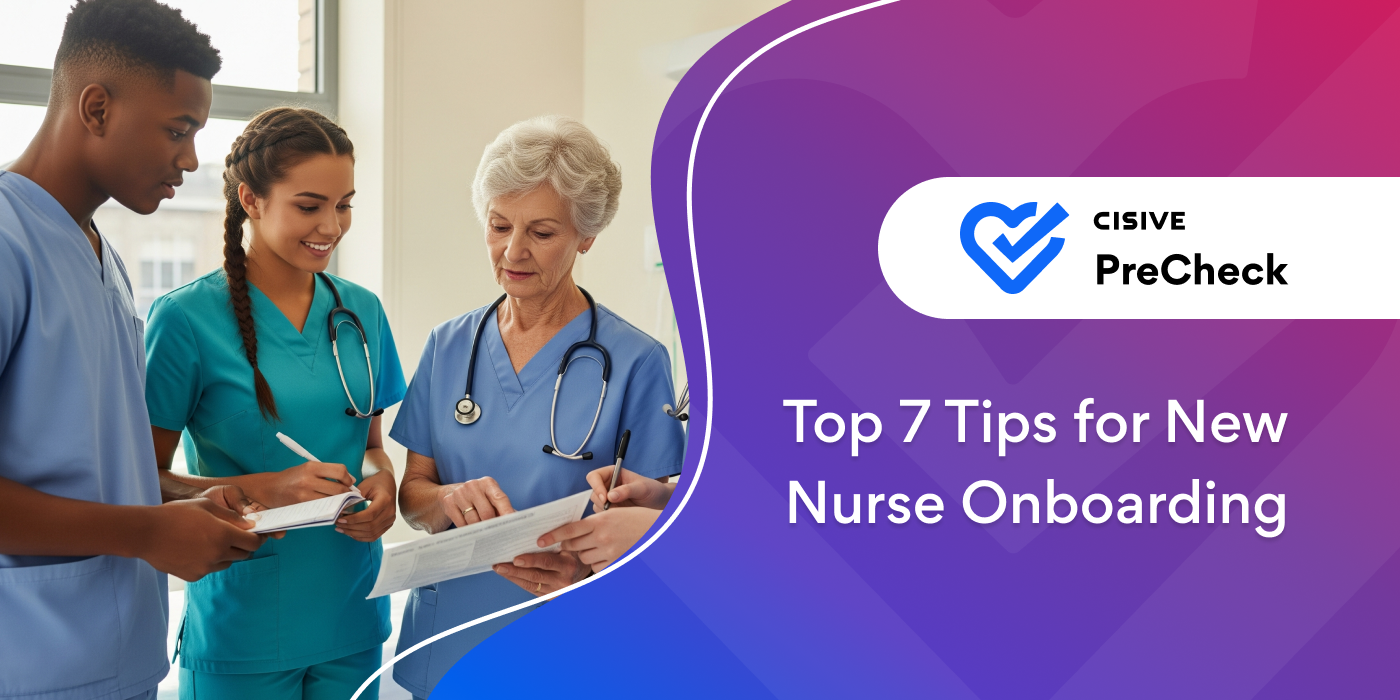
New nurse onboarding goes far beyond paperwork and facility tours. When you bring in RNs fresh from school, those first few weeks set the tone for the rest of their work life with you.
With nurse burnout continuing to rise, effective new nurse onboarding plays a critical role more than ever. Studies cited by the American Nursing Association have said that 62% of nurses, and up to 69% of nurses under 25, suffer from burnout. To prevent burnout, you need onboarding that builds clinical readiness and emotional resilience.
Orientation should offer more than an introduction to charting systems and badge access. It should prepare nurses for the pace of the floor, the unit culture, and the clinical expectations for your practice.
For healthcare HR leaders, onboarding is more than an administrative task. It’s a critical moment that impacts patient safety, nurse retention, and long-term performance. With 62% of nurses and 69% of those under 25 reporting burnout (ANA), your onboarding process must support both clinical readiness and emotional resilience.
When done well, onboarding accelerates time-to-productivity, strengthens team culture, and reduces costly early turnover.
Turnover and Burnout: A Tipping Point for Nursing
Burnout is now a leading cause of nurse turnover. A JAMA Network Open study found that 31.5% of nurses who left their roles identified burnout as the primary reason (JAMA). Early-career nurses are especially vulnerable—17.5% leave their first job within a year (NYU).
A structured, staged onboarding experience can reduce that risk—ensuring nurses feel prepared, supported, and aligned with your organization.

The Reality of Onboarding New Nurses
New nurses face unique pressures as they transition from school to practice:
-
- Staffing shortages can lead to compressed orientations, leaving nurses unprepared.
- Academic-to-practice gaps mean many new graduate nurses struggle with prioritization and pace.
- Compliance hurdles like licensure, EMR access, and required trainings are often siloed.
- Hiring for speed in today’s labor market increases the risk of clinical or cultural misalignment.
Onboarding is the one moment HR controls that can directly address each of these issues.
7 Best Practices for New Nurse Onboarding
Onboarding newly hired nurses works best when it runs like a well-managed care plan — organized, measurable, and responsive. Nurses entering your system need structure and clarity, and they need to learn tools for the pace and pressure of the clinical floor. These best practices bring consistency, build trust, and help prevent burnout.
1. Create a Structured Onboarding Plan
Design onboarding like a care plan: assess, train, validate. Define timelines for EMR training, shadow shifts, and early patient assignments. Nurses thrive when they know what to expect and when.
2. Standardize Preceptorships Across Units
Inconsistent preceptor styles create confusion. Use shared rubrics, expectations, and orientation binders to ensure alignment across departments.
3. Create a New Grad “Cheat Sheet” Guide
Equip nurse graduates with a pocket reference covering lab ranges, escalation protocols, paging formats, and code cart contents. This cuts down on guesswork in high-pressure situations.
4. Leverage Technology to Track Onboarding Progress
Use LMS or onboarding platforms to track clinical milestones and credential completion. Visibility into progress helps HR and nurse leaders intervene early when needed.
5. Set Benchmarks, Check-Ins, & Feedback Sessions
Schedule formal check-ins at key points (week 1, week 3, day 90). These sessions allow preceptors to assess readiness, address burnout risks, and affirm progress.
6. Avoid Rushing Your New Nurse Training
Each skipped step becomes a downstream safety issue. Let nurses learn the protocols, tools, and unit dynamics at a sustainable pace.
7. Integrate Background Screening Early in the Hiring Pipeline
Start credential and background verification before orientation. With PreCheck, you can validate licensure, education, work history, and immunization status early—ensuring nurses start fully cleared and on schedule.
Recommended Podcast: Clinical Onboarding & The Placement Gap
Why PreCheck Supports Better Onboarding
When screening or credentialing is delayed, onboarding stalls—and HR feels the pressure. Cisive PreCheck’s healthcare-specific platform reduces friction by consolidating education checks, license verification, sanction screening, and immunization tracking into one seamless process.
That means less paperwork, fewer bottlenecks, and faster floor readiness.
Stronger Onboarding Starts with Smarter Screening
Healthcare professionals in HR know: onboarding isn’t just onboarding, it’s a strategic investment in workforce stability. With PreCheck, you gain control, speed, and accuracy where it matters most: at the start of every registered nurse’s journey.
Let’s reduce turnover and improve time-to-readiness. Schedule a PreCheck demo today.