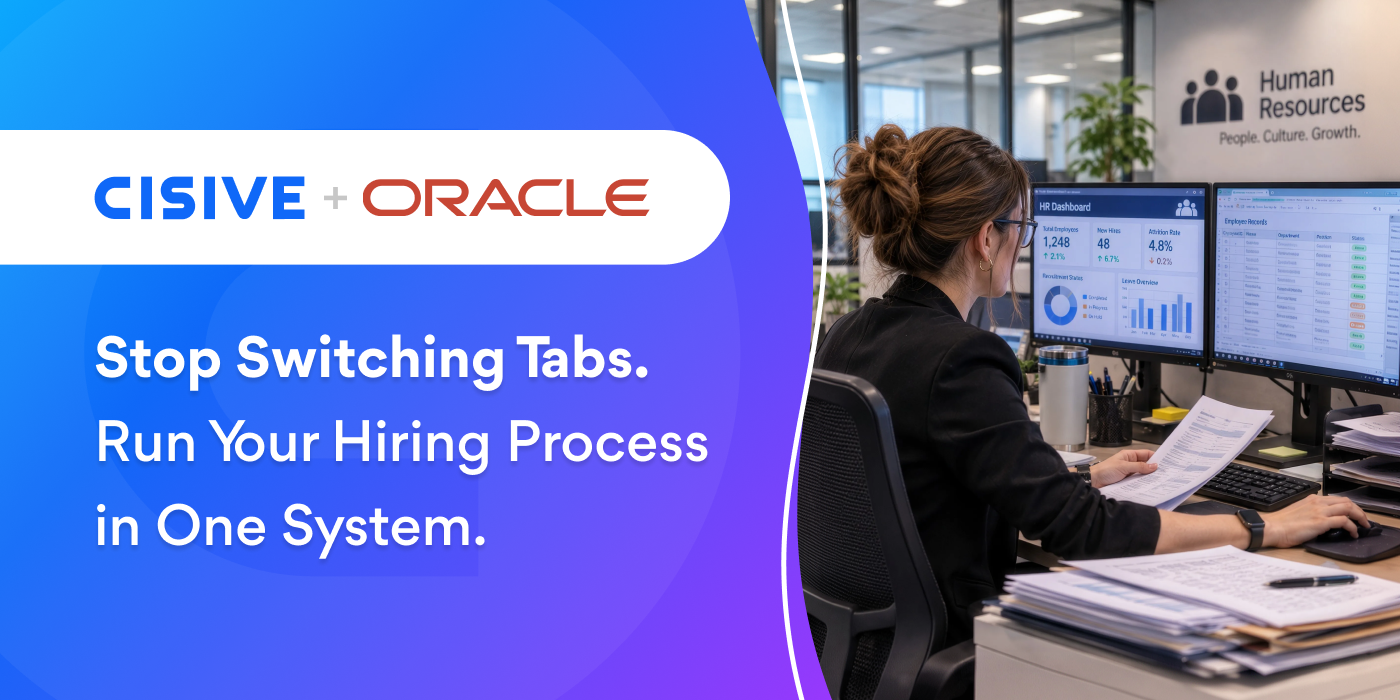
It's a Tuesday morning, and you're trying to answer a question that should take five seconds: where is this candidate in the screening process?
In a not-so-surprising twist, it doesn't take just five seconds. You switch tabs to a screening portal, hopefully remember your login, then search by candidate name because the case ID is back in Oracle, in a browser window you just left. Ten minutes later, you have your answer but lost the thread on the other things you were doing before the hiring manager pinged you.
Nothing about this process is dramatic. It's small, forgettable, and happens a dozen times a day, which is why no one really stops to add up the time spent.
The Tax No One Puts on the Books
Every time you exit the system you're working in, you pay a cost that doesn't show up on any timesheet. It's the seconds spent clicking and loading a new page, and then the re-orientation afterward - the "okay, where was I?" moment after every switch.
That moment has a name and a number attached to it. Researchers at UC Irvine have found that it takes people roughly 25 minutes on average to fully return to a task after an interruption. Separately, organizational psychologist Sophie Leroy's research on what she calls "attention residue" found that part of your focus stays attached to the task you just left, even after you've moved on; so the next thing you do gets a little less of your attention than it should. For most recruiters, checking a screening status is just another Tuesday. For their brains, it's a measurable time-drain that doesn't fully clear before the next interruption.
Multiply that across one recruiter's day. Between checking a status in one tab, entering a note in another, and cross-referencing a spreadsheet to make sure nothing's stuck, you get a quiet but real pull on the hours that should be going toward recruiting: talking to candidates, coaching hiring managers, and building pipeline.
Where This Tax Shows Up Most
The "tax" shows up in small, specific moments:
- Pulling up screening status right before a call with a hiring manager, because you know they'll ask
- Re-entering a candidate's information since the system that ran the background check doesn't talk to the system you're hiring in
- Keeping a personal tracker (a spreadsheet, a sticky note, or a mental list) of who's "still in screening," because that information doesn't exist where you'd naturally look for it
None of these tasks feel like a big deal on their own, but with enough of them together, across multiple candidates, they quickly become the reason a recruiter's day feels harder than usual.
Someone Else Is Waiting on That Tab, Too
There's also a cost on the candidate end of that tab switch. When your candidate emails asking for an update and you have to find the answer in a system you're not logged into, "I'll check and get back to you" turns into hours, sometimes a full day, before they hear anything.
A strong candidate is almost certainly talking to more than one company at a time, so that time lapse is where they can slip away when another company answers faster.

The Benefits of Staying "Home"
Now imagine the alternative: you're in Oracle, going about your work, and the screening status is just... there. No second login. No second search. No mental tracker running in the background.
Instead of adding more tools to do different jobs, it makes more sense to streamline and reduce. One fewer place to go, one fewer thing to remember, for every candidate; that's a small thing on any single day, and a meaningfully different day when it adds up.
Why the Cost Compounds Before Lunch
Attention residue stacks up between tab switches. The first status check of the morning costs you a few minutes of refocus. By your fifth or sixth candidate check before noon, you're not starting fresh each time, but pulling focus back from several half-finished threads at once, which is part of why the second half of a heavy recruiting day can feel so much foggier than the first.
The Best System is One You Never Have to Leave
This problem is about attention more than software, and how much of a recruiter's attention is spent finding information instead of using it.
A workaround enabling your recruiters to switch systems faster is just a band-aid; what really optimizes the recruiters’ time and becomes a lasting solution is not needing to switch at all. When the information they need is where they’re already working, the tax disappears, along with the multitasking.
See what it looks like to never have to leave Oracle.