Many people use cannabidiol (CBD) to manage problems such as pain, inflammation, and anxiety. Much of this usage involves over-the-counter products that have gone largely unregulated.
CBD product sales in the U.S. rose nearly 20-fold between 2014 and 2022, according to Statista data. This has HR professionals and hiring managers concerned about CBD oil use affecting workplace drug tests, especially with confusion between CBD and tetrahydrocannabinol (THC), which are derived from the same plant.
Federal and state regulation of CBD is evolving in 2026, adding new complications and making the issue crucial for HR professionals and employers to monitor.
Accurate, reliable testing can help detect THC use and give employees insight into what they're ingesting. In this article, we'll take a closer look at the role of CBD oil in drug tests and how to promote a safe, secure workplace.
What is CBD Oil?
CBD is a natural extract derived from the cannabis plant. Unlike its well-known counterpart, THC, CBD isn't psychoactive or intoxicating. In other words, it doesn’t produce the "high" commonly associated with marijuana.
CBD is known for its therapeutic benefits. It works by interacting with the body's endocannabinoid system, which regulates processes such as mood, pain, appetite, and sleep. CBD oil has gained popularity for its purported medicinal benefits. Many consumers claim CBD has helped them relieve pain, stress, and inflammation.
Products containing CBD come in many forms. CBD oil is perhaps the most common, but it also appears in tinctures, capsules, topical creams, and edibles.
How Is CBD Regulated?
As of early 2026, only one CBD product is approved by the U.S. Food and Drug Administration (FDA) — Epidiolex, a prescription oil approved to treat two types of epilepsy. Otherwise, CBD products are sold over the counter without FDA endorsement, often labeled as “dietary supplements." Because the CBD industry lacks regulation and testing standards, there are many concerns about product quality, consistency, and labeling accuracy.
For example, unregulated CBD products carry the risk of unwanted ingredients. Some researchers have also argued that the health benefits of over-the-counter CBD products are minimal.
In late 2025, Congress passed a bill restricting the amount of THC in hemp products, which affects many companies in the CBD industry that don’t ensure their products are truly THC-free. Some states have passed similar restrictions on hemp and CBD products.
Recommended Reading: Non-DOT Drug Testing
CBD Products vs. THC: What's the Difference?
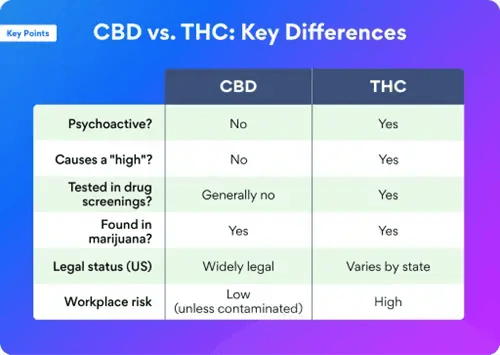
The primary difference between CBD and THC is their psychoactive effects. THC causes intoxication, while CBD does not.
THC and CBD are often compared because they're both cannabinoids and are derived from the cannabis plant. When ingested, they bind to cannabinoid receptors (CB1 and CB2) found in the brain. However, that's where the similarities end.
THC, which is generally associated with marijuana, is a psychotropic chemical. This means it causes a "high" or euphoric sensation. It impacts parts of the brain associated with behavior, learning, and memory to achieve this effect.
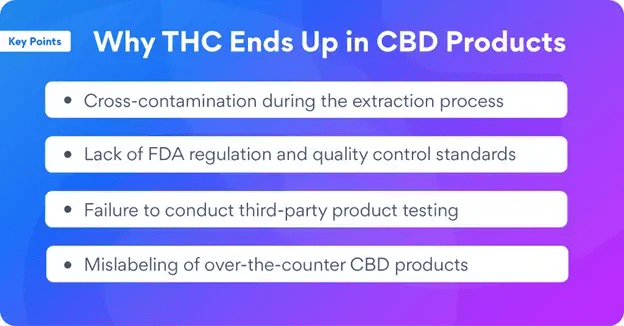
CBD doesn't cause psychoactive effects, with the caveat that it’s only non-psychoactive in its purest form. Unfortunately, many unregulated CBD products contain trace amounts of THC. In one study, 105 CBD products were examined. Not only did 18% of the products contain less CBD than advertised, 35% featured small amounts of THC, with most of those not mentioning THC on the label.
These oversights occur for numerous reasons. For example, CBD products can become contaminated with THC during the extraction process. Some brands fail to test their products properly or mislabel them, either inadvertently or intentionally.
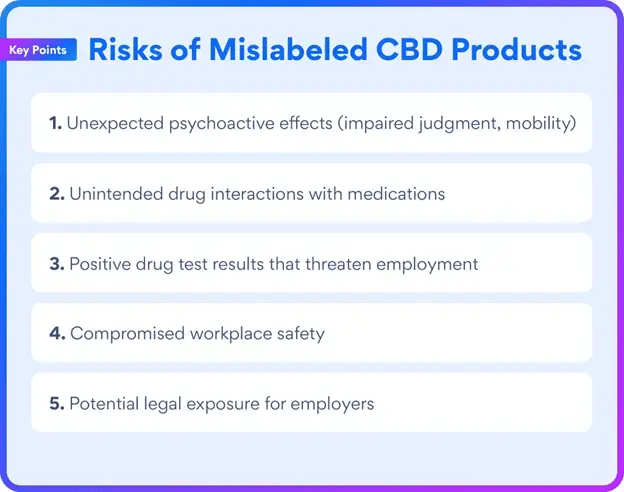
When taken unknowingly, THC can cause a variety of adverse effects, including impairing judgment, behavior, and mobility — all of which pose risks in the workplace.
How Does Cannabis Drug Testing Work?
Employers often use workplace drug testing to screen job applicants or monitor employees for substance use. As part of that process, they might conduct cannabis drug testing, which detects the presence of THC in biological samples, such as urine, blood, saliva, or hair.
While any job can require drug screening, it's especially common in industries with high safety or performance concerns, including healthcare, government, construction, and automotive.
The U.S. Department of Transportation has its own type of drug testing, known as DOT testing. It's used for certain professions, such as pilots, truck drivers, and train conductors, and includes pre-employment drug-testing requirements. Other employers use non-DOT tests, which give them more discretion over what drugs to test for and where to perform testing.
Here's a brief overview of how the drug testing process works:
- Sample collection: The testing facility will collect a biological sample from the individual. While cannabis can be detected through blood, hair, and saliva, many employers rely on urine drug tests. THC can be detected in the urine anywhere from one to 30 days after use, creating a longer timeline for detection than other methods.
- Sample analysis: The sample is analyzed to detect the presence of THC and its metabolites, or the substances developed while the body breaks down a drug. Most labs use immunoassay testing, a speedy, cost-effective method that relies on antibodies to detect THC. While THC breaks down into many cannabinoids, drug testing often focuses on delta-9-THC, a psychoactive cannabinoid found in drugs like marijuana.
- Confirmation: If the test detects THC, another test may be performed to confirm the result. Throughout this process, the sample follows a specific chain of custody to ensure constant monitoring and protect it against tampering or contamination. Attempts to cheat are on the rise, making chain of custody even more important.
- Results: The individual is informed whether the result is positive or negative. If an employer requests the test, they'll also be notified. THC testing has a high accuracy rate, provided that there's nothing wrong with the sample.
When conducting cannabis drug testing, it's extremely important to use a reliable, high-quality source. Reliable testing helps maintain a safe workplace environment and ensures all test results are accurate. Inaccurate testing creates liability if a candidate or employee is punished for a false positive.
Accurate drug testing also alerts employees to what they're consuming. For example, drug screening can reveal when a supposedly THC-free CBD oil product actually contains traces of the substance.
At Cisive, we protect employees and employers through expert drug-screening services. We streamline drug testing to make the process as seamless as possible while also promoting accuracy and confidentiality.
Recommended Reading: Chain of Custody Forms in Drug Testing
How Much THC Will Cause a Positive Result?
A positive THC result can be triggered by amounts as small as 50 nanograms per milliliter (ng/mL). For reference, a nanogram is one billionth of a gram. People who consume any amount of marijuana or THC are at risk of failing a cannabis drug test.
Will CBD Oil Affect Cannabis Drug Testing?
Generally, CBD shouldn’t cause a positive drug test result. Cannabis drug tests look for delta-9-THC, which isn’t found in pure CBD products. That said, many CBD products contain trace amounts of THC, regardless of how they’re branded.
It's relatively common for delta-9-THC products to be mislabeled and sold as CBD. According to a 2017 study conducted by Penn Medicine, as many as 70% of over-the-counter CBD products were mislabeled.
Misleading or inaccurate labeling can be dangerous to customers. For starters, it can cause unexpected, adverse effects, such as impaired judgment and mobility. It may also lead to unintended drug interactions for consumers who are on certain medications.
Mislabeled products also have the potential to harm others. For example, if an employee's judgment is impaired, it can affect their ability to safely execute their job. Contaminated products might also cause a positive drug result, which threatens employment.

Could CBD Oil Cause a False Positive Drug Test?
CBD oil by itself won't cause a false positive on a cannabis drug test. However, if the CBD oil has trace amounts of THC due to cross-contamination or mislabeling, it may trigger a positive result.
While some people might believe the results are wrong, cannabis drug tests are generally reliable. And by having had THC in their system, even inadvertently, they’ve created a risk to workplace safety, regardless of the source.
Employers can reduce the likelihood of positive test results by warning employees about the possibility of CBD contamination. They can limit the risk of false positives by turning to trusted providers that use highly accurate testing methods and help employers maintain a safe, compliant workplace.
Improve Your Drug Testing Process With Cisive
Many people consume CBD oil to reduce pain, anxiety, and stress. Employers should advise their workforce of the risks in consuming CBD products that might contain THC, as well as encourage them to research products via reliable sources, such as companies that perform third-party product testing.
Employers should ensure their workplace environments are safe and compliant through regular drug screenings for THC and other substances. For many industries, such as healthcare and construction, a drug-free environment is key to guaranteeing the safety of employees and customers. At the same time, accurate results are paramount: False positives damage the employer’s credibility, negatively impact employees, and potentially create liability.
Many employers find that the best way to manage drug testing is to turn to reliable testing services, such as those offered by Cisive. This safeguards the workplace against lawsuits, is fair to employees, and protects your customers and the public.
Want to learn more about our streamlined drug testing? Connect with an expert today.
Frequently Asked Questions
How is CBD different from THC?
CBD and THC are both cannabinoids that are derived from the cannabis plant. However, CBD lacks the psychoactive effects of THC and doesn’t cause the “high” typically seen in marijuana use.
Do employers test for CBD oil?
Employer drug screenings don’t test for CBD directly because it doesn’t impair users. However, many workplaces test for marijuana use, which contains large amounts of THC. Therefore, CBD products that contain trace amounts of THC can trigger a positive test result.
How does workplace drug testing work?
The U.S. Department of Transportation has its own type of drug testing, but some employers use other forms. Most workplace drug testing includes four stages: collecting the sample, analyzing it, confirming a positive or negative result, and informing the individual (and the employer, if applicable).
How can employers guard against false positives?
Workplace drug testing should follow a strict, consistent, and legally compliant process to ensure that all steps are followed in the right order, cheating is prevented, and chain of custody is maintained throughout. Reliable providers can handle these drug testing processes, ensuring compliance and giving employers, employees, and candidates the communication they need.